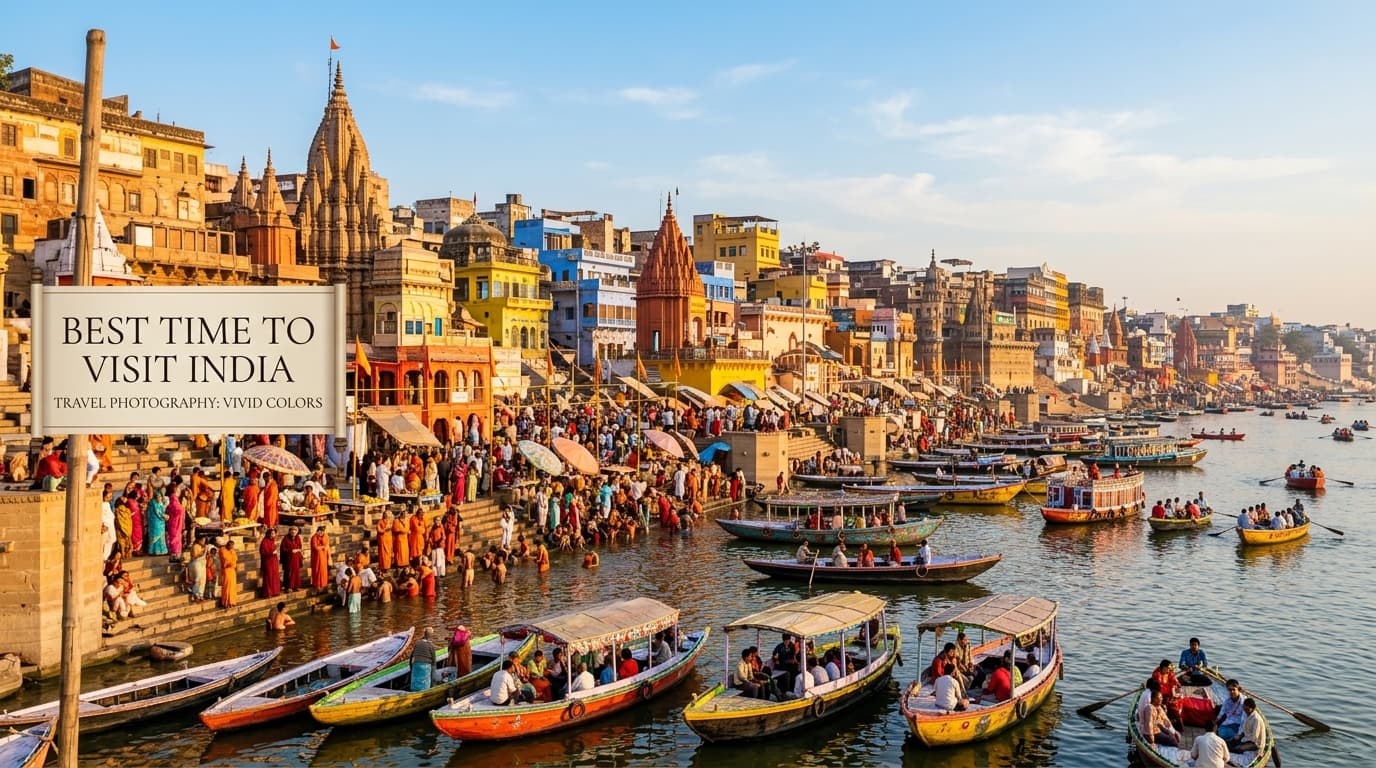
Best Time to Visit India: A Season-by-Season Guide
India stretches from the snow-capped Himalayas in the north to the tropical beaches of Kerala in the south, spanning nearly 3,300 kilometers. This extraordinary geographic range means that no single answer exists for the "best" time to visit. Instead, the ideal travel window depends entirely on where you plan to go and what you want to experience. Understanding India's three main seasons will help you plan the trip of a lifetime.
October to March: The Peak Season
The months from October through March are widely considered the best time to visit most of India. During this period, the monsoon rains have ended, the air is clear, and temperatures across the northern plains and central plateau are pleasantly cool. Daytime highs in Delhi hover around 20-25 degrees Celsius (68-77 degrees Fahrenheit) in November and December, while nights can drop to 5-8 degrees Celsius (41-46 degrees Fahrenheit).
This is the ideal window for exploring Rajasthan's desert forts and palaces, cruising the Kerala backwaters, visiting the temples of Varanasi, and trekking through the forests of Madhya Pradesh. The Taj Mahal in Agra is at its most photogenic during the clear winter mornings, when mist lifts off the Yamuna River to reveal the white marble dome.
South India, including Tamil Nadu, Karnataka, and Goa, is perfect from November to February. Goa's beach season peaks during Christmas and New Year, when temperatures sit at a comfortable 28-32 degrees Celsius (82-90 degrees Fahrenheit) and the skies are reliably blue.
Be aware that peak season brings peak prices. Hotel rates in popular destinations like Jaipur, Udaipur, and Goa can be two to three times higher than during the off-season. Booking accommodation at least two to three months in advance is strongly recommended, especially around Christmas, New Year, and the Diwali festival period in October or November.
April to June: The Hot Summer
Summer in India is intense. The northern plains, including Delhi, Agra, and Varanasi, regularly see temperatures exceeding 40 degrees Celsius (104 degrees Fahrenheit) from April through June. Rajasthan can hit 45 degrees Celsius (113 degrees Fahrenheit) or higher, making outdoor sightseeing uncomfortable at best and dangerous at worst.
However, summer is the perfect time to head to the hill stations. Shimla, Manali, and Dharamsala in Himachal Pradesh offer pleasant temperatures of 15-25 degrees Celsius (59-77 degrees Fahrenheit). Darjeeling and Gangtok in the northeast remain cool and green. Ladakh, which is inaccessible for much of the year due to snow, opens its mountain passes in June, making summer the only time to drive the legendary Leh-Manali Highway.
Summer also brings significantly lower prices and thinner crowds at most destinations outside the hill stations. If you can tolerate the heat and plan your days around early mornings and late evenings, you can find incredible value on hotels, flights, and tours across the country.
July to September: The Monsoon Season
The Indian monsoon is one of the great natural phenomena on Earth. It typically arrives on the southwest coast of Kerala around June 1 and advances northward, reaching Delhi by late June or early July. The rains bring relief from the oppressive summer heat and transform the landscape into a lush, emerald green that is stunningly beautiful.
Traveling during the monsoon requires flexibility and a willingness to get wet. Some regions, particularly the Western Ghats, parts of Assam, and coastal areas, receive extremely heavy rainfall that can cause flooding and road closures. The hill town of Cherrapunji in Meghalaya, one of the wettest places on Earth, receives the bulk of its 11,000 millimeters of annual rainfall during this period.
That said, the monsoon can be a magical time to visit certain destinations. Rajasthan receives relatively light rainfall and its desert landscape comes alive with green. The Udaipur lakes fill up, making the City of Lakes live up to its name. Kerala's Ayurvedic resorts offer special monsoon treatment packages at reduced rates, as the humid air is believed to enhance the effectiveness of traditional therapies.
Regional Differences to Keep in Mind
India's regional climate variations are significant enough that you can almost always find somewhere ideal to visit regardless of the month. The far south, including Kerala and Tamil Nadu, has a more moderate tropical climate year-round, with temperatures rarely exceeding 35 degrees Celsius (95 degrees Fahrenheit). However, the southeast coast receives a separate northeast monsoon from October to December, meaning Chennai and Pondicherry get their heaviest rains just as the rest of India enters peak season.
The northeastern states of Assam, Meghalaya, and Arunachal Pradesh are best visited from October to April. The Andaman and Nicobar Islands in the Bay of Bengal enjoy their best weather from November to April, with calm seas ideal for snorkeling and diving.
Planning Around Festivals
India's festival calendar is one of the best reasons to time your visit carefully. Diwali, the Festival of Lights, usually falls in October or November and is celebrated across the entire country with fireworks, oil lamps, and feasts. Holi, the Festival of Colors, takes place in March and is an unforgettable experience in cities like Mathura and Varanasi, where the celebrations have deep historical roots.
The Pushkar Camel Fair in Rajasthan (November), Durga Puja in Kolkata (October), and Onam in Kerala (August-September) are other standout events worth building a trip around. Attending a major festival gives you an insight into Indian culture that no monument or museum can match.
Whatever season you choose, India will reward you with extraordinary experiences. The key is matching your itinerary to the climate and planning ahead for the most popular periods.
Tags

Go2India Team
Exploring India since 2021 | 25+ states visited | Updated monthly
We are a team of travel writers and India enthusiasts who explore the country year-round. Our guides are based on first-hand experience, local knowledge, and verified official sources.
More about us →