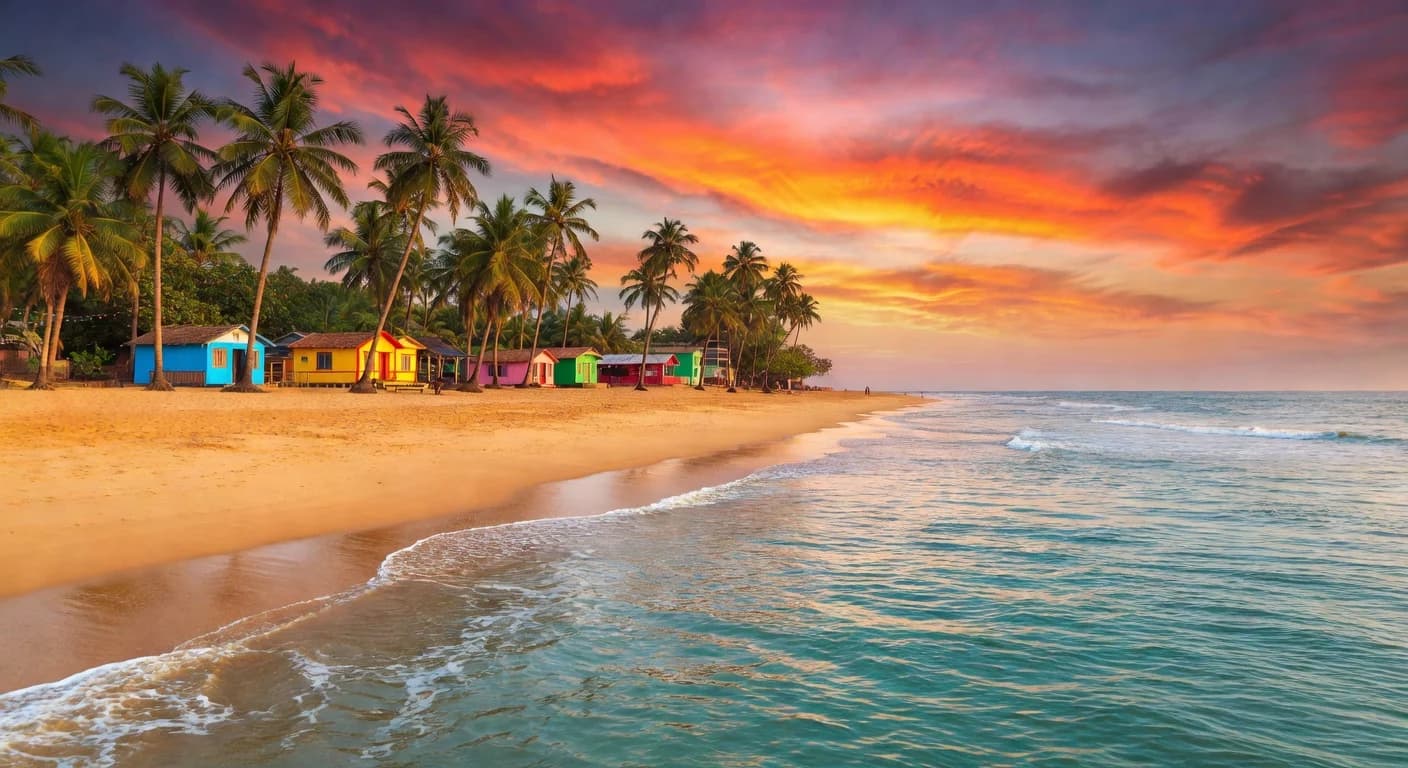
Goa Beach Guide: North vs South, Best Beaches & Nightlife
When we first arrived in Goa, we expected just another beach destination—but what we found was a place where Portuguese colonial charm collides with Indian spirituality, where hippie culture thrives alongside luxury resorts, and where the choice between North and South Goa can completely reshape your entire trip. This isn't just a beach guide; it's your insider's map to understanding which side of Goa actually suits you.
Key Takeaways
| Question | Answer |
|---|---|
| What is the best time to visit? | November to February offers perfect weather (25-32°C). Avoid monsoon season (June-September) when beaches close. |
| How much does it cost? | Budget: ₹1,500-2,500/night; Mid-range: ₹3,000-6,000/night; Luxury: ₹8,000+/night (roughly $18-75+ USD) |
| How do I get there? | Fly into Dabolim Airport (GOI). Trains arrive at Madgaon Station. Buses connect from Mumbai and Bangalore. |
| Is it safe? | Generally safe for tourists. Avoid isolated beaches at night; use registered taxis. Petty theft occurs in crowded areas. |
| What should I book in advance? | Hotels during peak season (Dec-Jan), ferry tickets to islands, popular restaurant reservations. |
| North or South? | North Goa: Party, nightlife, budget travel. South Goa: Relaxation, luxury, fewer crowds, better for families. |
1. Understanding North vs South Goa: The Fundamental Divide
The Mandovi River doesn't just split Goa geographically—it divides two entirely different travel experiences. When our team spent three weeks exploring both regions, we realized that choosing between North and South Goa is less about geography and more about choosing your entire vibe.
North Goa pulses with energy. This is where backpackers congregate, where beach shacks blast electronic music until sunrise, where the party never really stops. Towns like Baga, Calangute, and Anjuna have transformed into cosmopolitan beach hubs with international restaurants, yoga studios, and nightclubs that rival anything you'd find in Mumbai. The beaches are crowded, the infrastructure is well-developed, and prices reflect the demand.
South Goa whispers rather than shouts. Here, you'll find pristine beaches with fewer tourists, luxury resorts hidden among coconut groves, and a pace that encourages you to actually rest. Places like Palolem, Agonda, and Colva maintain a more authentic Goan character—fishing villages where life still revolves around the tides, where you can walk for hours without seeing another tourist.
The Vibe Difference
North Goa's energy is intoxicating if you're seeking connection and stimulation. You'll meet travelers from every corner of the globe, swap stories at beach bars, and find yourself spontaneously joining groups heading to late-night parties. The infrastructure is tourist-friendly—ATMs, pharmacies, and restaurants on every corner. However, this accessibility comes with trade-offs: beaches are often crowded, the environment shows strain, and the authentic Goan culture feels diluted.
South Goa rewards patience. Yes, there are fewer restaurants and nightlife options, but what exists tends to be higher quality. The beaches feel like discoveries rather than destinations. Local communities remain more intact. When we visited Palolem during shoulder season, we could walk the entire beach and count the tourists on one hand—a stark contrast to the thousands we'd seen in Baga just days earlier.
Infrastructure & Accessibility
North Goa's infrastructure is unquestionably superior. Getting around is straightforward—taxis, auto-rickshaws, and scooter rentals are abundant and inexpensive. Accommodation ranges from ₹500/night budget hostels to ₹15,000+ luxury resorts. In South Goa, you'll find fewer options at the budget end, and transportation requires more planning. However, this "inconvenience" is precisely what keeps South Goa less crowded.
Compare hotels, resorts, and guesthouses across India with free cancellation on most bookings.
Search Hotels on Booking.com → Scan me
2. Best Beaches in North Goa: Where the Action Happens
North Goa's beaches form a nearly continuous strip of sand from Pernem in the north to the Mandovi River in the south. Each beach has developed its own personality, shaped by the travelers who congregate there.
Baga & Calangute: The Tourist Epicenter
Baga Beach is where most first-time visitors land, and for good reason—it's the most developed, most accessible, and most crowded beach in Goa. During peak season (December-January), the beach becomes almost unbearably packed. The water is often murky from the sheer volume of swimmers, and the sand is covered with sunbeds and parasols rented by beach shacks.
But here's what we discovered: Baga is brilliant if you approach it correctly. Come early morning (before 8 AM) and you'll have the beach to yourself. The water is cleaner, the light is magical, and you can actually see why this place attracted travelers in the first place. The beach shacks—small wooden structures serving fresh seafood and cold beer—are genuinely excellent. We had the best fish curry of our Goa trip at a nameless shack near the northern end of Baga, paying just ₹250 for a meal that would cost ₹800 in a tourist restaurant.
Calangute, just south of Baga, is marginally less crowded and slightly more upscale. The beach itself is nearly identical, but the surrounding infrastructure feels more polished. Hotels here range from mid-range chains to boutique properties. If you're seeking the North Goa experience but with slightly more breathing room, Calangute is your answer.
Key experiences in this area:
- Sunset drinks: The beach shacks transform into bars as evening approaches. Kingfisher beer costs ₹80-120, and the sunset views are free.
- Water sports: Parasailing, jet skiing, and banana boat rides are available daily. Prices vary but expect ₹500-1,500 per activity.
- Nightlife: Clubs like Tito's and Mambo's are within walking distance. Cover charges range from ₹500-1,500 depending on the night.
- Shopping: The night markets (Wednesday at Anjuna, Saturday at Baga) sell everything from sarongs to jewelry. Haggle aggressively—initial prices are typically 2-3x the final price.
Anjuna: The Bohemian Beach
Anjuna holds a special place in Goa's history. In the 1960s and 70s, this was ground zero for the hippie movement in India—travelers came seeking spiritual enlightenment and found a beach that asked few questions. Today, Anjuna has matured but retained its bohemian soul.
The beach itself is rockier than Baga and Calangute, with dramatic rocky outcrops creating natural pools. It's less suitable for swimming but infinitely more photogenic. The Wednesday flea market is legendary—thousands of vendors sell everything from vintage clothing to handmade jewelry. We spent an entire morning there and barely covered half the market. Budget ₹2,000-3,000 if you want to actually buy something.
The nightlife in Anjuna is more sophisticated than Baga's. Clubs like Paradiso and Shiva Valley cater to a slightly older, more discerning crowd. The music tends toward progressive house and techno rather than the mainstream pop of Baga's clubs.
Vagator & Chapora: The Scenic Alternative
Vagator Beach, just north of Anjuna, offers the best of both worlds—it's developed enough to have excellent restaurants and accommodation, but less crowded than Baga. The beach is backed by dramatic red cliffs, creating stunning sunset views. Chapora Fort overlooks the beach, and the hike up takes about 15 minutes. The views from the top are worth every drop of sweat.
We stayed in Vagator for four nights and found it to be the sweet spot for North Goa—close enough to Baga's action to access nightlife and restaurants, but far enough to escape the worst crowds. Accommodation ranges from ₹1,500-8,000/night depending on season and amenities.
Skip the hassle — book India day trips, cooking classes, and experiences in advance with instant confirmation.
Browse Activities on Klook → Scan me
3. Best Beaches in South Goa: Tranquility & Authenticity
South Goa's beaches are longer, wider, and significantly less crowded than their northern counterparts. The infrastructure is less developed, but that's precisely the point—you come here to disconnect, not to party.
Palolem: The Crescent Jewel
Compare hotels, resorts, and guesthouses across India with free cancellation on most bookings.
Search Hotels on Booking.com →
Scan me
Palolem Beach is South Goa's crown jewel—a perfect crescent of golden sand backed by coconut palms and fishing boats. Unlike North Goa's beaches, Palolem still feels like a place where locals live, not just a tourist destination. Fishing boats launch from the beach each morning, and the rhythm of life follows the tides.
The beach shacks here are more upscale than North Goa's—you'll pay ₹400-600 for a fish curry rather than ₹250, but the quality is noticeably higher. The seafood is fresher because the boats literally launch from this beach. We ate dinner with our feet in the sand, watching the sunset paint the sky in shades of orange and pink, and it cost less than ₹500 per person including a beer.
Accommodation in Palolem ranges from basic huts (₹800-1,500/night) to luxury resorts (₹8,000+/night). The huts are genuinely charming—bamboo structures with mosquito nets, basic bathrooms, and the sound of waves as your alarm clock. During peak season, book at least two weeks in advance.
Why Palolem works:
- Authenticity: The beach remains a working fishing village. You'll see locals going about their daily lives, not performing for tourists.
- Nightlife (low-key): A few beach bars stay open late, but the vibe is relaxed. No clubs, no cover charges, just good music and cold beer.
- Water quality: The water is cleaner than North Goa beaches because there are fewer swimmers.
- Day trips: Nearby attractions include Goa Islands, spice plantations, and wildlife sanctuaries.
Agonda: The Quiet Alternative
Agonda Beach, just north of Palolem, is even quieter and more pristine. It's longer and wider than Palolem, with fewer beach shacks and fewer tourists. If Palolem feels crowded to you, Agonda is your answer.
The beach is backed by a small village with basic but adequate accommodation (₹1,000-3,000/night) and a handful of restaurants. There's minimal nightlife—a few beach bars close by 10 PM. This is the place to come if you genuinely want to disconnect. We met a couple here who'd been staying for three weeks, spending their days reading and swimming, their evenings watching the sunset. They had no plans to leave.
Colva & Benaulim: The Established South
Colva is South Goa's oldest beach resort, dating back to the Portuguese colonial era. It's more developed than Palolem or Agonda, with established hotels, restaurants, and infrastructure. It's also more crowded—though still far less busy than North Goa beaches.
Colva works well if you want South Goa's relaxed vibe but with more amenities. Hotels range from ₹2,000-6,000/night. The beach itself is wide and sandy, backed by a promenade with restaurants and shops. It feels like a proper beach town rather than a backpacker destination.
Benaulim, just south of Colva, is slightly quieter and has a more upscale feel. Accommodation here skews toward mid-range and luxury (₹3,000-10,000/night), and the restaurants are noticeably better than Colva's.
Book accommodation in South Goa during shoulder seasons (March-April, September-October) for the best combination of good weather, fewer crowds, and lower prices.
4. Nightlife: North Goa's Unbeatable Scene
Let's be direct: if nightlife is a priority, North Goa is the only choice. South Goa's nightlife is essentially non-existent beyond a few beach bars that close by 10 PM.
The Club Scene
North Goa's club scene is surprisingly sophisticated. Clubs like Tito's (in Baga), Mambo's (also Baga), and Cubana (Arpora) host international DJs and attract crowds from across India and beyond. Cover charges typically range from ₹500-1,500 depending on the night and whether there's a special event. Drinks inside clubs cost ₹300-500 for beer, ₹400-700 for cocktails.
Our experience at Tito's on a Saturday night was eye-opening. The club was packed with a genuinely international crowd—we heard conversations in at least eight different languages. The sound system was world-class, the DJ was skilled, and the energy was infectious. It felt less like a beach town club and more like something you'd find in Mumbai or Delhi.
However, here's the honest assessment: Goa's club scene, while fun, isn't world-class. If you're comparing it to clubs in Ibiza or Bangkok, you'll be disappointed. If you're comparing it to what you'd find in most Indian cities, it's impressive.
Beach Shack Nightlife
The real Goa nightlife happens at the beach shacks. These are small wooden structures with sand floors, string lights, and DJs playing everything from reggae to electronic music. They stay open until 2-3 AM, and the vibe is far more relaxed than clubs. You'll pay ₹100-150 for beer, and there's no cover charge.
We spent one night bar-hopping along Baga Beach, stopping at different shacks, meeting travelers, and dancing with strangers. The total cost for the evening was around ₹800 including food and drinks—a fraction of what we'd have paid at a club. This is where the real magic of Goa's nightlife happens.
The Party Calendar
Goa's nightlife peaks during specific periods. December and January are the busiest months—expect crowds and higher prices everywhere. February and March are still good but slightly quieter. April onwards, many clubs close or reduce hours as tourists depart. September to November sees a return of the party crowd as the weather improves and prices drop.
Did You Know? Goa's nightlife culture was shaped by the Portuguese colonial period, which lasted until 1961. The legacy of Portuguese liberalism created a more permissive atmosphere than in other parts of India, allowing the hippie movement to flourish here in the 1960s and 70s.
Source: Lonely Planet India
5. Water Activities & Adventure Sports
Both North and South Goa offer excellent opportunities for water activities, though North Goa has more options and more aggressive marketing.
Parasailing & Jet Skiing
These are available on most North Goa beaches, particularly Baga and Calangute. Parasailing costs around ₹1,000-1,500 for 15-20 minutes. Jet skiing costs ₹1,500-2,000 for 15 minutes. The operators are generally professional and safety standards are reasonable, though not to international levels. Negotiate prices—the first quote is rarely the final price.
Scuba Diving & Snorkeling
Goa has several dive sites, primarily around Goa Islands. A beginner's scuba certification course costs around ₹12,000-15,000 and takes 3-4 days. Single dives cost ₹3,000-5,000. Snorkeling trips are cheaper at ₹1,500-2,500 per person.
When we took a snorkeling trip to Grande Island, we saw colorful fish, sea turtles, and coral formations. The water visibility was good (around 15-20 meters), and the experience was genuinely worthwhile. Book through established operators rather than random beach vendors.
Surfing
Goa has several decent surf breaks, particularly during monsoon season (June-September) when swells are consistent. Beaches like Arambol and Morjim have surf schools offering lessons at ₹1,000-1,500 per hour. Equipment rental is ₹500-800 per day.
Kayaking & Backwater Tours
Several operators offer kayaking tours through Goa's backwaters and lagoons. These tours typically cost ₹2,000-3,500 per person and last 3-4 hours. They're excellent for spotting birds and experiencing a different side of Goa away from the beaches.
Discover the best guided tours and activities in Delhi, Mumbai, Jaipur and beyond.
Browse Tours on GetYourGuide → Scan me
6. Accommodation: Finding Your Perfect Stay
Goa's accommodation landscape is remarkably diverse, ranging from ₹500/night budget dorms to ₹50,000+ per night luxury villas.
Budget Options (₹500-1,500/night)
Skip the hassle — book India day trips, cooking classes, and experiences in advance with instant confirmation.
Browse Activities on Klook →
Scan me
North Goa has numerous hostels and budget guesthouses, particularly in Baga, Calangute, and Anjuna. Expect basic but clean rooms, often with shared bathrooms. Amenities are minimal but sufficient. Popular chains include Zostel and various independent hostels. These places are social hubs—you'll meet other travelers and easily find people to explore with.
South Goa's budget options are more limited. Palolem has beach huts in this price range, but they're basic—no air-conditioning, shared bathrooms, and minimal amenities. However, the experience of sleeping steps from the beach is worth the trade-off.
Mid-Range Options (₹2,000-5,000/night)
This is where Goa truly shines. For ₹3,000-4,000/night, you can get a comfortable room with air-conditioning, private bathroom, and decent amenities in either North or South Goa. Many mid-range hotels include breakfast and have good restaurants on-site.
In North Goa, mid-range hotels are concentrated in Baga, Calangute, and Vagator. In South Goa, Colva and Benaulim have the best selection. We stayed at several mid-range properties and found them consistently good value—clean, well-maintained, and with helpful staff.
Luxury Options (₹8,000+/night)
Goa has several excellent luxury resorts, particularly in South Goa. Properties like Taj Exotica and Leela Goa offer world-class amenities, excellent restaurants, and stunning settings. These resorts often have private beaches, spas, and multiple dining options.
North Goa's luxury options are fewer but include properties like Taj Holiday Village and Cidade de Goa. These resorts cater to Indian tourists and are excellent value compared to international luxury resorts.
Booking Strategy
During peak season (December-January), book accommodation at least 4-6 weeks in advance. Prices can increase by 50-100% during this period. Shoulder seasons (March-April, September-October) offer the best value—good weather, fewer crowds, and lower prices.
Avoid booking through random websites promising "best deals." Stick with established platforms or book directly with hotels. We found that calling hotels directly often resulted in better rates than online booking sites.
7. Getting Around: Transport Within & To Goa
Reaching Goa
By Air: Dabolim Airport (GOI) is Goa's main airport, located about 30 km south of Panaji. Flights arrive from Delhi, Mumbai, Bangalore, and other major Indian cities. Flight times are typically 2-3 hours from major metros. From the airport, taxis to North Goa cost around ₹1,000-1,500; to South Goa, ₹1,500-2,000.
By Train: Madgaon Junction (in South Goa) and Karmali Station (near Panaji) are the main railway stations. Trains connect to Mumbai (12-14 hours), Bangalore (18-20 hours), and other cities. Train travel is slower but significantly cheaper than flying and offers an authentic Indian experience.
By Bus: Numerous bus operators connect Goa to neighboring states. Buses from Mumbai take 12-14 hours and cost ₹800-1,500. From Bangalore, expect 16-18 hours and ₹1,000-1,800. Buses are crowded but cheap.
Book buses, trains, and transfers between Indian cities easily online. Compare routes and prices.
Book Transport on 12Go → Scan me
Getting Around Goa
Scooter/Motorcycle Rental: This is the most popular way to get around Goa. Rentals cost ₹300-500/day for a basic scooter, ₹600-1,000/day for a better quality bike. You'll need an International Driving Permit, though enforcement is lax. Goa's roads are generally good, but traffic can be chaotic. Wear a helmet (it's legally required) and drive defensively.
Taxis & Auto-Rickshaws: Taxis are available everywhere and are relatively inexpensive. A taxi from Baga to Anjuna costs around ₹200-300. Auto-rickshaws are even cheaper at ₹100-150 for the same journey. Negotiate the fare before getting in—meters are rarely used.
Buses: Goa has an extensive bus network connecting all major towns. Buses are cheap (₹20-50 for most journeys) but crowded and slow. They're best for short distances or if you're on a tight budget.
Ferries: Ferries connect various points along Goa's coast and to nearby islands. Ferry rides typically cost ₹50-150 depending on distance.
8. Food & Dining: Goan Cuisine Beyond the Tourist Shacks
Goan cuisine is a unique blend of Indian spices, Portuguese influences, and fresh seafood. It's one of India's most distinctive regional cuisines, and eating well in Goa is remarkably easy and inexpensive.
Signature Goan Dishes
Fish Curry: The quintessential Goan dish—fresh fish cooked in a coconut-based curry with spices. A plate costs ₹250-400 at beach shacks, ₹600-1,000 at restaurants. The best versions use locally caught fish and coconut milk that's freshly extracted.
Prawn Balchão: A spicy prawn dish with a tangy, slightly sweet flavor. It's traditionally made with dried chilies, garlic, and vinegar. Expect to pay ₹400-600 at beach shacks.
Sorpotel: A pork curry that's a legacy of Portuguese colonialism. It's rich, spicy, and absolutely delicious. You'll find it at local restaurants and family-run eateries rather than tourist establishments.
Bebinca: A seven-layer dessert made with coconut, jaggery, and ghee. It's sweet, rich, and absolutely addictive. Most restaurants serve it for ₹100-200.
Where to Eat
Beach Shacks: These are the heart of Goan dining. Expect fresh seafood, cold beer, and stunning views for ₹300-600 per person. Quality varies, but even mediocre beach shack food is satisfying. We had our best meals at nameless shacks run by families who've been there for decades.
Local Restaurants: Away from the beach, you'll find family-run restaurants serving authentic Goan food at local prices. A full meal with fish curry, rice, and a drink costs ₹200-350. These places are where locals eat, and the food is invariably better than tourist restaurants.
Upscale Dining: North Goa has several excellent restaurants serving refined Goan cuisine and international food. Expect to pay ₹800-1,500 per person at these establishments. In South Goa, upscale dining is concentrated in luxury resorts.
Did You Know? Goan cuisine's distinctive flavor profile comes from the region's unique history. Portuguese colonizers introduced ingredients like potatoes, tomatoes, and chili peppers, which were then incorporated into traditional Indian cooking techniques. The result is a cuisine found nowhere else in India.
Source: Times of India Travel
Get an India eSIM before you land. No physical SIM needed — activate instantly on your phone.
Get Saily eSIM for India → Scan me
9. Best Time to Visit: Seasons & Weather
Goa's climate is tropical, with distinct seasons that dramatically affect your experience.
Peak Season: December to January
Compare car rental prices across India. Pick up at airports or city locations with flexible cancellation.
Compare Car Rentals →
Scan me
This is when Goa is at its busiest and most expensive. Weather is perfect—temperatures around 25-32°C, minimal rain, and clear skies. However, beaches are crowded, hotels are full, and prices are 50-100% higher than other seasons. If you visit during peak season, book accommodation well in advance.
Shoulder Seasons: February to April & September to November
These are the sweet spots. Weather is still good (though increasingly hot in March-April), crowds are manageable, and prices are reasonable. February and March are particularly good—the weather is perfect, and prices have dropped from peak season levels.
Monsoon Season: June to September
The monsoon brings heavy rain, rough seas, and many beach shacks close. However, the landscape becomes lush and green, prices drop dramatically, and the few tourists around tend to be more serious travelers. If you don't mind rain and rough seas, monsoon season offers excellent value.
Summer: April to May
Hot and humid, with temperatures reaching 35-38°C. Many tourists leave, prices drop, and the beaches are quiet. However, the heat is intense, and some establishments close. Only visit if you're heat-tolerant and seeking solitude.
10. Practical Information & Travel Tips
Money & Costs
Budget travelers can live on ₹1,500-2,000/day (roughly $18-24 USD). Mid-range travelers should budget ₹3,500-5,000/day ($42-60 USD). Luxury travelers will spend ₹8,000+/day ($95+ USD). These estimates include accommodation, food, and activities.
ATMs are abundant in North Goa but less common in South Goa. Carry cash, particularly if you're staying in remote areas. Credit cards are accepted at upscale restaurants and hotels but not at beach shacks or local eateries.
Safety
Goa is generally safe for tourists. Petty theft occurs, particularly in crowded areas and at night. Avoid displaying expensive jewelry, cameras, or large amounts of cash. Use registered taxis rather than hailing random vehicles. Avoid isolated beaches at night.
Health & Medical
Goa has good medical facilities, particularly in North Goa. Pharmacies are abundant and medications are inexpensive. Tap water is generally safe in tourist areas but stick to bottled water if you have a sensitive stomach. Mosquitoes can be prevalent, particularly during monsoon season—carry insect repellent.
Internet & Connectivity
Internet is excellent in North Goa and adequate in South Goa. Most hotels and restaurants offer free WiFi. If you need reliable connectivity, consider getting a local SIM card or eSIM. Major providers include Jio, Airtel, and Vodafone. A month of unlimited data costs around ₹300-500.
Cultural Sensitivity
Goa is more liberal than other parts of India, but respect local customs. Dress modestly away from beaches. Ask permission before photographing people. Avoid public displays of affection, particularly in conservative areas.
Frequently Asked Questions
What's the difference between North and South Goa?
North Goa is developed, crowded, and party-focused with excellent nightlife and infrastructure. South Goa is quieter, more authentic, and better for relaxation. North Goa suits backpackers and party-seekers; South Goa suits families and those seeking tranquility.
Is Goa safe for solo female travelers?
Yes, Goa is relatively safe for solo female travelers, particularly in tourist areas. However, exercise the same precautions you would anywhere—avoid isolated areas at night, dress modestly away from beaches, and trust your instincts. The tourist infrastructure is well-established and welcoming.
How long should I spend in Goa?
3-5 days is sufficient to experience the main beaches and get a feel for Goa. 7-10 days allows you to explore both North and South Goa thoroughly. Many travelers spend 2-3 weeks, splitting time between different beaches.
Can I visit Goa during monsoon season?
Yes, though many beach shacks close and the sea is rough. The landscape is lush, prices are low, and crowds are minimal. If you don't mind rain and prefer solitude, monsoon season is excellent value.
What's the best beach in Goa?
This depends on your priorities. For nightlife and action: Baga or Calangute. For authenticity and fewer crowds: Palolem or Agonda. For a balance: Vagator or Colva. There's no objectively "best" beach—only the best beach for your preferences.
Do I need a visa to visit Goa?
Goa is part of India, so visa requirements are the same as for the rest of India. Most nationalities can obtain a tourist visa on arrival or apply online. Check the India Visa Guide 2026 for current requirements.
What's the best way to get around Goa?
Renting a scooter is the most popular option—it's cheap, flexible, and gives you freedom to explore. Taxis and auto-rickshaws are also available and inexpensive. Buses are cheapest but slower and more crowded.
Conclusion
Goa isn't just one destination—it's two completely different experiences separated by a river. North Goa offers the energy, infrastructure, and nightlife that appeal to backpackers and party-seekers. South Goa provides the tranquility, authenticity, and natural beauty that appeal to those seeking genuine relaxation.
Our experience living in and exploring Goa taught us that the best approach is to experience both. Spend 3-4 days in North Goa to understand why it's India's most famous beach destination, then head south for 3-4 days to discover why South Goa is where many travelers choose to stay longer.
For more inspiration on beach travel in India, explore our complete island guide or check out what to do in India by month to plan your perfect timing. And if you're planning a broader India trip, our Rajasthan travel itinerary and Kerala backwaters guide offer excellent complementary experiences.
Goa is waiting. The only question is: which Goa are you?
The Go2India Team has spent years exploring India's beaches, cities, and hidden corners. We write from genuine experience, not guidebooks. Our recommendations are based on real visits, real conversations with locals, and real meals eaten in real restaurants.