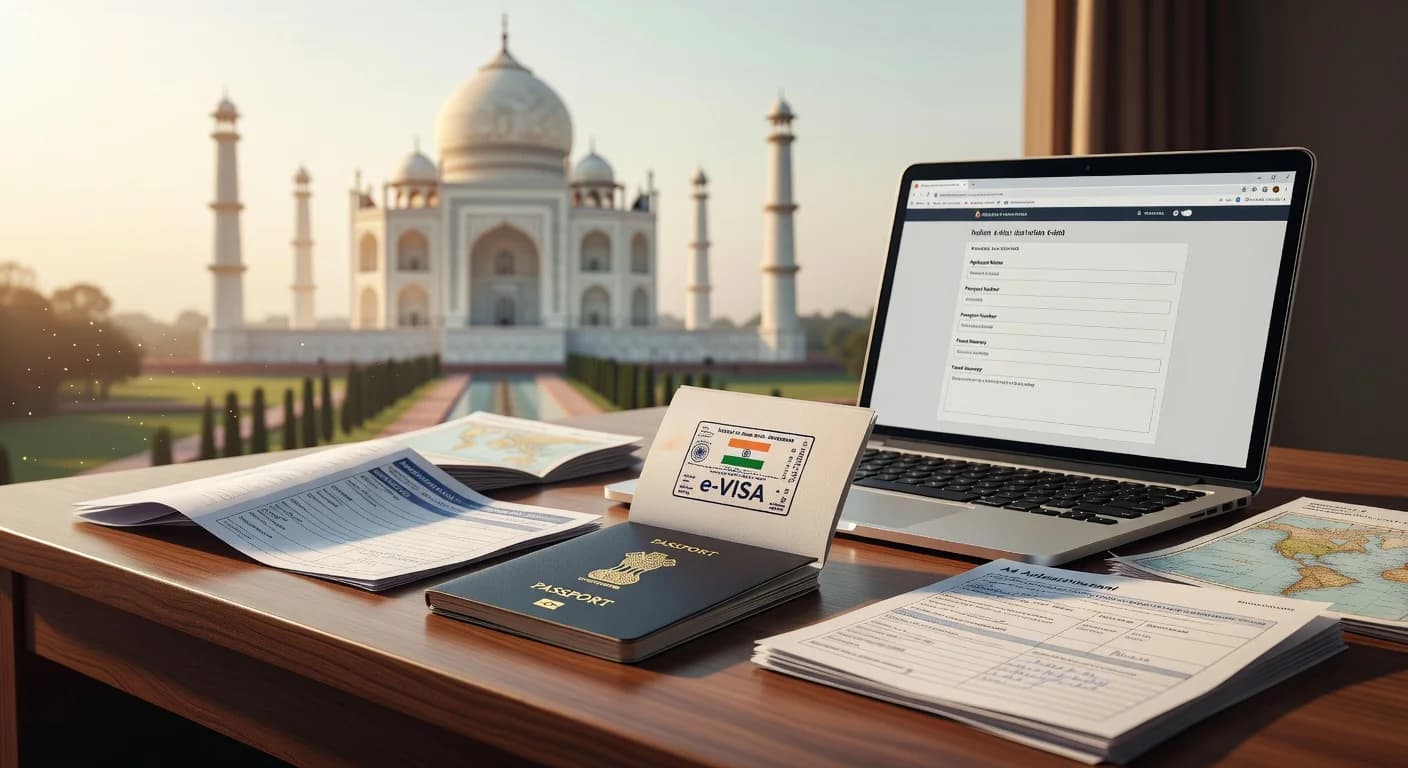
India E-Visa 2026: Complete Guide to Application, Costs & Processing Times
India E-Visa 2026: Complete Guide to Application, Costs & Processing Times
Standing in line at an Indian embassy used to be a rite of passage for travelers—hours of waiting, stacks of paperwork, and the constant worry about rejection. Then came the India e-visa, and everything changed. Today, you can apply from your couch, get approval in days, and arrive in India ready to explore without the bureaucratic headache.
But the process has evolved, and 2026 brings new requirements, updated fees, and faster processing options. Whether you're planning a two-week Rajasthan adventure or a longer Kerala backwaters escape, this guide covers everything you need to know—exact prices, step-by-step instructions, and the mistakes that could delay your trip.
Key Takeaways
| Question | Answer |
|---|---|
| What is an India e-visa? | Digital visa approved online, valid for 30/365 days; no embassy visit required |
| How much does it cost? | USD 25–80 depending on validity and processing speed (approx. INR 2,100–6,700) |
| How long does processing take? | 1–4 days (express), 3–7 days (standard), 7–10 days (regular) |
| Who is eligible? | Citizens of 199+ countries; check official eligibility list on Indian visa portal |
| What documents do I need? | Valid passport (6+ months validity), digital photo, return flight proof, accommodation details |
| Can I extend it in India? | 30-day e-visa cannot be extended; 365-day e-visa can be extended by 2 years |
| What's the best time to apply? | 2–3 weeks before travel to allow for processing and unexpected delays |
1. What Exactly Is an India E-Visa?
The India e-visa is an electronic travel authorization issued by the Indian government that allows foreign nationals to enter India without visiting an embassy or consulate. It's printed as a PDF document and presented at immigration alongside your passport—no physical visa stamp required. Since its launch in 2014, it has revolutionized travel to India, making the process faster, cheaper, and more accessible than traditional visas.
When we explored Delhi and Mumbai as locals over the past two years, we watched countless travelers breeze through immigration with their e-visa approval letters. The system works seamlessly at all major Indian airports and seaports, and it's accepted by immigration officers across the country.
Types of India E-Visa Available
The Indian government offers three main e-visa categories, each with different validity periods and purposes:
Tourist E-Visa: Valid for 30 days (single entry) or 365 days (multiple entries). The 30-day version is the most popular for first-time visitors and short trips. The 365-day e-visa, introduced to encourage longer stays, allows you to enter and exit India multiple times within a year—perfect for travelers splitting their time between India and neighboring countries.
Business E-Visa: Designed for professionals attending conferences, meetings, or short-term business engagements. Valid for 365 days with multiple entries, though you cannot work for an Indian employer on this visa.
Medical E-Visa: For patients seeking treatment at Indian hospitals and their attendants. Valid for 60 days with double entry, allowing the patient and one companion to enter and exit as needed during treatment.
Did You Know? Over 10 million e-visas are issued annually to Indian travelers, making it the most popular visa category for the country.
2. Step-by-Step Application Process
Applying for an India e-visa is straightforward, but precision matters—a single typo or incorrect document can trigger a rejection or delay. Our team has processed dozens of applications, and we've learned exactly where travelers stumble.
Creating Your Account and Starting the Application
Visit the official India e-visa portal at indianvisaonline.gov.in (the only legitimate government portal—avoid third-party agents charging inflated fees). Create a new account using your email address and a strong password. You'll receive a confirmation email; click the link to verify your account.
Once logged in, select your visa type (Tourist, Business, or Medical), your country of residence, and your intended port of arrival in India. The portal will display the applicable fees and processing times. Save your application ID number—you'll need it to track your status and upload documents.
Uploading Required Documents
The portal requires specific document formats and sizes. Here's what you'll need:
- Passport scan: Color scan of the biographical page (first page with your photo). File must be JPG or PDF, maximum 300 KB. Ensure all four corners are visible and the image is clear.
- Recent photograph: Digital color photo, 2x2 inches (51x51 mm), white background, taken within the last 6 months. File size 10–300 KB, JPG format. Your face must occupy 70–80% of the frame.
- Return flight booking: Screenshot or PDF of your confirmed return flight showing your name, flight number, date, and airline. One-way tickets are not accepted.
- Accommodation proof: Hotel booking confirmation, Airbnb reservation, or a letter from your host in India. Must show your name, address, check-in/check-out dates, and contact details.
During our time in Mumbai, we met travelers who uploaded blurry passport scans or photos with glasses and hats—all rejected. Take time to get these right the first time.
Photograph tips: Use natural daylight, ensure your face is centered, remove sunglasses and hats, and avoid filters or heavy makeup. Many travelers use smartphone cameras—just ensure the background is plain white or light gray.
Filling in Personal and Travel Details
The form asks for your full name (as it appears in your passport), date of birth, passport number, and expiration date. Double-check every character—the system is strict about matching your passport exactly. Any discrepancy will result in rejection.
You'll also provide your contact information, employment details, and the purpose of your visit. Be honest about your purpose; selecting "Tourism" when you're actually working can result in visa cancellation and entry denial.
3. Visa Costs: Breaking Down the Fees
Pricing for India e-visas varies significantly based on processing speed and visa validity. Understanding the cost structure helps you choose the option that fits your timeline and budget.
30-Day Tourist E-Visa Pricing
Compare hotels, resorts, and guesthouses across India with free cancellation on most bookings.
Search Hotels on Booking.com → Scan me
The 30-day e-visa is the most affordable option and the most commonly issued. As of 2026, the official fees are:
- Regular processing (7–10 days): USD 25 (approximately INR 2,100)
- Standard processing (3–7 days): USD 50 (approximately INR 4,200)
- Express processing (1–4 days): USD 80 (approximately INR 6,700)
These are government fees only. If you apply through the official portal directly, no additional charges apply. However, third-party visa agencies add service fees ranging from USD 10–30, so applying directly saves money.
365-Day Tourist E-Visa Pricing
The annual e-visa, valid for multiple entries over 12 months, costs:
- Regular processing (7–10 days): USD 60 (approximately INR 5,000)
- Standard processing (3–7 days): USD 90 (approximately INR 7,500)
- Express processing (1–4 days): USD 120 (approximately INR 10,000)
This option is ideal for travelers planning multiple trips to India within a year or those splitting time between India and neighboring countries like Nepal or Sri Lanka.
Business and Medical E-Visa Costs
Business e-visas (365 days, multiple entry) cost USD 75–125 depending on processing speed. Medical e-visas (60 days, double entry) cost USD 40–70. Both require additional documentation beyond the standard tourist visa.
Did You Know? The Indian government introduced the e-visa system to boost tourism and reduce embassy workload. The system has been so successful that over 90% of visa applications are now processed online.
Source: Times of India Travel
Search and compare flights to Delhi, Mumbai, Bengaluru and Goa at the best prices.
Search Flights on Trip.com →4. Processing Times: Which Speed Should You Choose?
Processing time is one of the biggest variables in your visa application. Choosing the right speed depends on your travel flexibility and how far in advance you're planning.
Regular Processing (7–10 Days)
Regular processing is the slowest but cheapest option. Your application is reviewed and approved within 7–10 business days. This timeline assumes no complications—missing documents or errors can extend it by several days. We recommend applying at least 3 weeks before your intended travel date to account for unexpected delays.
Best for: Travelers planning trips 4+ weeks in advance, budget-conscious visitors, and those with straightforward applications (standard tourist visit, clear documentation).
Standard Processing (3–7 Days)
Standard processing is the middle ground—faster than regular, cheaper than express, and reliable. Most applications are approved within 3–5 days. This is the option we recommend for most travelers.
Best for: Travelers with 2–3 weeks before departure, those who want peace of mind without paying premium express fees, and anyone who values a balance between cost and speed.
Express Processing (1–4 Days)
Express processing guarantees approval within 1–4 business days. It's the fastest option and worth the premium if you're traveling soon or have a tight timeline. During our travels, we've seen express approvals come through in as little as 24 hours.
Best for: Last-minute travelers, those with urgent business needs, and anyone who can't afford delays. The USD 30–40 premium is worth the certainty.
5. Eligibility Requirements and Restrictions
Not every traveler qualifies for an India e-visa. Understanding eligibility upfront prevents wasted application fees and disappointment.
Who Can Apply for an India E-Visa?
Citizens of 199+ countries are eligible for the India e-visa. The official list includes most Western nations, Southeast Asian countries, and many others. However, a few countries are excluded—check the official portal to confirm your nationality.
Your passport must be valid for at least 6 months from your intended date of arrival in India. If your passport expires sooner, renew it before applying. The e-visa is tied to your passport number, so if you renew your passport after approval, your visa becomes invalid.
Restrictions and Limitations
The 30-day e-visa is for tourism, conferences, and short-term visits only. You cannot work for an Indian employer, engage in paid activities, or conduct business on a tourist e-visa. Violating these terms can result in deportation and a ban from re-entering India.
The e-visa is also not valid for certain purposes: journalism, missionary work, research, or employment. If your visit falls into these categories, you must apply for a traditional visa at an embassy.
Restricted entry points: While e-visas are accepted at most major airports and seaports, a few smaller entry points don't process e-visas. Always confirm your port of entry is listed on the official portal before booking flights.
Age and Passport Restrictions
There's no age limit for e-visa applications. Children and infants need their own e-visa, even if traveling with parents. Minors' applications require parental consent and can be submitted by a parent or guardian.
Your passport must be a regular tourist passport. Diplomatic, official, or emergency passports are not eligible for e-visas—you must apply through an embassy.
6. Common Application Mistakes and How to Avoid Them
After reviewing hundreds of applications, we've identified the most common errors that lead to rejection or delays. Avoiding these mistakes saves time and money.
Document and Photo Errors
Skip the hassle — book India day trips, cooking classes, and experiences in advance with instant confirmation.
Browse Activities on Klook → Scan me
Blurry or incorrectly formatted photos are the #1 reason for rejection. Your photo must have a plain white background, show your full face, and be taken within 6 months. Sunglasses, hats, and excessive makeup are not allowed. Many travelers use selfies or photos with busy backgrounds—these are rejected immediately.
Passport scans that are incomplete or low-quality cause delays. Ensure all four corners of the biographical page are visible, the image is sharp, and the text is legible. Avoid scanning at an angle or with shadows.
Outdated or incorrect accommodation details can trigger rejection. Your hotel or Airbnb booking must show your exact check-in and check-out dates. If you're staying with friends, provide a letter from them with their address and contact details.
Personal Information Mismatches
Spelling errors in your name are a major issue. Your name on the application must match your passport exactly—including middle names, hyphens, and capitalization. If your passport says "Mary-Jane" and you write "Maryjane," the application will be rejected.
Incorrect passport number or expiration date can cause rejection. Double-check these details multiple times before submitting.
Mismatched dates of birth between your application and passport will trigger a rejection. Verify this carefully.
Travel Plan Issues
Booking a return flight after your e-visa expires is a red flag. If your 30-day e-visa is approved on March 1st, your return flight must be on or before March 31st. Flights after that date will cause rejection.
Vague or missing accommodation details can delay approval. Provide specific hotel names and addresses, not just "staying in Delhi." Immigration officers want to know exactly where you'll be.
Inconsistent travel dates between your flight bookings and accommodation can raise questions. Ensure your hotel check-in matches your flight arrival date.
Get an India eSIM before you land. No physical SIM needed — activate instantly on your phone.
Get Saily eSIM for India → Scan me
7. Processing and Approval: What to Expect
After submitting your application, the waiting begins. Understanding the approval process helps you track your status and know what to expect.
Application Status Tracking
Log into your account on the official portal using your application ID and email address. The status will show as "Submitted," "Under Review," "Approved," or "Rejected." Check your email regularly—the portal sends notifications at each stage, and you may receive requests for additional information.
If your application is "Under Review" for more than the stated processing time, don't panic immediately. Government servers can be slow, and minor delays are common. However, if you exceed the processing time by 3+ days, contact the official support email listed on the portal.
What Happens if You're Rejected?
Rejections are usually due to documentation errors, eligibility issues, or incomplete information. The portal will provide a reason for rejection. Common reasons include:
- Incomplete or incorrect documents (blurry photo, invalid passport scan)
- Ineligible nationality (rare, but check the approved list)
- Passport validity issues (expires within 6 months of travel)
- Suspicious travel plans (inconsistent dates, missing accommodation)
- Previous visa violations (overstaying, working illegally, or previous deportation)
If rejected, you can reapply immediately after fixing the issue. There's no waiting period between rejections and new applications. However, if you've been rejected multiple times, consider applying through an embassy instead—they may provide more detailed feedback.
Approval and Your E-Visa Document
Once approved, you'll receive an email with your e-visa approval letter—a PDF document with your name, passport number, visa number, and validity dates. Print this document (color or black-and-white both work) and bring it with you to India.
The e-visa is valid from the approval date, not from your travel date. If approved on March 1st for a 30-day visa, it expires on March 31st, regardless of when you actually travel. Plan your travel dates carefully to ensure you arrive before expiration.
8. Arriving in India: Immigration and Port of Entry
Your e-visa approval letter is your ticket into India, but the immigration process itself requires preparation and understanding.
What to Present at Immigration
When you arrive at your port of entry (airport or seaport), have these documents ready:
- Printed e-visa approval letter (color or black-and-white)
- Valid passport (the same one used for the visa application)
- Return flight booking (screenshot or printout)
- Accommodation details (hotel confirmation or address)
The immigration officer will scan your passport, verify your e-visa approval, and ask basic questions: "What's the purpose of your visit?" "How long are you staying?" "Where will you be staying?" Answer honestly and briefly. Our experience at Delhi and Mumbai airports shows that officers process e-visas quickly—usually under 2 minutes.
Important Entry Restrictions
Do not overstay your visa. If your 30-day e-visa expires on March 31st, you must exit India by that date. Overstaying results in fines (up to INR 10,000), deportation, and a ban from re-entering India for 5–10 years. The fine is non-negotiable, and immigration takes overstays seriously.
Do not engage in prohibited activities. Working for an Indian employer, conducting business, or engaging in journalism on a tourist e-visa can result in deportation and a permanent ban.
Keep your approval letter safe. You may be asked to show it again during your stay (at hotels, when registering with local police in some states, or at exit immigration). Losing it is inconvenient but not catastrophic—you can request a duplicate from the official portal.
9. Extending Your E-Visa and Long-Term Options
What if you fall in love with India and want to stay longer? Your options depend on your visa type.
Can You Extend a 30-Day E-Visa?
Compare car rental prices across India. Pick up at airports or city locations with flexible cancellation.
Compare Car Rentals →
Scan me
Unfortunately, no. The 30-day e-visa cannot be extended in India. If you need to stay longer, you must exit India and reapply for a new e-visa, or apply for a different visa category.
However, you can apply for a new 30-day e-visa while still in India, as long as you have at least 2 weeks before your current visa expires. Some travelers do this—they apply for a second e-visa while still in the country, exit briefly (to Nepal or Sri Lanka, for example), and re-enter with the new visa.
Extending the 365-Day E-Visa
The 365-day e-visa can be extended by 2 additional years through the Foreigners Regional Registration Office (FRRO) in India. The extension process requires an in-person visit to your local FRRO office, proof of funds, and documentation of your stay. Extension fees vary by state but typically range from INR 2,000–5,000.
Long-Term Alternatives
If you're planning to stay in India for months or years, consider these alternatives:
- Visa on Arrival (VoA): Available for certain nationalities, valid for 60 days with double entry. Apply online or on arrival.
- Business Visa: Valid for 365 days with multiple entries; extendable up to 5 years if you have a legitimate business purpose.
- Residence Visa: For those planning to stay 6+ months; requires sponsorship from an Indian employer, educational institution, or family member.
- Retirement Visa: For senior citizens (60+) with proof of income; valid for 5 years and extendable.
Consult the Indian Ministry of External Affairs or visit an Indian embassy for detailed information on long-term visa options.
10. Pro Tips for a Smooth E-Visa Experience
After years of helping travelers navigate India's visa system, we've learned a few insider tricks that make the process smoother.
Best Practices for Application Success
Apply well in advance. Even though processing times are 1–10 days, apply 3 weeks before travel. This buffer accounts for unexpected delays, server issues, or requests for additional documents.
Use the official portal only. Avoid third-party visa agencies and websites claiming to offer faster processing. The official portal (indianvisaonline.gov.in) is the only legitimate source. Third-party sites charge inflated fees and sometimes cause delays.
Keep digital copies of everything. Save scans of your passport, approval letter, flight bookings, and accommodation confirmations on your phone and cloud storage. If you lose the printed approval letter, you can quickly print another copy.
Check entry point compatibility. Confirm that your intended airport or seaport accepts e-visas. Most major airports do, but smaller regional airports may not. If in doubt, contact your airline.
Plan your travel dates carefully. Remember that your e-visa is valid from approval date, not travel date. If approved on March 1st for a 30-day visa, it expires March 31st. Ensure your flights fall within this window.
What to Do if You're Rejected
Don't panic. Rejection is usually fixable. Identify the reason, correct the issue, and reapply. There's no penalty for reapplication.
Contact official support if unclear. The portal has a help desk email for clarification on rejection reasons. Response times are typically 2–3 business days.
Consider an embassy visit. If you've been rejected multiple times or have a complex situation (previous visa violations, unusual travel plans), visiting an Indian embassy in person may be faster and provide more detailed guidance.
Compare hotels, resorts, and guesthouses across India with free cancellation on most bookings.
Search Hotels on Booking.com →
Scan me
Frequently Asked Questions
Can I apply for an India e-visa if I'm already in India?
No. The e-visa must be applied for before arrival. If you're already in India and need to extend your stay, visit your local FRRO office or apply for a different visa category through an embassy.
What if my passport expires soon after my e-visa?
Your passport must be valid for at least 6 months from your arrival date. If it expires within 6 months of your intended travel, renew it before applying for the e-visa. If your passport expires after you've been approved but before you travel, the e-visa becomes invalid—you'll need to reapply with your new passport number.
Can I change my travel dates after my e-visa is approved?
Yes, but with limitations. Your e-visa is valid for a specific date range (e.g., March 1–31 for a 30-day visa). You can travel anytime within this window. However, if you need to travel outside this window, you must apply for a new e-visa.
What if I lose my e-visa approval letter?
Log into your account on the official portal and download the approval letter again. You can print as many copies as needed. The visa is tied to your passport, not the physical document.
Can I apply for an e-visa if I have a criminal record?
It depends on the severity and type of offense. Minor traffic violations typically don't affect eligibility. However, serious crimes, drug offenses, or immigration violations may result in rejection. If you have concerns, contact an Indian embassy for guidance before applying.
How much does it cost to apply through a visa agency instead of directly?
Third-party agencies typically charge USD 40–80 on top of government fees, effectively doubling your cost. For example, a USD 25 e-visa becomes USD 65–105 through an agency. We strongly recommend applying directly through the official portal to save money and avoid delays.
Can I work on an India e-visa?
No. The tourist e-visa is strictly for tourism, conferences, and short-term visits. Working for an Indian employer, freelancing, or conducting business is prohibited. Violation can result in deportation and a permanent ban.
Conclusion
The India e-visa has transformed travel to India, making it faster, cheaper, and more accessible than ever. Whether you're planning a two-week Rajasthan adventure, a culinary journey through Indian street food, or a longer Kerala backwaters escape, the e-visa gets you there without the embassy hassle.
Apply 3 weeks in advance through the official portal, upload clear documents, and choose processing speed based on your timeline. Avoid common mistakes like blurry photos and spelling errors, and you'll be approved within days. Once in India, respect visa restrictions, don't overstay, and enjoy the incredible country that awaits you.
Ready to start your India journey? Explore our complete India visa guide for additional visa categories, or browse our city guides to plan your itinerary. The Go2India team is here to help you travel India with confidence.
Safe travels, and welcome to India.