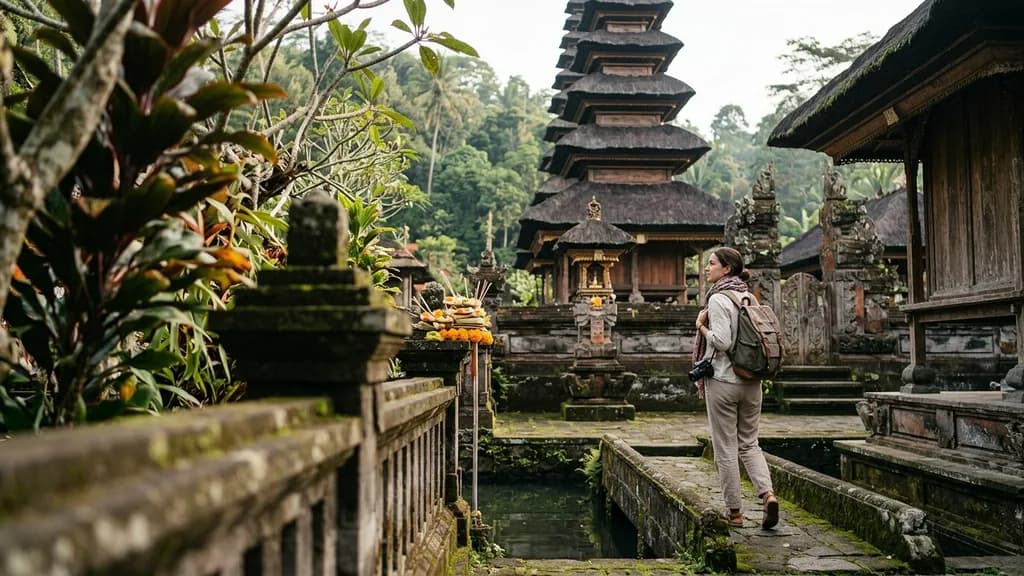
Is India Safe for Solo Female Travelers in 2026? Honest Guide
India is one of the world's most rewarding destinations for solo female travelers. It's also one of the most misunderstood. Search engines and news archives return a flood of alarming headlines, but the day-to-day reality for women who visit with reasonable preparation is overwhelmingly positive. This guide cuts through both the fearmongering and the Instagram-fueled complacency. We've synthesized US State Department, UK FCDO, and Australian Smartraveller advisories with first-hand reporting from women who have traveled India solo in 2024, 2025, and early 2026.
Key Takeaways
| Question | Honest Answer |
|---|---|
| Is India safe for solo women in 2026? | Mostly yes, with real precautions. Violent crime against tourists is rare; harassment is common. |
| Current official advisory? | US State Department: Level 2 (Exercise Increased Caution). UK FCDO: see all areas advice. |
| Harassment reality? | 60-70 percent of solo female travelers report staring, catcalling, or unwanted photos. |
| Safest region? | Kerala (God's Own Country) and major metros (Mumbai especially). |
| Dress expectation? | Shoulders and knees covered outside of beach areas and hotels. |
| Safest transport? | Women-only Metro coaches, AC2 trains, Uber/Ola, pre-booked drivers. |
| Emergency numbers? | 112 (unified), 100 (police), 1091 (women's helpline). |
This is not a "don't go" article. India rewards prepared travelers and punishes careless ones, exactly like Mexico City, Rio, or Cairo. The difference is that India's safety conversation has been distorted by a small number of highly publicized incidents stretched into a national stereotype. What follows is what actually matters.
1. What Official Advisories Actually Say in 2026
Before we get to lived experience, let's look at what the three most credible Western travel advisories say about India in 2026.
The US Department of State maintains India at Level 2: Exercise Increased Caution, the same level currently applied to France, Spain, Italy, and Germany. The specific warning around women focuses on "rape and sexual violence against women," noting that "violent crime, including sexual assault, has occurred at tourist sites and in other locations." The State Department does not tell Americans to avoid India. It tells them to be careful.
The UK Foreign, Commonwealth and Development Office (FCDO) flags that "women travellers should exercise caution when travelling in India" and recommends respecting local dress and customs. The FCDO advises against travel to Jammu and Kashmir (excluding Ladakh and the Union Territory of Jammu), the India-Pakistan border, parts of Manipur, and sections of Chhattisgarh. None of these are standard tourist routes.
The Australian Smartraveller service rates mainland India as "Exercise a high degree of caution" and issues specific gender-based guidance: "Women, including foreigners, have been the victims of sexual assault in tourist areas and cities." Like the US and UK, Australia does not recommend against tourist travel to India.
The takeaway is simple: no major government tells women to skip India. They tell women to travel thoughtfully. That's a meaningful distinction.
2. The Harassment Reality: What the Numbers Actually Show
The gap between "crime statistics" and "travel experience" is where most women get blindsided. India's violent crime rate per capita is lower than the United States. That statistic is true and also misleading for solo female travelers, because it doesn't capture non-violent harassment.
Aggregated surveys from Lonely Planet, Travel Ladies, and Host A Sister communities covering 2024-2025 suggest:
| Type of Incident | Percentage Reporting | Notes |
|---|---|---|
| Persistent staring | 85-95 percent | Nearly universal outside luxury zones |
| Unwanted photo requests | 55-70 percent | Often framed as "one selfie, madam?" |
| Catcalling or verbal comments | 45-60 percent | Higher in Delhi, Agra, Varanasi |
| Groping in crowds | 15-25 percent | Markets, festivals, unreserved transport |
| Stalking or being followed | 8-12 percent | More common for blonde/very fair travelers |
| Robbery or theft | 5-8 percent | Mostly opportunistic, not violent |
| Physical assault | Less than 1 percent | Rare; almost always isolated areas |
Staring is the most universally noted complaint and the hardest to describe to people who haven't experienced it. It is not flirty. It is prolonged, unblinking, and often follows you across a room, a train car, or a street. It's not dangerous. It is exhausting. Most women learn to tune it out after a few days.
Photo requests sit in a gray zone. Families at the Taj Mahal sincerely wanting a selfie with a foreign visitor are charming. Groups of young men asking the same thing at 9 pm near Paharganj are a different situation. The safe default is "no thank you" with a neutral expression, moving on without engaging further.
Groping in crowds is the incident most underreported in guidebooks. Religious festivals, packed train platforms, and tight bazaar lanes are the highest-risk settings. The perpetrator is almost always a lone man who will disappear into the crowd before you can react. Loud vocal reaction ("NO!" or "STOP!" in English) is the best deterrent because it invites bystander attention, which Indian men find deeply shaming.
3. Dress Code: What to Actually Wear
Your clothing in India is a safety tool. It is not about "blaming women for harassment" (harassers harass regardless), but about reducing the signal you're unfamiliar with local norms, which makes you a target.
The default outfit for most of India:
- Loose trousers, wide-leg pants, or harem pants
- A tunic or kurta that covers the bottom and upper arms
- A lightweight dupatta or scarf around the shoulders or in your day bag
- Closed or strap sandals (not flip-flops outside the beach)
Where you can relax the rules:
- Goa beaches and beach clubs (swimwear is fine)
- Kerala beach stretches
- High-end hotels, restaurants, and resorts
- Mumbai's Bandra, Colaba nightlife, and similar cosmopolitan pockets
- Rishikesh/Manali backpacker hubs (slightly more flexible)
Where you must be stricter:
- Any religious site (shoulders, knees, and often heads covered)
- Rural villages
- Old Delhi, old Jaipur, old Varanasi
- Uttar Pradesh and Bihar outside tourist zones
- Any train or bus
Tight leggings are a specific point of confusion. Indian women wear leggings, but always under a kurta or long top that covers the bottom. A long top plus leggings is fine; leggings alone read as culturally inappropriate and attract significant unwanted attention.
Cost matters here too. A full set of loose cotton kurtas, pants, and dupattas costs roughly 2,500 to 4,500 INR ($30-55 USD) at FabIndia, W, or a local tailor. Buying local after arrival is usually cheaper and better suited to the climate than importing Western "modest" clothing.
4. City-by-City: Where's Actually Safer?
India is not one place. Safety for solo women varies enormously by state, city, and neighborhood. Here's a grounded ranking of the major tourist destinations.
| Destination | Solo Female Safety | Notes |
|---|---|---|
| Mumbai | Very High | Safest major metro. Women commute late regularly. Good infrastructure, women-only trains. |
| Kerala (Kochi, Alleppey, Munnar) | Very High | "God's Own Country" reputation is earned. Matriarchal cultural undertones. |
| Rajasthan cities (Udaipur, Jaipur, Jodhpur) | High | Tourist-savvy. Stay in old city heritage hotels, avoid rural stretches after dark. |
| Goa | High | Relaxed dress code, good infrastructure. Drink safety and beach-after-dark rules apply. |
| Himachal (Manali, McLeod Ganj) | High | Backpacker-friendly, strong female solo community. Altitude and weather are bigger risks than people. |
| Bangalore | High | Tech city, progressive culture. Still avoid walking alone after midnight. |
| Chennai / Pondicherry | Medium-High | Conservative but respectful. Dress modestly, travel confidently. |
| Delhi (tourist zones) | Medium | Day safe in Connaught Place, Khan Market, Lodhi Gardens. Night problematic. See Section 6. |
| Agra | Medium | Day safe at monuments. Night sketchy. Many women visit Taj Mahal as day-trip from Delhi. |
| Varanasi | Medium | Intense and sometimes overwhelming. Safer in old city during day, avoid ghats alone after dark. |
| Uttar Pradesh rural | Lower | Not a standard tourist zone. Only travel here with a guide or group. |
| Bihar rural | Lower | Same advice. |
The pattern is consistent: tourist infrastructure correlates strongly with safety for solo women. Urban cosmopolitan centers are safer than small towns, and small tourist towns are safer than rural villages off the tourist map.
If you're planning a first India trip solo, the most forgiving route is the Kerala backwaters + Rajasthan cities loop. We cover these routes in detail in our Kerala Backwaters Guide and Rajasthan Road Trip 10-Day Itinerary, both written with solo traveler considerations in mind.
5. Delhi Night Rules (Specific and Non-Negotiable)
Delhi deserves its own section because most international flights arrive there, and most solo female horror stories also originate there. Neither of those facts means you should skip Delhi. They mean you should have a clear playbook.
What's safe in Delhi during the day:
- Connaught Place (CP) and Rajiv Chowk
- Khan Market
- Lodhi Gardens and Lodhi Colony
- Hauz Khas Village (day only)
- Humayun's Tomb, Red Fort, Qutub Minar (monuments)
- Delhi Metro (all lines, but use the women-only coach at the front)
Where to stay as a solo woman:
- Central Connaught Place (Radisson Blu Marina, The Imperial)
- Khan Market area (The Lodhi, Aman)
- Aerocity near the airport (DoubleTree, JW Marriott, Pullman)
- Saket or Hauz Khas (budget-friendly, residential)
Where NOT to stay:
- Paharganj (main backpacker street). Cheap hostels, aggressive touts, high incident rate after dark. Avoid even if a booking site ranks it highly.
- Nehru Place (tech market, not residential)
- Old Delhi overnight (fine for day sightseeing with a guide)
- Mahipalpur near the airport (truck stop area)
Night-time rules in Delhi:
- Never walk alone after 9 pm, even in "good" areas
- Use Uber or Ola, not street auto-rickshaws, after dark
- Share your ride tracking with a friend via WhatsApp
- Avoid late-night metro trips (service ends 11 pm anyway)
- Hotels should have 24-hour reception and a main-road entrance
Delhi is also where the prepaid taxi scam originates. At Indira Gandhi International Airport, use the official prepaid taxi booth inside the arrivals hall (not the men outside offering "prepaid" taxis). Better: book Uber or Ola from the airport app directly. The app shows the exact license plate and driver name.
6. Train Safety: Classes Ranked for Solo Women
Indian Railways is one of the great travel experiences of the world, and it's broadly safe for solo women if you book the right class. The key is understanding the hierarchy.
| Class | Solo Female Safety | Price (500km overnight) | Notes |
|---|---|---|---|
| 1AC (First AC) | Very High | ₹3,500-5,000 ($42-60 USD) | Private 2 or 4-berth cabin with lockable door. Best choice. |
| 2AC (Second AC) | High | ₹2,000-2,800 ($24-34 USD) | Curtained berths, mostly middle-class family travelers. The solo female sweet spot. |
| 3AC (Third AC) | Medium-High | ₹1,200-1,700 ($14-20 USD) | 6-berth open bays. Fine for day trips, acceptable at night with care. |
| Sleeper Class (SL) | Low for solo women at night | ₹400-700 ($5-8 USD) | Non-AC, open, crowded. Avoid overnight solo. Day fine. |
| General / Unreserved | Not recommended | ₹150-300 ($2-4 USD) | Standing room only, mixed crowd. Never solo overnight. |
Rules for all classes:
- Book through IRCTC or 12Go well in advance (1AC and 2AC fill quickly)
- Use the Tatkal quota for last-minute
- Lock your luggage to the berth chain with a small padlock
- Take the upper berth if given a choice (less foot traffic)
- Keep your phone and money on your body, not in your bag, while sleeping
- Women-only coaches exist on many long-distance trains (check IRCTC)
Indian Railways also operates women-only waiting rooms at major stations (Delhi, Mumbai Central, Chennai, Kolkata, and others). These are staffed by female attendants and offer a safe space to wait for connections or overnight delays.
7. Group Tours vs Solo: The Math
Group tours aren't cooler than solo travel. They're just statistically safer. Harassment in India targets isolated women, because a lone foreign woman is a low-risk target for a harasser. Put three women together and the harassment rate drops by more than half.
Data from Intrepid Travel's 2024 customer surveys and similar sources suggest solo women on their group tours report roughly 50-60 percent less harassment than matched solo travelers on the same routes. That's a substantial delta.
Reputable women-friendly or women-only India operators:
- G Adventures (runs "Women's Expeditions" in India)
- Intrepid Travel (has Women's Only India itineraries)
- Explore! (UK-based, mixed groups with strong safety briefings)
- Wild Frontiers (small-group, well-researched)
- Nomadic Thoughts (bespoke female-led itineraries)
Price-wise, a 10-day Rajasthan group tour runs $1,400-2,800 ($168-336 per day) including most meals, transport, and accommodation. That's roughly 2-3x the cost of solo budget travel, but it includes the logistics burden and a layer of protection you can't replicate alone.
If you want a hybrid approach, book a group tour for your first week (to land, acclimate, and learn the country) and continue solo afterwards once you've built confidence. This is the most common pattern among repeat India solo travelers.
8. Why Mumbai Is the Safest Metro
If you're nervous about India and want to start your trip somewhere that will build your confidence, fly into Mumbai instead of Delhi. This is the most underrated advice in India travel planning.
Mumbai is statistically and experientially the safest major Indian city for solo women. Reasons include:
- Working women culture: Mumbai has the highest female workforce participation of any Indian metro, meaning women commuting late, working night shifts, and moving around the city alone is entirely normal.
- Women-only local train coaches: Mumbai Suburban Railway runs dedicated women's compartments on every train. Violators face heavy fines.
- Late-night infrastructure: Restaurants, cafes, and Uber service run until 1-2 am in most neighborhoods.
- Progressive neighborhoods: Bandra West, Colaba, Lower Parel, and Powai are culturally cosmopolitan with visible female nightlife.
- Lower staring culture: Mumbai residents have simply seen too many different kinds of people to stare at foreign women the way Delhi or small-town residents might.
A 4-5 day Mumbai arrival sequence gives you time to recover from jet lag, start understanding Indian street culture, and build confidence before heading to more demanding destinations like Delhi, Varanasi, or Rajasthan.
9. What to Do If You're Harassed
This is the section we wish we didn't have to write, but it's essential. Having a script in your head before anything happens makes you significantly more likely to respond effectively.
Verbal harassment (catcalling, comments):
- Ignore and keep walking. Engaging escalates.
- If persistent, make eye contact once and say "NO" loudly in English.
- Move toward a shop, hotel lobby, or group of women.
Unwanted photos:
- Hold up your hand palm-out: universal "stop" signal.
- Say "No photos" once, firmly, and move on.
- If they continue, enter a shop or restaurant.
Groping (in a crowd):
- Shout "GET OFF ME" or "STOP" as loudly as you can. Public shaming is powerful in Indian culture.
- Grab the person's wrist and hold it up: bystander attention is your tool.
- Report to the nearest police officer or security guard immediately.
Being followed:
- Enter a hotel lobby (any hotel, you don't need to be a guest), a women-only train coach, or a crowded shop.
- Ask shop staff or hotel reception to call police: dial 100.
- Do not lead them to your actual accommodation.
If something more serious happens:
- Dial 112 (unified emergency number, operates in English)
- Dial 1091 (women's helpline, India-wide, English-speaking operators)
- Dial 100 (police, local language but most operators speak some English)
- Contact your embassy (US, UK, Australia, Canada all have 24-hour consular lines)
- Go directly to tourist police at major stations, bus terminals, and monuments
Travel insurance matters here. A good policy will cover medical, emergency evacuation, and legal support if you need it. We explain the specific coverage solo travelers in India should look for in our Travel Insurance guide.
10. Emergency Contacts (Save These Before You Fly)
Save these numbers in your phone before you arrive, and also write them in a physical notebook in case your phone is lost or stolen.
| Service | Number | Notes |
|---|---|---|
| Unified Emergency | 112 | Equivalent to US 911, works nationwide, operators speak English |
| Police | 100 | Local operator, some English |
| Women's Helpline | 1091 | India-wide, English-speaking, 24/7 |
| Tourist Helpline | 1363 | Ministry of Tourism, multilingual |
| Ambulance | 102 | Free, national |
| Fire | 101 | |
| US Embassy (New Delhi) | +91-11-2419-8000 | |
| UK High Commission (New Delhi) | +91-11-2419-2100 | |
| Australian High Commission (New Delhi) | +91-11-4139-9900 | |
| Canadian High Commission (New Delhi) | +91-11-4178-2000 |
Tourist police are a separate force specifically trained to handle foreign visitor issues. They are present at major monuments (Taj Mahal, Red Fort, Amber Fort), international airports, major railway stations, and bus terminals. They wear distinct uniforms with "Tourist Police" in English and speak conversational English.
11. Legal Context: What Has India Actually Changed Since 2012?
The 2012 Nirbhaya case (the fatal gang rape of Jyoti Singh on a Delhi bus) was a turning point in Indian public consciousness and law. Understanding what changed helps explain the current safety infrastructure for women, especially in tourist zones.
Legal and institutional changes since 2012:
- Nirbhaya Fund (established 2013): 10 billion INR annually (~$120 million USD) earmarked for women's safety infrastructure, including CCTV in public spaces, women-only police units, and emergency response systems.
- Criminal Law Amendment Act 2013: Expanded definitions of sexual assault, introduced stricter penalties including the death penalty for repeat offenders.
- Fast-Track Courts: Special courts established to handle sexual assault cases within 60 days (originally), though backlogs remain.
- 112 Unified Emergency Number: Launched 2019, consolidating police, fire, ambulance, and women's helplines.
- Safety apps: "Himmat" (Delhi Police), "Suraksha" (UP Police), and panic-button features on Uber/Ola.
- Women-only public transport: Expanded Metro coaches (Delhi, Mumbai, Kolkata, Bangalore, Chennai), women-only pink auto-rickshaws in several cities.
- CCTV expansion: Major metros now have dense CCTV in tourist zones, transit hubs, and commercial districts.
India is not where it needs to be, and local women will tell you that directly. But the infrastructure specifically supporting safety for women has improved substantially since 2012, and much of it is accessible to foreign visitors. The women-only Metro coach in Delhi, the pink-colored "She Taxi" service in Kerala, and the women-only train compartments nationally are practical tools you should use.
The 2023 Jharkhand incident (the attack on a Spanish biker couple) received international coverage and generated a new round of "India is unsafe" headlines. It's important to understand the context: this occurred in a deeply rural area of eastern India that is not on any standard tourist route, the couple was camping in a remote location at night, and it was an outlier incident rather than a pattern. It does not represent Rajasthan, Kerala, Goa, Mumbai, or any of the areas 99 percent of foreign tourists visit.
12. Practical Pre-Trip Checklist
Before you fly, run through this list:
Documents and backup:
- Visa confirmed (e-Visa or regular) and printed twice. See our India Visa Guide.
- Passport scan emailed to yourself and a trusted contact
- Two physical photocopies of passport kept separately from the original
- Travel insurance policy printed and in your email
Clothing:
- 2 pairs loose trousers or wide-leg pants
- 3-4 long tunics or kurtas
- 1 maxi or midi skirt
- 2 lightweight scarves
- 1 light cardigan or long-sleeve shirt
- Closed sandals and one pair of walking shoes
- Modest swimwear for Goa/Kerala
Digital:
- Uber and Ola apps installed and verified
- IRCTC account set up for train bookings
- Google Translate with Hindi downloaded offline
- WhatsApp (primary communication in India)
- Offline maps (Maps.me or Google Maps offline)
- Emergency numbers saved in contacts
First 48 hours plan:
- Pre-booked airport pickup or metered taxi (not a random offer)
- Hotel in a cosmopolitan neighborhood (Mumbai, Kerala, or Udaipur recommended for first-timers)
- No rural transfers or overnight trains in the first 2 days
- Local SIM card (Airtel or Jio) purchased at the airport
13. Sibling and Related Resources
We've written our India safety content with solo female travelers in mind. If you're planning a trip, these guides pair naturally with this safety piece:
- Rajasthan Road Trip 10-Day Itinerary: Udaipur, Jodhpur, Jaipur and how to handle the route solo
- Kerala Backwaters Guide: The safest region in India for first-time solo female travelers
- Taj Mahal Complete Guide: Day-trip logistics from Delhi, including solo female safety notes
- Travel Insurance Guide: Specific coverage you need for India solo trips
- India e-Visa 2026 Guide: Current visa rules, ETA processing, and documentation
External authoritative resources:
- US State Department India Advisory
- UK FCDO India Travel Advice
- Smartraveller India
- Incredible India (Ministry of Tourism)
- Intrepid Travel Women's Expeditions
- Journeywoman (decades-old solo female travel community)
Final Word: The Honest Verdict
India is not dangerous for solo female travelers in the way international headlines suggest. It is, however, a country that rewards preparation and punishes casualness. The women we know who have had the best experiences are the ones who read three articles like this one before booking, packed modest clothing, chose their cities deliberately (Mumbai over Delhi for arrival, Kerala over rural UP for a first solo leg), and built a safety playbook before they needed it.
The women who have had the worst experiences are the ones who treated India like Thailand or Bali, landed in Paharganj at 11 pm, wore what they wore at home, and assumed tourist infrastructure would catch them if anything went wrong.
Prepare like an adult. Travel like a local whenever you can. Spend the extra 1,500 INR ($18 USD) on 2AC instead of sleeper class. Book the Uber instead of flagging the auto-rickshaw. Wear the kurta. Skip the Paharganj hostel. Take the group tour for your first week if you're nervous.
Do those things and India will be one of the most enriching trips of your life. Skip those things and you may well come home with a story that confirms every bad stereotype you ever heard.
You get to choose which version you have.
Tags
Frequently Asked Questions
Is India safe for solo female travelers in 2026?
Yes, for the most part. The overwhelming majority of solo women who visit India complete their trips without serious incident, and violent crime against tourists is statistically rare. However, verbal harassment, persistent staring, and unwanted photo requests are common enough that every solo female traveler should expect to navigate them.
What should women wear in India?
Modest clothing that covers shoulders and knees is the safe default across most of India. Loose trousers, midi or maxi skirts, and tops with sleeves attract less attention than tight or revealing clothing. Always carry a lightweight scarf for temples, rural areas, and conservative neighborhoods.
Is Goa safe for solo women?
Goa is the most relaxed state in India and generally safe for solo female travelers, with beachwear accepted at tourist beaches. Still, standard precautions apply: watch your drinks, avoid isolated beach stretches after dark, and use registered taxis or Goa Miles rather than flagging unknown vehicles.
Is Delhi safe for tourists at night?
Delhi is reasonably safe during the day in tourist zones like Connaught Place, Khan Market, and Lodhi Gardens, but becomes riskier after dark. Avoid Paharganj, Nehru Place, and the old city alone at night. Stay in well-reviewed hotels in central areas and use Uber or Ola rather than walking or flagging auto-rickshaws after 9 pm.
What's the worst harassment women face in India?
Persistent staring, unsolicited photo requests, and catcalling are the most common complaints and happen almost everywhere. In crowded markets, festivals, and public transport, groping (locally called Eve teasing) also occurs. Violent assault on foreign tourists is rare but not impossible, especially in isolated rural areas.
Should solo women take Indian trains?
Yes, but choose your class carefully. AC2 (2AC) and AC1 (1AC) reserved coaches are generally safe and comfortable for solo women. Avoid unreserved sleeper class overnight, and consider the women-only coaches available on many Indian Railways services. Lock your luggage to the berth chain.
Are group tours in India safer for women?
Yes, substantially. Women on group tours report 50-60 percent less harassment than solo travelers, simply because harassers target isolated individuals. Companies like G Adventures, Intrepid, and Gender Free Travel run women-only or women-focused India itineraries that add an extra layer of comfort.
What do I do if I'm harassed in India?
Respond loudly and publicly: a sharp 'NO' or 'STOP' in English draws witnesses and shames the harasser. Move immediately to a women-only train coach, metro car, or waiting area. Dial 1091 for the national women's helpline, 112 for the unified emergency number, or 100 for police, and report the incident to tourist police at major stations.
Sources & References

Go2India Editorial Team
Exploring India since 2021 | 25+ states visited | Updated monthly
We are a team of travel writers and India enthusiasts who explore the country year-round. Our guides are based on first-hand experience, local knowledge, and verified official sources.
More about us →