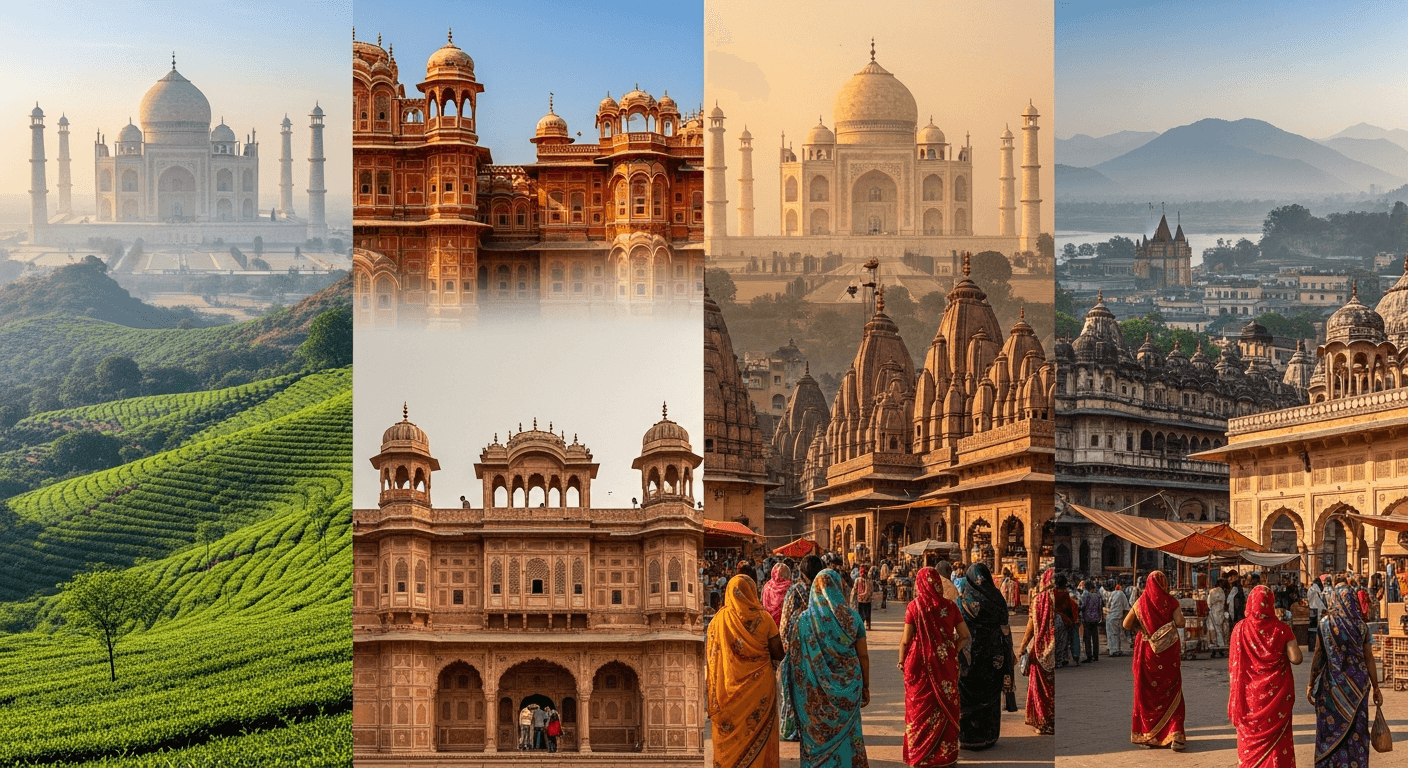
Rajasthan Road Trip: The Ultimate 10-Day Golden Triangle & Beyond Itinerary
Rajasthan Road Trip: The Ultimate 10-Day Golden Triangle & Beyond Itinerary
Picture this: you're driving through the Thar Desert at sunrise, the sky burning orange and pink above endless sand dunes, while a 16th-century fort emerges from the haze ahead. This is Rajasthan road trip territory—where every bend in the road reveals another palace, another story, another reason you fell in love with India. A 10-day Rajasthan itinerary isn't just a vacation; it's a journey through the soul of India's most romantic state, where maharajas once ruled and travelers still come seeking magic.
Key Takeaways
| Question | Answer |
|---|---|
| What is the best time to visit? | October to March. November–February offers ideal Rajasthan weather (15–25°C). Avoid May–September (40°C+ heat, monsoon). |
| How much does it cost? | Budget: ₹15,000–25,000/day ($180–300 USD); Mid-range: ₹25,000–50,000/day ($300–600 USD); Luxury: ₹50,000+/day ($600+ USD). |
| How do I get there? | Fly into Delhi, rent a car with driver (₹2,000–3,500/day), or book organized Rajasthan tours. |
| Is it safe? | Yes. Rajasthan is one of India's safest tourist regions. Standard precautions apply (avoid night driving, use registered taxis). |
| What should I book in advance? | Palace hotels (2–3 months ahead), Taj Mahal sunrise tickets, desert camps, and domestic flights. |
1. Understanding the Route: Delhi to Jaipur to Agra to Jodhpur
The classic Rajasthan Golden Triangle road trip connects three essential cities—Delhi, Jaipur, and Agra—then pushes west into the desert kingdoms of Pushkar and Jodhpur. This 10-day version gives you the iconic triangle plus the authentic desert experience that most rushed itineraries miss. The total driving distance is approximately 1,100 km, spread across 8–9 driving days, leaving you time to actually explore rather than just transit.
When we planned our first Rajasthan road trip two years ago, we made the mistake of trying to cover too much ground too fast. We've since learned that the sweet spot is 2–3 nights per location, allowing you to see major attractions without living in the car. This itinerary respects that rhythm while still delivering the full Rajasthan experience.
Route Overview & Driving Times
The journey flows like this: Delhi (1 night) → Jaipur (2 nights) → Agra (2 nights) → Pushkar (1 night) → Jodhpur (2 nights) → Return to Delhi or fly out. Most days involve 3–5 hours of driving, with one longer 6-hour stretch (Agra to Pushkar). Roads are generally well-maintained National Highways, though traffic around cities can be unpredictable.
Why This Route Works
Unlike the rushed 3-day Golden Triangle tours, this extended version lets you experience Rajasthan's true character. You'll see the Taj Mahal at sunrise (not in a crowd of 5,000), explore Jaipur's bazaars on foot, camp under stars in the Thar Desert, and visit Jodhpur's blue city without feeling hurried. The route also avoids backtracking—you move steadily westward, ending in Jodhpur where you can fly back to Delhi or continue to other destinations.
2. Days 1–2: Delhi Preparation & First Night
Most travelers arrive in Delhi via Indira Gandhi International Airport. If you're coming from outside India, you'll need a visa—check the India Visa Guide 2026 for current requirements. Spend your first day acclimatizing, sorting logistics, and picking up your rental car.
During our time in Delhi, we learned that arriving jet-lagged and immediately hitting the road is a recipe for exhaustion. Instead, use Day 1 to rest, eat well, and confirm all your bookings. Visit Old Delhi's food markets if you have energy—the Indian street food guide will prepare you for the chaos and flavors ahead.
Car Rental & Driver Selection
Compare hotels, resorts, and guesthouses across India with free cancellation on most bookings.
Search Hotels on Booking.com → Scan me
Renting a car with a driver is the standard approach for Rajasthan road trips, and it's genuinely the best option. Driving yourself is possible but challenging due to traffic patterns, road conditions, and navigation complexity. A good driver costs ₹2,000–3,500 per day (approximately $24–42 USD) and is worth every rupee.
Finding a reliable driver:
- Book through your hotel: Most mid-range and luxury hotels can arrange drivers. This adds ₹500–1,000 to daily costs but ensures accountability.
- Use apps: Savaari, Zoomcar, and local taxi services offer pre-booked drivers. Check recent reviews carefully.
- Ask other travelers: Hostels and guesthouses often have recommendations. We've had great success asking at our first hotel.
Compare hotels, resorts, and guesthouses across India with free cancellation on most bookings.
Search Hotels on Booking.com →
Scan me
Essential Delhi Stops (if you have time)
If you arrive with a full day, visit Delhi's attractions like India Gate or Jama Masjid. But honestly, Delhi is a bonus—your real journey starts when you head toward Jaipur. Get a good night's sleep instead.
3. Day 3: Delhi to Jaipur (260 km, 4–5 hours)
The drive from Delhi to Jaipur is straightforward—mostly National Highway 48, relatively smooth and well-maintained. You'll pass through Rajasthan's agricultural heartland, with occasional small towns breaking up the landscape. Stop halfway in Neemrana to stretch your legs and grab chai at a roadside dhaba.
Jaipur, the "Pink City," is India's first planned city, laid out in a grid by Maharaja Sawai Jai Singh II in 1727. The entire old city is painted terracotta pink—a sight that still amazes us every time we visit. Your first evening, wander the bazaars around Johari Bazaar and Bapu Bazaar, where you can buy traditional textiles, jewelry, and handicrafts.
Jaipur's Must-See Attractions
The City Palace and Jantar Mantar are the headline acts, but they're crowded and can be seen in 2–3 hours. The real magic of Jaipur happens in its markets and smaller havelis (traditional mansions). During our last visit, we spent an afternoon getting lost in the narrow lanes of the old city, discovering tiny temples and family-run textile shops.
Key experiences in Jaipur:
- Sunrise at Hawa Mahal: The "Palace of Winds" is iconic but mobbed by 9 AM. Arrive by 6:30 AM for photos without crowds. Entry: ₹50 (₹200 for Indians).
- City Palace interior: Still partially inhabited by the royal family. The museum section is worth 1–2 hours. Entry: ₹300–500.
- Jantar Mantar: An 18th-century astronomical observation site, UNESCO-listed. Fascinating if you enjoy history; skip if you're time-pressed. Entry: ₹200.
- Albert Hall Museum: Housed in a beautiful Victorian building. Good for understanding Rajasthani art and culture. Entry: ₹150.
Where to Stay in Jaipur
Jaipur has options across all budgets. Budget travelers love Diggi Palace (heritage property, ₹1,500–2,500/night), while mid-range visitors often choose Narain Niwas Palace Hotel (₹3,000–5,000/night). For luxury, Rambagh Palace (the former royal residence, ₹15,000–30,000+/night) is unforgettable but book 2–3 months ahead.
Book Hawa Mahal tickets online the night before to skip queues. Arrive at 6:30 AM for the best light and fewest crowds.
4. Day 4: Jaipur Deep Dive – Markets, Food & Crafts
Your second day in Jaipur should focus on experiences rather than ticking boxes. Skip the tourist circuit and dive into the city's living culture. This is where Rajasthan reveals itself beyond monuments.
Bazaar Exploration & Shopping
Johari Bazaar is the jewelry and textile heart of Jaipur. Bapu Bazaar offers everything from spices to souvenirs. Sanganeri Gate area has traditional block-printing workshops where you can watch artisans create fabric by hand—a process unchanged for centuries. When we visited a workshop near Sanganeri Gate, the owner explained how natural dyes are made from indigo, madder root, and pomegranate skin. It costs ₹200–500 to watch a demonstration, and most shops will sell you finished pieces.
Shopping tips:
- Negotiate everywhere: Prices in bazaars are starting points, not fixed. Expect to negotiate down 20–40% on handicrafts and textiles.
- Buy directly from makers: Workshops often sell cheaper than retail shops. Ask your hotel for recommendations.
- Avoid tourist traps: Shops near Hawa Mahal charge 3–4x normal prices. Walk 5 minutes away and prices drop dramatically.
Food Experiences in Jaipur
Jaipur's food scene is underrated. Beyond the famous Rogan Josh and Chole Bhature, try local specialties like Bajra Roti (millet bread) and Ker Sangri (a desert vegetable dish unique to Rajasthan). Laxmi Mishthan Bhandar is a local institution for sweets and snacks (₹50–200 per item). For dinner, Niros is a Jaipur institution since 1957, serving Rajasthani and North Indian cuisine in a heritage setting (mains ₹300–600).
Skip the hassle — book India day trips, cooking classes, and experiences in advance with instant confirmation.
Browse Activities on Klook → Scan me
5. Days 5–6: Agra & the Taj Mahal
The drive from Jaipur to Agra is 240 km and takes 4–5 hours. You'll pass through Dausa and Mathura, crossing into Uttar Pradesh. The landscape becomes flatter, more agricultural. Agra itself is chaotic—traffic, pollution, and tourist density can be overwhelming—but the Taj Mahal justifies the chaos.
Taj Mahal: Logistics & Timing
Skip the hassle — book India day trips, cooking classes, and experiences in advance with instant confirmation.
Browse Activities on Klook →
Scan me
The Taj Mahal is open sunrise to sunset (roughly 6 AM–7 PM depending on season). The sunrise visit is non-negotiable if you want decent photos and a spiritual experience. Tickets are ₹250 for Indians, ₹1,100 for foreign nationals. Book online at tajmahal.gov.in the night before to skip queues.
Pro tips from our visits:
- Arrive by 6 AM: Gates open at 6, and the first hour is relatively quiet. By 8 AM, tour groups flood in.
- Hire a guide: ₹500–800 for 2 hours. A good guide explains the marble inlay work, the symmetry, and the love story in ways that transform the visit from "pretty building" to profound.
- Bring a sunrise jacket: Even in winter, pre-dawn is cold. By 8 AM, you'll be stripping layers.
- Skip the evening visit: Sunset is crowded and the light isn't better than morning. Use your evening for exploring Agra's other sites.
Beyond the Taj: Agra's Other Treasures
Agra Fortress is 2 km away and often overlooked. It's less crowded than the Taj, equally impressive architecturally, and offers views of the Taj from across the Yamuna River. Entry: ₹550 for foreign nationals. Spend 1.5–2 hours here.
Itimad-ud-Daulah's Tomb (also called "Baby Taj") is a 17th-century mausoleum with intricate marble inlay work that rivals the Taj's craftsmanship. It's 6 km from the main city but far less crowded. Entry: ₹250. This is where we took our favorite Agra photos—the light is softer, the crowds manageable.
Where to Stay in Agra
Budget: Sheela Guesthouse (₹800–1,500/night). Mid-range: The Oberoi Amarvilas (₹8,000–12,000/night, with Taj views from your room). Luxury: Taj View Hotel or Oberoi properties (₹12,000–25,000+/night). Book palace hotels 2–3 months ahead if traveling November–February.
6. Day 7: Agra to Pushkar (240 km, 5–6 hours)
This is the longest driving day, but the reward is Pushkar—a spiritual desert town that feels worlds away from tourist circuits. The drive takes you through Rajasthan's heartland, passing Fatehpur Sikri (a 16th-century ghost city) en route. If you have time and energy, stop here for 1–2 hours. Entry: ₹600 for foreign nationals.
Pushkar is famous for its annual camel fair (November–December), but it's worth visiting year-round. The town sits around a sacred lake with 52 ghats (steps), and pilgrims come to bathe in waters believed to have healing properties. The energy is spiritual, bohemian, and utterly different from Jaipur or Agra.
Pushkar's Unique Appeal
Unlike other Rajasthan towns, Pushkar has a strong backpacker and spiritual traveler culture. You'll find yoga studios, Ayurvedic clinics, and vegetarian restaurants alongside temples and traditional havelis. The main bazaar is a sensory overload—incense, music, textiles, and street food all competing for attention.
Must-do in Pushkar:
- Brahma Temple: One of the few temples dedicated to Brahma (the creator god) in India. Small, peaceful, and free entry.
- Sunset at the ghats: Arrive around 5:30 PM to watch pilgrims bathe and priests perform evening aarti (prayer rituals). This is meditation in motion.
- Camel rides: If not visiting during the fair, hire a camel for a sunset ride into the desert (₹500–1,000 for 1–2 hours). It's touristy but genuinely magical.
Did You Know? Pushkar's annual camel fair attracts over 200,000 visitors and 50,000 camels. It's one of the world's largest camel fairs, though the exact dates vary each year based on the lunar calendar.
Source: Rajasthan Tourism Board
Where to Stay in Pushkar
Pushkar is budget-traveler heaven. Rooms range from ₹300–1,500/night. Pushkar Palace Hotel offers mid-range comfort (₹2,000–3,500/night) with lake views. For a unique experience, stay at a desert camp outside town (₹1,500–3,000/night, including dinner and breakfast).
Pushkar is vegetarian-only (no meat, fish, or eggs sold in restaurants). Plan accordingly if you're a meat eater.
7. Day 8: Pushkar to Jodhpur (260 km, 5–6 hours)
The drive from Pushkar to Jodhpur takes you deeper into the Thar Desert. The landscape becomes increasingly arid—fewer trees, more sand, occasional small villages. Jodhpur, the "Blue City," is your final major stop. The entire old city is painted indigo blue, a tradition started centuries ago (the color supposedly keeps homes cooler and repels insects).
Jodhpur is less touristy than Jaipur or Agra, which makes it feel more authentic. The fort dominates the skyline, and the bazaars retain genuine local energy rather than catering exclusively to tourists.
Mehrangarh Fort: Rajasthan's Most Dramatic Fort
Mehrangarh Fort sits 125 meters above the city on a rocky outcrop. It's massive, imposing, and genuinely awe-inspiring. Built in 1459, it's one of India's largest forts. Entry: ₹600 for foreign nationals. Hire a guide (₹400–600) to understand the history and architecture—the fort's design is a masterclass in medieval military strategy.
Highlights:
- Moti Mahal: The pearl palace, with intricate marble screens and royal chambers.
- Sheesh Mahal: Mirror palace with stunning inlay work.
- Fort museum: Weapons, textiles, and royal artifacts spanning centuries.
- Sunset views: The fort's western walls offer panoramic views of the blue city at sunset. Arrive by 4:30 PM.
Jodhpur's Blue City Bazaar
The old city's bazaar is a maze of narrow lanes, with shops selling everything from textiles to spices to traditional Rajasthani jewelry. Unlike Jaipur's bazaars, these feel less geared toward tourists. Prices are reasonable, and shopkeepers are genuinely friendly rather than aggressively sales-focused. We spent 3 hours wandering these lanes and never felt pressured to buy.
Shopping in Jodhpur:
- Textiles: Indigo-dyed fabrics, traditional block prints, and bandhani (tie-dye) work.
- Handicrafts: Wooden carvings, metalwork, and pottery.
- Spices: Jodhpur's spice markets are excellent. Buy whole spices rather than pre-ground for better quality.
Where to Stay in Jodhpur
Budget: Cosy Kabab (₹600–1,200/night). Mid-range: Ratan Vilas (₹2,500–4,000/night, heritage property). Luxury: Umaid Bhawan Palace (₹20,000–40,000+/night, a functioning palace hotel). If you can afford it, Umaid Bhawan is a once-in-a-lifetime experience—book 3 months ahead.
Compare car rental prices across India. Pick up at airports or city locations with flexible cancellation.
Compare Car Rentals →
Scan me
8. Day 9: Desert Safari & Thar Desert Experience
This is the day you venture into the Thar Desert for a camel safari and desert camp experience. Most camps are 40–50 km outside Jodhpur, accessible by car (1–1.5 hours). This is where Rajasthan's romance peaks—sleeping under stars in the desert, riding camels at sunrise, eating dinner around a campfire.
Choosing a Desert Camp
Compare car rental prices across India. Pick up at airports or city locations with flexible cancellation.
Compare Car Rentals →
Scan me
Desert camps vary wildly in quality and price. Budget camps (₹1,500–2,500/night) offer basic tents and simple food. Mid-range camps (₹3,000–6,000/night) have comfortable tents with attached bathrooms and better meals. Luxury camps (₹8,000–15,000+/night) offer air-conditioned tents, gourmet food, and personalized service.
Comparison of popular options:
| Camp | Best For | Cost | Rating |
|---|---|---|---|
| Budget Desert Camp | Backpackers, budget travelers | ₹1,500–2,500 | ⭐⭐⭐⭐ |
| Mid-range (e.g., Khuri Desert Camp) | Couples, small groups | ₹3,500–5,000 | ⭐⭐⭐⭐⭐ |
| Luxury (e.g., Sujan Sands) | Luxury travelers, honeymooners | ₹12,000–18,000 | ⭐⭐⭐⭐⭐ |
During our desert camp experience, we chose a mid-range option and it was perfect—comfortable enough to relax, authentic enough to feel real. The sunset camel ride, dinner under stars, and sunrise return ride were highlights of our entire Rajasthan trip.
What to Expect
Most camps include:
- Camel safari (sunset and sunrise)
- Dinner and breakfast
- Accommodation in a tent
- Campfire entertainment (folk music, dancing)
- Blankets and heaters (essential in winter)
Bring sunscreen, a hat, and water. The desert sun is intense, and dehydration sneaks up fast. Wear layers—desert nights are cold (5–10°C in winter), even though days are warm.
9. Day 10: Jodhpur to Delhi (Return)
Your final day involves returning to Delhi. You have two options: drive (12+ hours, not recommended in one day) or fly (2 hours, ₹2,000–5,000). We always recommend flying. Jodhpur Airport has daily flights to Delhi on multiple airlines (IndiGo, Air India, SpiceJet). Book 1–2 weeks ahead for better prices.
If you must drive, break it into two days—stop in Ajmer or Pushkar overnight. But honestly, after 10 days of driving, flying home is worth the cost.
Alternative: Extend to Udaipur
If you have extra time, skip the return to Delhi and drive to Udaipur instead (5–6 hours from Jodhpur). Udaipur is Rajasthan's most romantic city, with palaces on lakes and a bohemian vibe. This would extend your trip to 12–13 days but is absolutely worth it if you can manage it.
10. Practical Booking Guide: How to Organize Your Trip
Step 1: Book Flights (3 months ahead)
Book your international flight to Delhi and return flight from Delhi (or Udaipur/Jodhpur if extending). Domestic flights within India are cheap—Delhi to Jodhpur costs ₹2,000–5,000 one-way if booked in advance.
Search and compare flights to Delhi, Mumbai, Bengaluru and Goa at the best prices.
Search Flights on Trip.com →Step 2: Book Accommodations (2–3 months ahead)
Book hotels in this order of priority:
- Palace hotels (Udaipur, Jodhpur, Jaipur): These fill up fast, especially November–February. Book 3 months ahead.
- Taj Mahal area hotels (Agra): Book 2 months ahead.
- Desert camps: Book 6–8 weeks ahead.
- Other hotels: Can usually be booked 4–6 weeks ahead.
Use the booking widget below to compare options across budget levels.
Step 3: Arrange Ground Transportation
Option A: Hire a car with driver
- Cost: ₹2,000–3,500/day
- Booking: Contact your first hotel, use Savaari app, or book through a travel agent
- Advantages: Flexible, personalized, comfortable
- Disadvantages: Requires upfront payment, driver quality varies
Option B: Organized tour
- Cost: ₹25,000–50,000/day (all-inclusive)
- Booking: Klook, GetYourGuide, or local tour operators
- Advantages: Guides included, hotels pre-booked, no logistics stress
- Disadvantages: Less flexible, group pace may not suit you
Option C: Train + local taxis
- Cost: ₹1,000–2,000/day
- Booking: Indian Railways (indianrailways.gov.in)
- Advantages: Cheapest, authentic experience
- Disadvantages: Slow, less comfortable, requires more planning
For most travelers, Option A (car with driver) offers the best balance of cost, comfort, and flexibility.
Book buses, trains, and transfers between Indian cities easily online. Compare routes and prices.
Book Transport on 12Go → Scan me
Step 4: Book Activities & Experiences
Book these in advance:
- Taj Mahal sunrise tickets: tajmahal.gov.in (₹1,100 for foreign nationals)
- Mehrangarh Fort guide: Book through your Jodhpur hotel
- Desert safari/camp: Book 6–8 weeks ahead
- Cooking classes, camel rides, bazaar tours: Book 2–3 weeks ahead
Step 5: Get Travel Insurance & SIM Card
Travel insurance is essential—it covers medical emergencies, trip cancellations, and lost luggage. Get an Indian SIM card or eSIM for data and calls. Local SIM cards cost ₹300–500 with 2–4 GB data. eSIMs are convenient if you're only staying 10 days.
Get an India eSIM before you land. No physical SIM needed — activate instantly on your phone.
Get Saily eSIM for India → Scan me
Step 6: Plan Your Budget
Budget breakdown for 10 days:
| Category | Budget | Mid-Range | Luxury |
|---|---|---|---|
| Accommodation | ₹1,000–2,000/night | ₹3,000–6,000/night | ₹10,000–25,000+/night |
| Food | ₹500–1,000/day | ₹1,000–2,000/day | ₹2,000–4,000/day |
| Car & driver | ₹2,000–2,500/day | ₹2,500–3,000/day | ₹3,000–3,500/day |
| Activities | ₹500–1,000/day | ₹1,000–2,000/day | ₹2,000–5,000/day |
| Flights (domestic) | ₹2,000–3,000 | ₹3,000–5,000 | ₹5,000–8,000 |
| Total (10 days) | ₹40,000–60,000 ($480–720) | ₹70,000–120,000 ($840–1,440) | ₹150,000–300,000+ ($1,800–3,600+) |
These are per-person costs. Couples can save by sharing a car and hotel room.
Frequently Asked Questions
What's the best time to visit Rajasthan?
October to March is ideal. November–February offers perfect weather (15–25°C), clear skies, and comfortable driving conditions. Avoid May–September (40°C+ heat, monsoon rains). Check India's monthly weather guide for detailed forecasts.
Do I need a visa to visit India?
Yes, most foreign nationals need a visa. Check the India Visa Guide 2026 for your specific country's requirements. E-visas are available for many nationalities and can be obtained online in 24–72 hours.
Is it safe to drive in Rajasthan?
Yes, Rajasthan is one of India's safest regions for tourists. Road conditions are generally good on National Highways. Avoid night driving (poor visibility, unpredictable traffic). Hire a professional driver if you're uncomfortable driving in India.
Can I do this trip in less than 10 days?
Yes, but you'll miss the desert experience. A 7-day version (Delhi–Jaipur–Agra–Delhi) is possible but rushed. A 10-day version with Pushkar and Jodhpur is ideal for a complete experience.
What should I pack?
- Lightweight, breathable clothing (cotton, linen)
- Sunscreen, hat, sunglasses
- Comfortable walking shoes
- Layers (desert nights are cold in winter)
- Medications (altitude sickness tablets if sensitive)
- Power adapter (India uses Type D plugs)
- Cash (many small shops don't accept cards)
Can I book this trip myself, or should I use a tour operator?
Both work. Self-booking gives you flexibility and often costs less. Tour operators handle logistics and provide guides. For first-time visitors, a tour operator is less stressful. For experienced travelers, self-booking is rewarding.
Conclusion
A 10-day Rajasthan road trip is one of India's greatest travel experiences. You'll see the Taj Mahal at sunrise, sleep under desert stars, explore ancient forts, and eat some of the best food of your life. The route—Delhi, Jaipur, Agra, Pushkar, Jodhpur—flows naturally and rewards both rushed tourists and leisurely travelers.
The key is booking early (especially palace hotels and desert camps), hiring a good driver, and resisting the urge to rush. Rajasthan reveals itself to those who slow down.
Ready to plan your trip? Start by checking our complete Rajasthan travel itinerary guide for more detailed city breakdowns, then use the booking widgets above to lock in flights, hotels, and tours. Need help with visas or travel insurance? We've got guides for those too.
Safe travels, and welcome to Rajasthan. 🐪✨