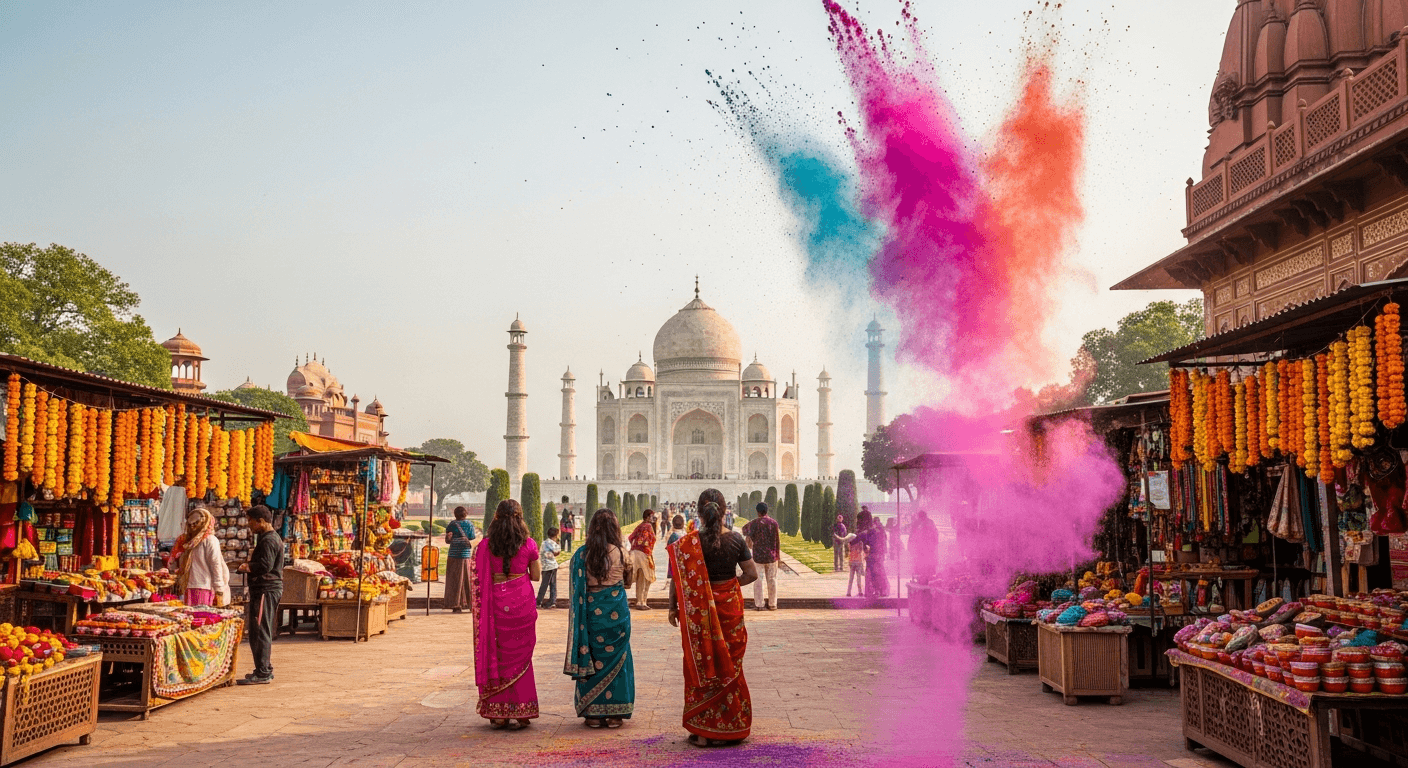
Holi Festival 2026: Where to Celebrate India's Festival of Colors
Imagine stepping into a street where strangers become friends in seconds, armed with colored powder and water balloons, laughing as vibrant hues transform everyone into a living rainbow. This is Holi, the Festival of Colors—India's most exuberant celebration of spring, new beginnings, and the triumph of good over evil. In 2026, Holi falls on March 14-15, and it's the perfect time to experience one of the world's most joyful and inclusive festivals firsthand.
Key Takeaways
| Question | Answer |
|---|---|
| When is Holi 2026? | March 14-15, 2026 (Holika Dahan on March 14; Holi on March 15) |
| Where should I celebrate? | Mathura and Vrindavan (most authentic), Delhi, Jaipur, or Varanasi |
| How much will it cost? | Budget: ₹2,000–5,000/day ($24–60 USD); Mid-range: ₹5,000–12,000/day ($60–145 USD) |
| Is it safe? | Yes, generally very safe; avoid excessive alcohol and stay aware in crowded areas |
| What should I book now? | Accommodation (3+ months ahead), trains/flights, and guided tours for festival experiences |
| What's the best time to arrive? | 2-3 days before Holi to experience pre-festival preparations and Holika Dahan |
| What should I wear? | White clothing (colors will cover it anyway); comfortable shoes for crowds |
1. Understanding Holi: History, Significance, and Traditions
Holi is far more than a colorful street party—it's a deeply spiritual celebration rooted in Hindu mythology, marking the arrival of spring and the victory of good over evil. The festival commemorates the legend of Prahlad, a devotee of Lord Krishna who was saved from the demoness Holika by divine intervention. Today, it's celebrated by Hindus, Sikhs, Buddhists, and Jains across India, and by Indian diaspora communities worldwide.
The festival unfolds over two nights and days. On the evening of Holika Dahan (March 14), communities gather around bonfires to burn dried wood and agricultural waste, symbolizing the destruction of negativity. The following morning (March 15), the main celebration begins with the throwing of colored powders (gulal), water balloons, and playful pranks. By noon, the streets are a kaleidoscope of color, laughter, and music.
The Spiritual Roots
When we visited Mathura during Holi season, we witnessed the profound reverence underlying the festivities. Devotees sing bhajans (devotional songs) celebrating Krishna's divine love, and temples overflow with worshippers. The festival isn't just about fun—it's about renewal, forgiveness, and reconnection with loved ones. Many Indians use Holi as an opportunity to reconcile with estranged family members and friends, making it a festival of unity.
Modern Celebrations and Evolution
Today's Holi celebrations blend ancient traditions with contemporary joy. While rural areas maintain more traditional practices centered on agriculture and spirituality, urban centers have evolved to include music festivals, themed parties, and community gatherings. The core remains unchanged: the celebration of color, joy, and the human spirit's resilience.
Did You Know? Holi is celebrated by over 1 billion people worldwide, making it one of the largest festivals on the global calendar.
2. The Best Places to Celebrate Holi in India
India offers diverse Holi experiences depending on your preferences—from the most authentic spiritual celebrations to vibrant urban festivals. Each region brings its own cultural flavor to the festivities.
Mathura and Vrindavan: The Heart of Holi
Mathura and Vrindavan, located in Uttar Pradesh about 150 km south of Delhi, are the spiritual epicenter of Holi celebrations. These towns are believed to be the birthplace of Lord Krishna, and the festival here is unmatched in authenticity and spiritual intensity. During our time in Vrindavan, we experienced Holi as it's been celebrated for centuries—with bhang (cannabis-infused milk), traditional sweets, and the famous "Lathmar Holi" in nearby Barsana, where women playfully beat men with sticks while men shield themselves with shields.
Why visit: Most authentic experience, Krishna temples, traditional practices, spiritual atmosphere
Accommodation: Varies from budget guesthouses (₹1,500–3,000/night) to mid-range hotels (₹4,000–8,000/night). Book 3-4 months in advance as rooms fill quickly.
Delhi: Urban Energy and Accessibility
Delhi offers a more accessible Holi experience with the city's cosmopolitan energy. Neighborhoods like Chandni Chowk, Connaught Place, and residential colonies host vibrant celebrations. The city's diversity means you'll find celebrations blending traditional and modern elements, with music, street food, and community gatherings.
Why visit: Easy accessibility, diverse celebrations, excellent food scene, modern amenities
Accommodation: Wide range available; book hotels in central Delhi 2-3 months ahead
Jaipur: Royal Holi Experience
Jaipur, Rajasthan's vibrant capital, offers a unique blend of royal heritage and festive energy. The city's pink-hued architecture creates a stunning backdrop for Holi celebrations. During our exploration of Jaipur, we found the local markets filled with traditional colors and sweets, and many heritage hotels host special Holi events.
Why visit: Heritage sites, unique cultural blend, excellent shopping for traditional colors and sweets, comfortable climate
Accommodation: Heritage hotels and mid-range options; prices range from ₹3,000–10,000/night
Compare hotels, resorts, and guesthouses across India with free cancellation on most bookings.
Search Hotels on Booking.com → Scan me
Varanasi: Spiritual Intensity
Varanasi, on the banks of the sacred Ganges River, offers an intensely spiritual Holi experience. The ghats (riverbanks) come alive with devotional singing, and the city's ancient temples host elaborate celebrations. The combination of spiritual energy and festival joy creates an unforgettable atmosphere.
Why visit: Spiritual significance, sacred river rituals, ancient temples, unique cultural experience
Accommodation: Budget to mid-range options; book early as this is peak season
3. Holi 2026 Dates and Timeline: Planning Your Visit
Official Dates for 2026:
- Holika Dahan (Bonfire Night): March 14, 2026 (evening)
- Holi (Main Festival): March 15, 2026 (morning through afternoon)
When to Arrive and Depart
Compare hotels, resorts, and guesthouses across India with free cancellation on most bookings.
Search Hotels on Booking.com →
Scan me
Arriving 2-3 days before Holi (March 11-12) allows you to experience the pre-festival energy, shop for colors and traditional sweets, and acclimate to your destination. The actual festival is most vibrant from dawn until around noon on March 15, after which celebrations wind down by afternoon.
Festival Timeline
- March 13-14: Preparation phase—markets bustle with shoppers buying colors, sweets, and festival supplies. This is the best time to explore local markets and understand regional traditions.
- Evening of March 14: Holika Dahan—the bonfire ritual. Communities gather, sing devotional songs, and celebrate the burning of negativity.
- March 15 (Early Morning): The main Holi celebration begins. Colored powder throwing typically starts around sunrise and peaks between 8 AM and noon.
- Afternoon of March 15: Celebrations continue with family gatherings, feasts, and visits to friends and relatives.
Post-Holi Activities
Many travelers extend their stay to March 16-17 to recover, explore cities more thoroughly, and participate in the calmer post-festival atmosphere when locals visit temples and family.
Book accommodation with flexible cancellation policies in case festival dates shift, and plan to arrive at least 2-3 days early to avoid last-minute chaos.
4. What to Expect: The Holi Experience Explained
Holi is a sensory explosion—and understanding what to expect helps you prepare mentally and practically. The festival is joyful, chaotic, colorful, and occasionally overwhelming, but it's an experience like no other.
The Colors and Powders
Traditional Holi colors come from natural sources: turmeric (yellow), indigo (blue), and various flowers and plants. However, modern synthetic colors dominate markets. While vibrant, some synthetic colors can irritate skin. We recommend purchasing organic, herbal colors from reputable sellers, or bringing your own natural alternatives from home.
What happens: People throw colored powder (gulal) at each other, creating clouds of color. Water balloons, water guns, and buckets of colored water add to the chaos. By the end of the morning, everyone—regardless of age, class, or background—is covered head to toe in color.
The Social Aspect
One of Holi's most beautiful aspects is its egalitarian nature. During our time in Mathura, we witnessed the breakdown of social hierarchies as servants and employers, rich and poor, young and old played together without distinction. Strangers become friends; old grudges are forgiven. This is the festival's true magic.
The Food and Drink
Holi feasts are legendary. Traditional sweets include gujhiya (a fried pastry filled with khoya and dried fruits), laddu, and barfi. Savory dishes like samosas and chikhalwali are also popular. Bhang (a cannabis-infused drink) is traditionally consumed, though it's optional and not necessary to enjoy the festival. The food culture during Holi is incredibly rich—expect invitations to homes and restaurants offering special festival menus.
Did You Know? Gujhiya, the iconic Holi sweet, dates back to the Mughal era and remains the most popular festive dessert across North India.
Source: Times of India Travel
5. Practical Preparation: What to Pack and Wear
Proper preparation ensures you enjoy Holi without discomfort or regret. Here's what our team learned from multiple Holi celebrations:
Clothing Recommendations
- Wear white: Traditional Holi attire is white, which contrasts beautifully with colors. However, wear clothes you don't mind staining permanently—the colors rarely wash out completely.
- Comfortable shoes: You'll be walking, playing, and standing in crowds. Closed-toe shoes protect your feet from colored water and rough surfaces.
- Layers: March weather in North India is warm but can be cool in early mornings. A light shawl or jacket helps during Holika Dahan.
- Avoid jewelry: Metal jewelry can be damaged by water and colored powder. Leave valuables at your accommodation.
Essential Items to Pack
- Sunscreen: The intense play and sun exposure can cause severe burns. Apply SPF 50+ liberally.
- Moisturizer and lip balm: Colors can dry skin significantly. Bring a good moisturizer and lip balm.
- Herbal/organic colors: If you're concerned about synthetic colors, bring your own from home or purchase from trusted sellers.
- Old towels: Pack 2-3 old towels for drying off and cleaning.
- Plastic bags: Protect electronics, documents, and valuables in waterproof bags.
- Change of clothes: Have at least two complete outfits ready for changing after the main celebration.
- Eye drops: Colored powder can irritate eyes; bring saline eye drops.
Health Precautions
- Skin sensitivity: If you have sensitive skin, do a patch test with colors before the festival.
- Respiratory issues: The colored powder can trigger asthma or allergies. Bring an inhaler if needed.
- Sun protection: Apply sunscreen every 2 hours and wear a hat or cap.
- Hydration: Drink plenty of water throughout the day. The excitement and sun exposure can lead to dehydration.
Get an India eSIM before you land. No physical SIM needed — activate instantly on your phone.
Get Saily eSIM for India → Scan me
6. Getting There: Transportation and Logistics
Reaching your chosen Holi destination requires advance planning, especially during peak festival season when transport is heavily booked.
Flying to India
Skip the hassle — book India day trips, cooking classes, and experiences in advance with instant confirmation.
Browse Activities on Klook → Scan me
Most international travelers fly into Delhi (Indira Gandhi International Airport) or Mumbai. From there, you can reach Holi destinations by train, bus, or domestic flight. Book international flights 2-3 months in advance for better rates and availability.
Trains: The Authentic Experience
Indian Railways is the backbone of festival travel. For Mathura and Vrindavan from Delhi, the journey takes 2-3 hours by train. During our travels, we found trains to be reliable, affordable, and a great way to meet locals. However, book tickets 2-3 months ahead, as festival season sees high demand.
Sample routes:
- Delhi to Mathura: 2-3 hours by express train
- Delhi to Jaipur: 4-5 hours by express train
- Delhi to Varanasi: 12-14 hours by overnight train (more comfortable than it sounds)
Buses and Private Transport
State-run and private buses connect major cities. While cheaper than trains, they're less comfortable for long journeys. Private car rentals with drivers offer flexibility and comfort—expect to pay ₹2,000–3,000 per day for a non-AC vehicle, ₹3,500–5,000 for AC.
Local Transport in Cities
Once you arrive, use auto-rickshaws (₹50–150 per ride in most cities), taxis, or ride-sharing apps like Uber and Ola. During Holi, traffic is heavier than usual; allow extra time for journeys.
Book buses, trains, and transfers between Indian cities easily online. Compare routes and prices.
Book Transport on 12Go → Scan me
7. Accommodation: Where to Stay During Holi
Finding accommodation during Holi requires early booking and realistic expectations about prices and availability.
Booking Strategy
- Book 3-4 months in advance: This is non-negotiable for Holi season. Rooms in popular destinations fill by December for March celebrations.
- Consider flexibility: Book hotels with flexible cancellation policies in case plans change.
- Budget for price increases: Many hotels raise rates 20-40% during Holi. Factor this into your planning.
Accommodation Options by Budget
| Accommodation Type | Best For | Price Range (per night) | Notes |
|---|---|---|---|
| Budget Guesthouses | Solo travelers, backpackers | ₹1,500–3,000 ($18–36) | Basic amenities, local atmosphere, often family-run |
| Mid-Range Hotels | Couples, small groups | ₹4,000–8,000 ($48–96) | Good balance of comfort and value, reliable service |
| Heritage Hotels | Luxury seekers, special occasions | ₹10,000–25,000+ ($120–300+) | Unique cultural experience, excellent service, premium locations |
| Airbnb/Homestays | Families, longer stays | ₹2,500–7,000 ($30–84) | Local experience, kitchen access, flexible arrangements |
| Temple Accommodations | Spiritual seekers | ₹500–2,000 ($6–24) | Dormitory-style, very basic, deeply spiritual atmosphere |
Destination-Specific Recommendations
Mathura and Vrindavan: Book through local guesthouses or platforms catering to pilgrims. Many offer special Holi packages including meals and festival activities.
Delhi: Wide range of options from budget hostels in Paharganj to luxury hotels in Connaught Place. Mid-range options in South Delhi offer good value.
Jaipur: Heritage hotels near the City Palace offer authentic experiences. Mid-range hotels in C-Scheme area provide comfort and accessibility.
Compare car rental prices across India. Pick up at airports or city locations with flexible cancellation.
Compare Car Rentals →
Scan me
8. The Holi Experience: Day-by-Day Itinerary
Here's what a typical Holi celebration looks like, based on our experiences in different Indian cities:
Day 1 (March 13): Arrival and Acclimatization
- Arrive at your destination and settle into accommodation
- Explore local markets to buy colors, sweets, and festival supplies
- Visit local temples to understand regional traditions
- Dine on local cuisine and chat with residents about Holi customs
- Rest early—the next two days will be energetic
Day 2 (March 14): Holika Dahan Eve
- Morning: Explore local attractions and markets
- Afternoon: Prepare for Holika Dahan—buy wood, dried cow dung cakes, and offerings
- Evening: Attend Holika Dahan at a local bonfire (ask your hotel for nearby locations)
- Night: Enjoy the bonfire, sing devotional songs, and celebrate with locals
- Late night: Return to accommodation and rest
Day 3 (March 15): Holi Main Festival
- Before dawn: Wake up early, apply oil to skin and hair (colors are easier to remove), and wear white clothes
- Sunrise to 10 AM: The main color-throwing happens. Go out and play with colors, water, and locals
- Mid-morning: Return to accommodation to shower and change clothes
- Afternoon: Attend family gatherings, feasts, and temple visits
- Evening: Rest, recover, and reflect on the day's experiences
Day 4 (March 16): Post-Holi Exploration
- Recover from the festivities
- Explore the city more thoroughly now that crowds have dispersed
- Visit temples and cultural sites
- Prepare for departure or extend your stay
9. Budget Breakdown: How Much Will Holi Cost?
Understanding costs helps you plan realistically. Here's a breakdown based on our research and experiences:
Daily Budget Estimates (per person)
Compare car rental prices across India. Pick up at airports or city locations with flexible cancellation.
Compare Car Rentals →
Scan me
Budget Traveler:
-
Accommodation: ₹2,000–3,500/night
-
Transport (local): ₹300–500/day
-
Activities/tours: ₹500–1,000/day
-
Total: ₹3,600–5,500/day ($43–66 USD)
Mid-Range Traveler:
-
Accommodation: ₹5,000–8,000/night
-
Transport: ₹500–1,000/day
-
Activities/tours: ₹1,000–2,000/day
-
Total: ₹8,000–13,500/day ($96–162 USD)
Luxury Traveler:
-
Accommodation: ₹12,000–25,000+/night
-
Transport: ₹1,500–3,000/day
-
Activities/tours: ₹2,000–5,000/day
-
Total: ₹18,500–38,000+/day ($222–456+ USD)
Additional Costs to Consider
- International flights: $600–1,500 depending on origin
- Visa: $100–200 (Indian tourist visa)
- Travel insurance: $50–150 for 2 weeks
- Colors and festival supplies: ₹300–800
- Special Holi experiences/tours: ₹1,500–5,000
Total trip cost for 5 days (mid-range): Approximately $1,500–2,500 including flights and accommodation
10. Safety, Etiquette, and Cultural Sensitivity
Holi is generally safe and welcoming, but understanding local customs and taking basic precautions ensures a smooth experience.
Safety Considerations
- Crowds: Holi attracts massive crowds, especially in Mathura and Vrindavan. Keep valuables secure, stay aware of your surroundings, and avoid getting separated from travel companions.
- Alcohol: While bhang (cannabis drink) is traditional, alcohol consumption can lead to poor decisions. Drink responsibly and avoid excessive consumption.
- Colored powder: Synthetic colors can cause skin irritation. Wash off colors within a few hours and moisturize thoroughly.
- Sun exposure: The intense sun during Holi can cause severe sunburn. Reapply sunscreen frequently.
- Water safety: Use bottled water for drinking and rinsing eyes. Tap water mixed with colors can cause infections.
Cultural Etiquette
- Respect religious practices: Holi has spiritual significance. Participate respectfully in temple visits and Holika Dahan ceremonies.
- Accept invitations graciously: If locals invite you to their homes or celebrations, accept warmly. This is a sign of acceptance and friendship.
- Photography: Ask permission before photographing people, especially during intimate moments or religious rituals.
- Dress modestly outside celebrations: While Holi itself is exuberant, dress conservatively when visiting temples or walking through residential areas.
- Learn basic Hindi phrases: Simple greetings like "Holi Hai!" (It's Holi!) and "Bura na mano" (Don't mind/take offense) are appreciated.
Inclusivity and Participation
Holi is famously inclusive. Regardless of your religion, nationality, or background, you're welcome to participate. However, be mindful that some conservative families may prefer not to play with colors. Always ask before throwing colors on someone.
Discover the best guided tours and activities in Delhi, Mumbai, Jaipur and beyond.
Browse Tours on GetYourGuide → Scan me
11. Booking Tours and Experiences: Making the Most of Holi
While spontaneous celebration is wonderful, booking specific experiences ensures you don't miss important aspects of the festival.
Guided Holi Tours
Many tour operators offer Holi-specific packages including:
- Temple tours: Guided visits to important temples with explanations of rituals
- Holika Dahan experiences: Organized bonfire celebrations with local families
- Cooking classes: Learn to make traditional Holi sweets like gujhiya
- Photography tours: Professional photographers guide you to the best spots and moments
- Spiritual retreats: Multi-day experiences combining Holi with yoga and meditation
Booking platforms: Check tour operators specializing in India travel. Prices range from ₹2,000–8,000 for day tours to ₹15,000–40,000 for multi-day experiences.
Homestays and Family Experiences
Staying with local families provides authentic Holi experiences. Many homestay platforms offer Holi packages where you celebrate with the family, learn to cook traditional foods, and participate in all rituals.
Benefits: Authentic experience, home-cooked meals, personal connections, cultural immersion
Cost: ₹3,000–6,000/night including meals and activities
Festival-Specific Hotels and Resorts
Many hotels in Holi destinations offer special Holi packages including:
- Welcome drinks and snacks
- Organized Holika Dahan celebrations
- Special Holi feasts
- Holi color kits
- Guided tours to local attractions
Booking: Reserve 3-4 months in advance through hotel websites or travel platforms.
Frequently Asked Questions
Is it safe to travel to India during Holi?
Yes, Holi is generally very safe. However, exercise normal travel precautions: keep valuables secure, avoid walking alone late at night, and stay aware in crowded areas. The festival itself is joyful and welcoming, with minimal crime during celebrations.
What if I have sensitive skin? Can I still celebrate Holi?
Absolutely. Use organic, herbal colors or bring natural alternatives from home. Apply a thick layer of coconut oil or moisturizer before playing, wear sunscreen, and rinse off colors within 2-3 hours. Many people with sensitive skin celebrate Holi without issues by taking these precautions.
Can non-Hindus celebrate Holi?
Yes, Holi is celebrated by people of all religions and backgrounds. It's one of India's most inclusive festivals. Sikhs, Buddhists, Jains, and Christians all celebrate Holi. International visitors are warmly welcomed.
What's the best way to remove Holi colors?
Use coconut oil or baby oil to loosen the colors, then wash with mild soap and warm water. Repeat if necessary. Colors may take 2-3 washes to completely remove. Avoid harsh scrubbing, which can irritate skin.
Should I book accommodation in advance?
Absolutely. Book 3-4 months ahead for Holi season. Popular destinations like Mathura, Vrindavan, and Jaipur see occupancy rates of 90%+ during the festival. Last-minute bookings result in limited options and inflated prices.
What's the weather like during Holi 2026?
March weather in North India is warm and pleasant, with daytime temperatures ranging from 25-35°C (77-95°F). Early mornings can be cool. Bring light layers and sunscreen.
Can I celebrate Holi if I'm traveling solo?
Yes, many solo travelers celebrate Holi. Consider staying in hostels or guesthouses where you'll meet other travelers. Book group tours to meet locals and other visitors. Holi's inclusive nature means you'll quickly find community.
Conclusion
Holi 2026 is your invitation to experience one of the world's most joyful and meaningful celebrations. Whether you choose the spiritual intensity of Mathura and Vrindavan, the urban energy of Delhi, the heritage charm of Jaipur, or the sacred atmosphere of Varanasi, you'll witness the best of Indian culture: joy, inclusivity, forgiveness, and renewal.
The key to a successful Holi experience is early planning—book flights and accommodation 3-4 months in advance, prepare your skin and clothing, and approach the festival with an open heart. Pack sunscreen, moisturizer, and old clothes, and arrive 2-3 days early to experience the pre-festival energy.
This festival isn't just about throwing colors; it's about connecting with humanity in its purest form. During our time celebrating Holi across India, we've witnessed strangers become friends, hierarchies dissolve, and the entire country pause to celebrate joy together.
Ready to experience Holi 2026? Start planning now. Check out our Best Time to Visit India guide for more seasonal travel insights, explore our Rajasthan Travel Itinerary to combine Holi with heritage sites, and review our India Visa Guide 2026 to ensure your documentation is ready.
The colors are waiting. The joy is calling. Will you answer?
The Go2India Team has celebrated Holi across India's heartland. We're here to help you plan an unforgettable festival experience. Have questions? Reach out—we love helping travelers discover India's magic.