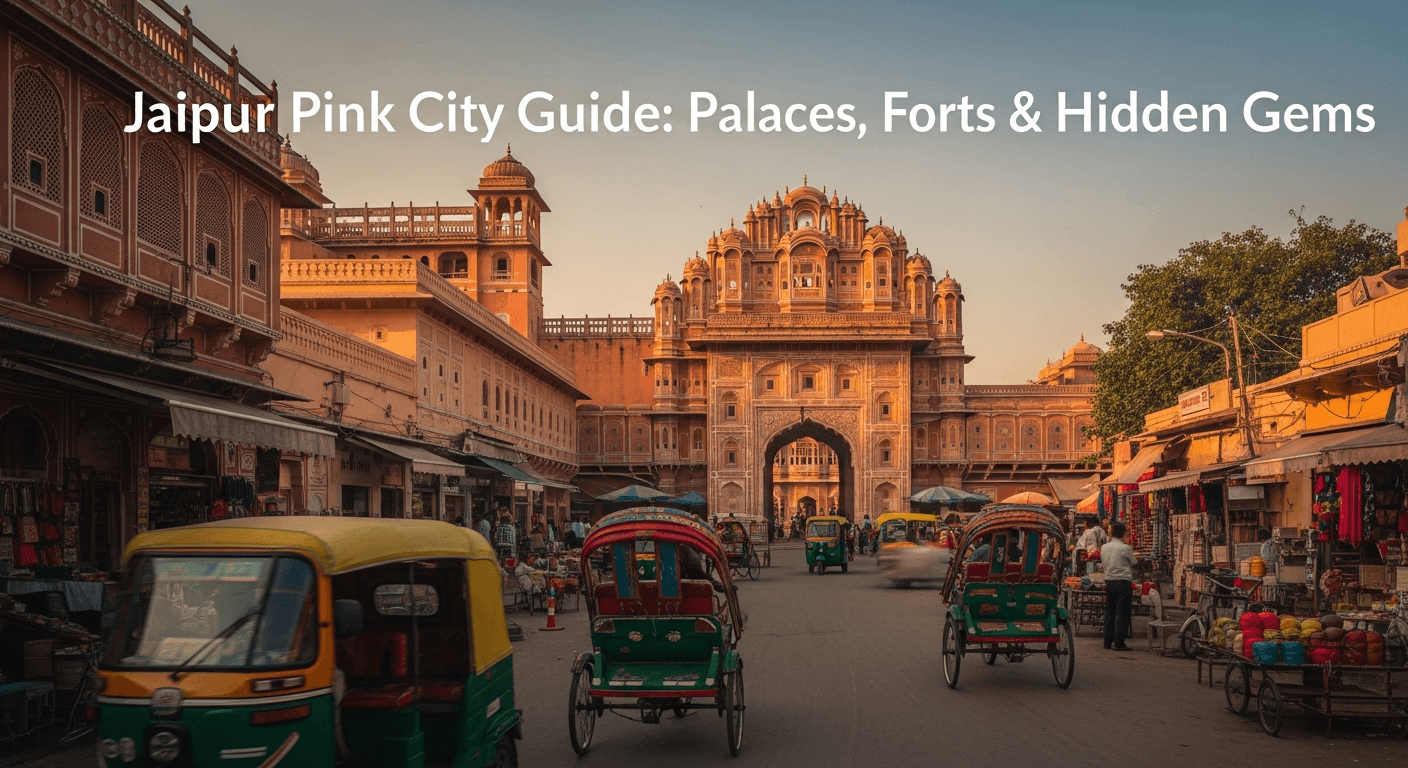
Jaipur Pink City Guide: Palaces, Forts & Hidden Gems
Jaipur Pink City Guide: Palaces, Forts & Hidden Gems
Walk through the gates of Jaipur, and you'll immediately understand why locals call it the Pink City. The salmon-hued buildings, geometric street layout, and centuries of royal heritage create an atmosphere unlike anywhere else in India. Founded in 1727 by Maharaja Sawai Jai Singh II, this Rajasthan capital seamlessly blends Mughal grandeur with Hindu tradition—and it's become one of India's most magnetic destinations for travelers seeking palaces, forts, and authentic experiences.
Key Takeaways
| Question | Answer |
|---|---|
| What is the best time to visit? | October to March; Jaipur weather is cool and pleasant. Avoid May-September monsoon season. |
| How much does it cost? | Budget: ₹1,500–2,500/day ($18–30 USD); Mid-range: ₹3,500–6,000/day ($42–72 USD); Luxury: ₹8,000+/day ($96+ USD) |
| How do I get there? | Fly into Jaipur International Airport (JAI); trains from Delhi (4–5 hours); buses from across Rajasthan. |
| Is it safe? | Yes, very safe for tourists. Standard precautions apply: avoid isolated areas at night, use registered taxis. |
| What should I book in advance? | Palace hotels (especially during peak season Oct–Feb); guided fort tours; cooking classes; train tickets from Delhi. |
| How many days do I need? | 2–3 days minimum to see major sights; 5+ days to explore hidden gems and nearby villages. |
| What's the local language? | Hindi and English widely spoken in tourist areas; learning a few Hindi phrases helps in markets. |
1. Understanding Jaipur: The Pink City's History & Layout
Jaipur's unique grid-based street plan makes it one of the world's oldest planned cities. Maharaja Sawai Jai Singh II designed the layout based on ancient Hindu and Mughal architectural principles, dividing the city into nine blocks (representing the nine planets). The entire walled city was painted pink in 1876 to welcome the Prince of Wales—and the tradition has stuck for nearly 150 years.
When we visited Jaipur for the first time, the first thing that struck us was how the pink buildings catch the golden hour light. It's not just a gimmick; it's a living, breathing part of the city's identity. The old walled city (Badi Chaupad) is where you'll find the most authentic experiences—crowded bazaars, heritage havelis, and street food stalls that have operated for generations.
The Walled City vs. Modern Jaipur
The original walled city covers roughly 6 square kilometers and is enclosed by seven gates. This is where the magic happens—narrow lanes, spice markets, textile shops, and the iconic City Palace. Modern Jaipur sprawls beyond the walls, with shopping malls, restaurants, and hotels catering to contemporary travelers. During our time exploring both areas, we found that staying near the walled city gives you authentic access, while neighborhoods like C-Scheme and Bani Park offer quieter, more upscale accommodations.
Neighborhoods Worth Exploring
Old City (Badi Chaupad): The heart of pink Jaipur. Chaotic, colorful, and absolutely essential. Expect narrow lanes, motorbikes, and the aroma of cumin and cardamom.
C-Scheme & Bani Park: Tree-lined, peaceful residential areas with boutique hotels, cafes, and galleries. Perfect for travelers seeking calm.
Tonk Road: Modern commercial hub with shopping centers, restaurants, and mid-range hotels. Less atmospheric but convenient.
2. The City Palace: Where Royalty Still Resides
The City Palace stands as one of India's most remarkable architectural achievements—a seamless fusion of Rajasthani and Mughal design that remains partially a royal residence. Built by Maharaja Sawai Jai Singh II and completed in 1734, the palace complex still houses the royal family, making it a living monument rather than a museum frozen in time.
The palace's seven-story structure dominates the city center, and its pink-painted facade is instantly recognizable. When we explored the open courtyards and galleries, we were struck by how the architecture manages to feel both grand and intimate. The intricate latticed screens (jali work) allow you to observe without being observed—a clever design that gave royal women privacy while letting them watch public ceremonies.
What You'll See Inside
Mubarak Mahal (Welcome Palace): This ornate gateway structure serves as the main entrance. The craftsmanship is extraordinary—notice the detailed plasterwork and the blend of Hindu and Islamic motifs.
Chandra Mahal: The seven-story residential palace is partially open to visitors. Each floor represents a different element and deity. The views from the upper levels across Jaipur are spectacular, though photography is restricted in certain areas.
- Pro Tip: Visit early morning (around 9:30 AM) to avoid crowds and catch better light for photography. The palace opens at 9:30 AM.
- Insider Secret: The palace courtyard sometimes hosts cultural performances and festivals. Check ahead if you're visiting during Diwali or other celebrations.
- Budget Option: The palace ticket (around ₹300–500 for Indians, ₹750–1000 for foreigners) includes access to the museum and courtyards but not all private chambers.
Did You Know? The City Palace is one of the few royal palaces in India that remains partially inhabited by the royal family. The current Maharaja still uses portions of the palace for official functions.
Source: Incredible India
Compare hotels, resorts, and guesthouses across India with free cancellation on most bookings.
Search Hotels on Booking.com → Scan me
3. Hawa Mahal: The Palace of Winds
No visit to Jaipur is complete without seeing the Hawa Mahal, the five-story pink sandstone structure that has become synonymous with the city itself. Built in 1799 by Maharaja Sawai Pratap Singh, this "Palace of Winds" is one of the most photographed monuments in India—and for good reason.
The Hawa Mahal's 953 tiny windows were designed to allow royal women to observe street life and festivals without being seen. It's an ingenious solution to the practice of purdah (female seclusion), and the architecture is breathtaking. The honeycomb-like facade catches light differently throughout the day, shifting from deep pink to coral to almost salmon depending on the time.
Visiting Hawa Mahal: Practical Details
Compare hotels, resorts, and guesthouses across India with free cancellation on most bookings.
Search Hotels on Booking.com →
Scan me
Best Time to Visit: Early morning (6–7 AM) or late afternoon (4–5 PM) for the best light and fewer crowds. During our visit, we arrived at 6:45 AM and had nearly the entire monument to ourselves for 20 minutes.
What to Expect: The interior is less impressive than the exterior—it's essentially a narrow, five-story staircase with small viewing windows. The real magic is in the architecture itself and the views from the top levels across the old city. Most visitors spend 30–45 minutes here.
- Photography Spot: The best photos are taken from the street opposite the Hawa Mahal, especially in early morning light. The small square in front is perfect for capturing the full facade.
- Avoid: The afternoon sun (11 AM–3 PM) creates harsh shadows and makes the pink less vibrant.
- Entry Fee: Around ₹50–75 for Indians, ₹200–300 for foreigners. The fee is modest, but the experience is priceless.
4. Jantar Mantar: Ancient Astronomy Meets UNESCO Recognition
Just steps from the City Palace lies Jantar Mantar, an astronomical observation site built by Maharaja Sawai Jai Singh II in 1734. This UNESCO World Heritage Site contains the world's largest stone sundial and represents a remarkable achievement in medieval science and mathematics.
Jantar Mantar isn't a palace or fort—it's a collection of 19 astronomical instruments (originally 20) designed to measure time, predict eclipses, and track celestial bodies. When we walked through the site, we were amazed by how these 300-year-old instruments still function with remarkable accuracy. The largest structure, the Samrat Yantra (Supreme Instrument), is a 27-meter-high sundial that measures time to within 20 seconds.
Understanding the Instruments
The site can feel overwhelming at first—there are no flashy displays or interactive exhibits. Instead, you're walking among geometric stone structures that require some imagination to appreciate. However, hiring a knowledgeable guide (₹300–500 for a 1–2 hour tour) transforms the experience. They'll explain how each instrument works and why Jai Singh II created this astronomical laboratory.
- Best Guide Tip: Look for guides near the entrance with official badges. They can explain the Samrat Yantra, the Rama Yantra, and the Misra Yantra in ways that make sense to non-scientists.
- Photography Paradise: The geometric shapes and shadows create stunning photographs, especially in golden hour light.
- Entry Fee: Around ₹75–100 for Indians, ₹250–300 for foreigners.
Discover the best guided tours and activities in Delhi, Mumbai, Jaipur and beyond.
Browse Tours on GetYourGuide → Scan me
5. Nahargarh Fort: Views, History & Sunset Magic
Perched on the Aravalli Hills overlooking Jaipur, Nahargarh Fort offers panoramic views of the pink city below and a fascinating glimpse into Rajasthan's military past. Built in 1734 and originally named Sudarshangarh, the fort was renamed Nahargarh (Tiger Fort) after a tiger that allegedly haunted the area.
The drive up to the fort takes about 15–20 minutes from the city center, and the views improve with every switchback. When we arrived at sunset, the entire city glowed pink beneath us—it's one of those moments that makes travel photography worthwhile. The fort itself is relatively small compared to other Rajasthani forts, but its strategic location and the views make it essential.
Exploring the Fort
The fort contains several structures, including the Madhavendra Bhawan (a palace built for the royal family), gun emplacements, and observation points. The architecture is less ornate than palace structures but more functional—you can see the military strategy in every wall and tower placement. Most visitors spend 1–2 hours here, combining exploration with sunset viewing.
- Sunset Viewing: Arrive 1–1.5 hours before sunset. Bring water and wear comfortable shoes for the uneven terrain.
- Local Tip: The fort is popular with Jaipur locals in the evening. You'll see families, couples, and groups enjoying the views. It's a safe, lively atmosphere.
- Photography: The views of the city are best 30 minutes before and after sunset. The pink buildings glow against the darkening sky.
- Entry Fee: Around ₹25–50 for Indians, ₹100–150 for foreigners.
6. Albert Hall Museum & Jaipur's Cultural Treasures
While palaces and forts dominate Jaipur's tourist circuit, the Albert Hall Museum offers deeper insight into Rajasthani art, crafts, and history. Located in Ram Niwas Garden, this Indo-Saracenic structure was built in 1887 and named after Prince Albert. It's one of India's oldest museums and houses an impressive collection of artifacts.
The museum's collection spans everything from ancient sculptures and manuscripts to textiles, weapons, and decorative arts. When we spent an afternoon here, we discovered galleries dedicated to traditional Rajasthani crafts—block printing, pottery, jewelry, and miniature paintings. It's a quieter, more contemplative experience than the crowded palaces, and it gives you genuine context for understanding Jaipur's artistic heritage.
What to See
Skip the hassle — book India day trips, cooking classes, and experiences in advance with instant confirmation.
Browse Activities on Klook → Scan me
The museum is organized thematically rather than chronologically, which makes it accessible even if you're not a history buff. Highlights include the Egyptian mummy (a curiosity collected by the royal family), traditional weapons, and an impressive textile collection. The building itself is architecturally significant—the dome and arches reflect the Indo-Saracenic style that was popular during the British Raj.
- Guided Tours: The museum offers guides (₹100–200), and they're genuinely knowledgeable. They can explain the significance of pieces and answer questions about Rajasthani culture.
- Photography: Most galleries allow photography without flash. The interior courtyards are particularly photogenic.
- Entry Fee: Around ₹50–75 for Indians, ₹200–300 for foreigners.
- Time Needed: 1.5–2 hours for a thorough visit.
Skip the hassle — book India day trips, cooking classes, and experiences in advance with instant confirmation.
Browse Activities on Klook →
Scan me
7. Where to Eat: From Street Food to Fine Dining
Jaipur's food scene is a delicious blend of Rajasthani, Mughlai, and contemporary Indian cuisine. The city is famous for its spicy, flavorful dishes—and the street food is some of India's best. During our time in Jaipur, we ate our way through markets, family-run restaurants, and heritage hotels, and we never had a bad meal.
Must-Try Dishes & Where to Find Them
Laal Maas: This fiery Rajasthani curry made with mutton and red chilies is not for the faint-hearted. It's traditionally made with dried red chilies, and the heat builds with each bite. You'll find authentic versions in old city restaurants and at local eateries in the bazaars.
Gatte ki Sabzi: Gram flour dumplings cooked in a yogurt-based curry—it's comfort food at its finest and vegetarian-friendly. This is a staple in Rajasthani homes and restaurants.
Bajra Roti & Ker Sangri: Millet bread served with a tangy dried vegetable curry. It's humble, nutritious, and deeply traditional.
Pyaaz Kachori: Crispy, flaky pastries filled with spiced onions. Street vendors sell them fresh throughout the day, and they're perfect for breakfast or snacks.
Recommended Restaurants & Eating Experiences
| Restaurant | Cuisine | Vibe | Budget |
|---|---|---|---|
| Peacock Rooftop Restaurant | Rajasthani & Indian | Heritage rooftop with city views | ₹400–800 per person |
| Niros | North Indian & Mughlai | Casual, family-friendly, institution since 1950s | ₹300–600 per person |
| Handi Restaurant | Rajasthani & Mughlai | Intimate, traditional setting | ₹350–700 per person |
| Tapri Central | Modern Indian & Fusion | Trendy cafe, great for breakfast & coffee | ₹250–500 per person |
| Street Food Tours (Old City) | Street Food | Authentic, chaotic, delicious | ₹200–400 per person |
- Pro Tip: Visit Johari Bazaar and Bapu Bazaar in the early morning for the best street food experience. The energy is incredible, and you'll eat like a local.
- Vegetarian Heaven: Jaipur has excellent vegetarian options. Indian food culture is deeply vegetarian-friendly, and Jaipur is no exception.
- Spice Level Warning: Rajasthani cuisine is genuinely spicy. Always ask for "mild" if you're not accustomed to heat.
8. Where to Stay: From Budget Guesthouses to Palace Hotels
Jaipur's accommodation options range from budget backpacker hostels to ultra-luxury palace hotels. The choice depends on your budget, comfort level, and what kind of experience you're seeking. During our stays in Jaipur, we've tried everything from heritage havelis to five-star properties, and each offered unique perspectives on the city.
Accommodation by Neighborhood
Old City (Badi Chaupad): Heritage havelis converted into guesthouses and small hotels. Atmospheric, chaotic, authentic. You'll hear the call to prayer from nearby mosques and the sounds of the bazaar. Budget: ₹1,500–3,500/night.
C-Scheme & Bani Park: Quieter, tree-lined neighborhoods with boutique hotels, cafes, and galleries. Great for travelers seeking calm without sacrificing access to attractions. Budget: ₹3,000–7,000/night.
Tonk Road & Modern Jaipur: Shopping centers, restaurants, and mid-range hotels. Less atmospheric but convenient and well-connected. Budget: ₹2,500–5,000/night.
Palace Hotels: Several heritage properties offer the experience of staying in converted palaces or royal estates. These are splurges but unforgettable. Budget: ₹8,000–25,000+/night.
- Best for Budget Travelers: Look for guesthouses in the old city or C-Scheme. You'll find clean, comfortable rooms with character for ₹1,500–2,500/night.
- Best for Comfort & Value: Mid-range hotels in C-Scheme or Bani Park offer excellent value—good service, comfortable rooms, and proximity to attractions.
- Best for Luxury: Palace hotels offer the full Rajasthani experience. Book well in advance, especially during peak season (Oct–Feb).
- Booking Tip: Prices spike during October–February. If you're flexible, visiting in March–April or September offers better rates and fewer crowds.
Compare car rental prices across India. Pick up at airports or city locations with flexible cancellation.
Compare Car Rentals →
Scan me
9. Day Trips & Hidden Gems Beyond the City
While Jaipur's main attractions can be covered in 2–3 days, the surrounding region offers incredible experiences that most tourists miss. During our explorations, we discovered villages, temples, and natural sites that revealed a different side of Rajasthan.
Amber Fort (Amer Fort)
Compare car rental prices across India. Pick up at airports or city locations with flexible cancellation.
Compare Car Rentals →
Scan me
Just 11 kilometers from the city center, Amber Fort is one of Rajasthan's most spectacular forts. Built in 1592 by Raja Man Singh I, this massive sandstone and marble structure rises dramatically from the hillside. The fort is larger and more impressive than Nahargarh, with multiple palaces, courtyards, and intricate inlay work.
The approach to Amber Fort is iconic—you can either hike up (30–45 minutes) or ride an elephant (though we recommend reconsidering elephant rides due to animal welfare concerns; jeeps and walking are better alternatives). The Mirror Palace (Sheesh Mahal) inside the fort is extraordinary—the walls and ceiling are covered with tiny mirrors that reflect candlelight beautifully.
- Entry Fee: Around ₹100–150 for Indians, ₹550 for foreigners.
- Time Needed: 2–3 hours to explore thoroughly.
- Best Time: Early morning (8–9 AM) or late afternoon (4–5 PM) to avoid crowds and heat.
Jal Mahal (Water Palace)
This stunning palace sits in the middle of Man Sagar Lake, about 5 kilometers from the city center. Built in 1799, the five-story structure is partially submerged, creating a dreamlike appearance. While you can't enter the palace (it's under restoration), viewing it from the lakeside is magical, especially at sunset.
The lake is surrounded by the Aravalli Hills, and the entire setting is serene. Local families come here for evening walks, and it's a peaceful escape from the city bustle. The best views are from the north side of the lake, where you can see the palace reflected in the water.
- Entry Fee: Free to view from the lakeside.
- Photography: Sunset is the best time for photos. The palace glows pink against the darkening sky.
Govind Dev Ji Temple & Spiritual Jaipur
For a more spiritual experience, visit Govind Dev Ji Temple in the City Palace complex. This Krishna temple is one of Jaipur's most sacred sites and hosts daily rituals and prayers. The temple's architecture blends Hindu and Mughal styles, and the devotional atmosphere is palpable.
If you're interested in spirituality and yoga, several ashrams and yoga centers in Jaipur offer classes and retreats. Rajasthan travel is deeply spiritual, and Jaipur is no exception.
Book elephant-free tours at Amber Fort. Jeep rides and walking tours are better for animal welfare and often provide better photo opportunities anyway.
10. Practical Information: Getting Around, Safety & Essentials
Getting to Jaipur
By Air: Jaipur International Airport (JAI) is well-connected to major Indian cities and international destinations. Flights from Delhi take about 1 hour. Taxis and ride-sharing apps (Uber, Ola) are available at the airport.
By Train: The journey from Delhi to Jaipur takes 4–5 hours and is scenic and affordable. Several trains operate this route daily. Book tickets in advance, especially during peak season.
By Bus: Regular bus services connect Jaipur to Delhi, Udaipur, Jodhpur, and other Rajasthan cities. The journey from Delhi is about 5–6 hours.
Getting Around the City
Taxis & Auto-Rickshaws: Taxis are readily available and reasonably priced. Auto-rickshaws are cheaper but less comfortable for longer distances. Always agree on fares beforehand or use ride-sharing apps.
Ride-Sharing Apps: Uber and Ola operate in Jaipur and are reliable. Prices are transparent and generally cheaper than traditional taxis.
Bicycles & Scooters: For exploring the old city, bicycles are fun and practical. Several rental shops offer bikes for ₹200–400/day.
Safety & Practical Tips
Jaipur is generally very safe for tourists. Standard precautions apply: avoid isolated areas at night, keep valuables secure, and be aware of your surroundings in crowded markets. The city is bustling and chaotic, but not dangerous.
- Money: ATMs are abundant. Credit cards are accepted in hotels and restaurants, but cash is preferred in markets and street food stalls.
- Internet: Stay connected with a local SIM card or eSIM. Major providers (Jio, Airtel, Vodafone) offer affordable data plans.
- Health: Drink bottled water, eat at reputable restaurants, and carry basic medications. Medical facilities are good in Jaipur.
- Dress Code: Jaipur is relatively liberal, but modest clothing is respectful, especially in temples and old city areas.
Get an India eSIM before you land. No physical SIM needed — activate instantly on your phone.
Get Saily eSIM for India → Scan me
Suggested Itineraries
1-Day Itinerary: Jaipur Highlights
Morning (8:00 AM–12:00 PM):
- Start early at Hawa Mahal (arrive by 6:45 AM for best light and fewer crowds)
- Walk through the old city bazaars (Johari Bazaar, Bapu Bazaar)
- Breakfast at a local cafe or street food stall
Afternoon (12:00 PM–5:00 PM):
- Visit City Palace and Jantar Mantar (combined ticket available)
- Lunch at a traditional Rajasthani restaurant
- Explore Albert Hall Museum or shop at local markets
Evening (5:00 PM–9:00 PM):
- Head to Nahargarh Fort for sunset views
- Dinner at a rooftop restaurant with city views
3-Day Itinerary: Comprehensive Jaipur Experience
Day 1: Pink City Classics
- Morning: Hawa Mahal and old city exploration
- Afternoon: City Palace, Jantar Mantar, and lunch
- Evening: Nahargarh Fort sunset and dinner
Day 2: Forts & Culture
- Early morning: Amber Fort (11 km from city center)
- Mid-morning: Explore Amber Fort's palaces and courtyards
- Afternoon: Jal Mahal lakeside walk and lunch
- Evening: Albert Hall Museum or shopping in C-Scheme
Day 3: Hidden Gems & Experiences
- Morning: Cooking class or yoga session
- Afternoon: Day trip to Govind Dev Ji Temple or local village
- Evening: Street food tour in old city bazaars
- Night: Departure or relaxation at your hotel
Frequently Asked Questions
What is the best time to visit Jaipur?
October to March is ideal. The weather is cool and pleasant (15–25°C), perfect for exploring. Avoid May–September, when temperatures exceed 40°C and the monsoon brings humidity. January and February are peak season—book accommodations well in advance.
How many days do I need in Jaipur?
Two to three days covers the main attractions (Hawa Mahal, City Palace, Jantar Mantar, Nahargarh Fort, Amber Fort). For a deeper experience including cooking classes, village visits, and hidden gems, plan 4–5 days.
Is Jaipur safe for solo female travelers?
Yes, Jaipur is relatively safe. Use common sense: avoid isolated areas at night, dress modestly, and be aware in crowded markets. Many solo female travelers visit Jaipur without issues. Consider joining group tours for activities if you prefer company.
What's the best way to see Amber Fort without riding an elephant?
Walk up (30–45 minutes, steep but doable) or take a jeep ride. Both options are available at the fort entrance. Walking is rewarding and gives you time to appreciate the landscape.
Can I visit Jaipur as a day trip from Delhi?
Technically yes, but it's rushed. The flight or train journey takes 1–5 hours each way, leaving limited time for sightseeing. We recommend at least 2 days in Jaipur to enjoy it properly.
What should I pack for Jaipur?
Comfortable walking shoes, lightweight clothing, sunscreen, hat, sunglasses, and a light jacket for evenings (especially Oct–Feb). Modest clothing is respectful in temples and old city areas.
Conclusion
Jaipur is more than just a city of palaces and forts—it's a living, breathing testament to India's architectural genius, royal heritage, and vibrant culture. From the iconic pink facades of Hawa Mahal to the astronomical precision of Jantar Mantar, from the grandeur of Amber Fort to the intimate lanes of the old city bazaars, Jaipur offers experiences that stay with you long after you leave.
Whether you're a history enthusiast, architecture lover, foodie, or adventure seeker, Jaipur has something to captivate you. The city balances tradition and modernity beautifully—you can explore 300-year-old palaces in the morning and enjoy contemporary cafes in the evening.
For more inspiration on exploring Rajasthan, check out our Rajasthan Travel Itinerary guide, which covers the broader region and helps you plan multi-city trips. And if you're looking for broader India travel tips, our Best Time To Visit India guide will help you plan your entire journey.
Ready to book your Jaipur adventure? Start with flights, accommodation, and tours—and let the Pink City work its magic on you.
The Go2India Team has spent years exploring India's cities, palaces, and hidden corners. We write from genuine experience, not guidebooks. Everything in this guide comes from our time on the ground in Jaipur and conversations with locals, guides, and fellow travelers.