Kerala Backwaters Guide: Houseboats, Routes & Best Season to Visit
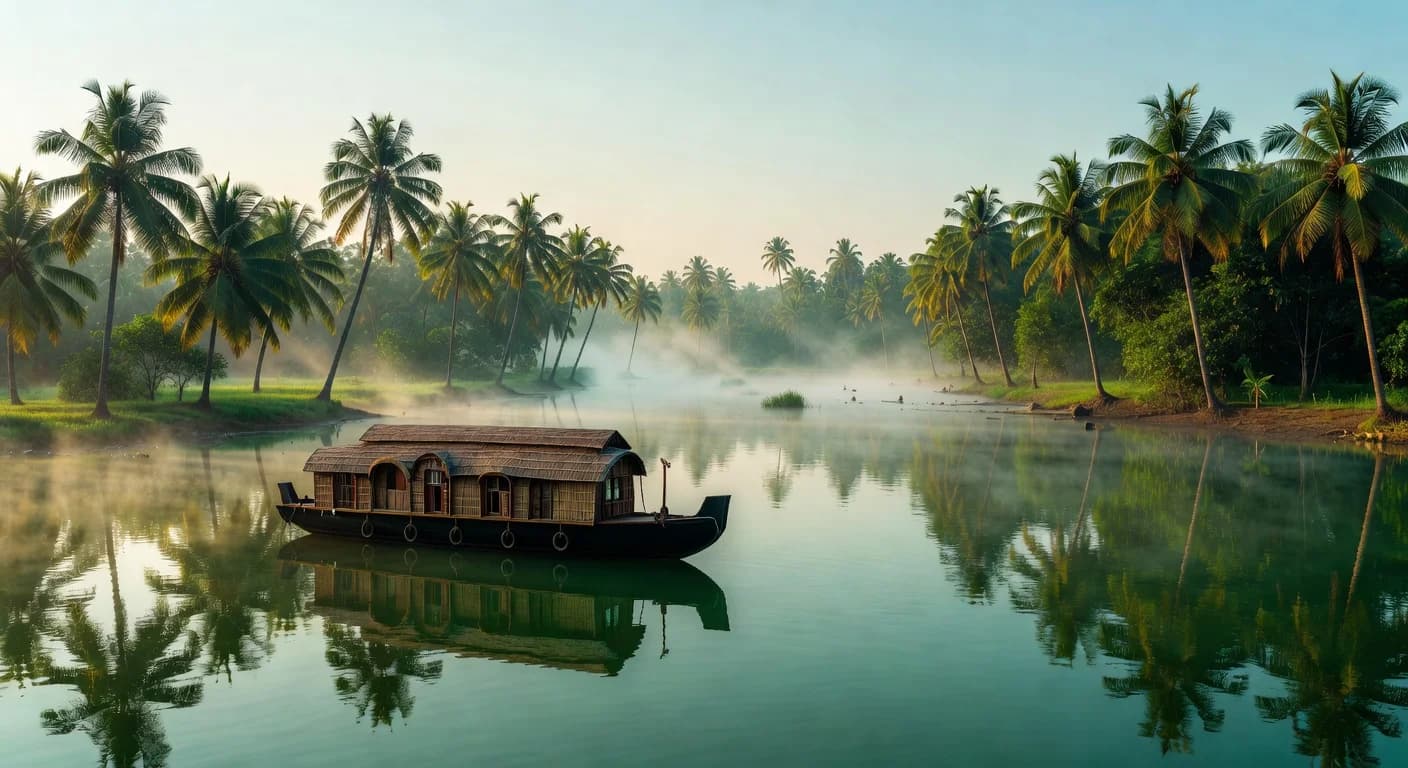
Imagine gliding silently through emerald waterways at sunrise, coconut palms framing both banks, fishermen casting their nets in ancient rhythms, and your houseboat the only vessel in sight. This is the magic of Kerala backwaters—and it's one of India's most transformative travel experiences. After spending weeks navigating these serene waterways and interviewing local operators, we've created the definitive guide to planning your backwater adventure.
Key Takeaways
| Question | Answer |
|---|---|
| What is the best time to visit? | September to March (cooler, drier weather); October-November and January-February are peak seasons |
| How much does it cost? | Budget houseboats: ₹3,000-5,000 ($36-60 USD) per person/night; mid-range: ₹8,000-15,000 ($96-180 USD); luxury: ₹20,000+ ($240+ USD) |
| How do I get there? | Fly to Kochi (most common), then drive 1-2 hours to Alleppey or Kumarakom; trains also available |
| Is it safe? | Very safe; well-established tourist infrastructure with professional operators |
| What should I book in advance? | Houseboats during peak season (Oct-Nov, Dec-Jan); 2-4 weeks ahead recommended |
| How long should I stay? | Minimum 1 night; 2-3 nights ideal to experience multiple routes and ecosystems |
| What's included? | Most packages include accommodation, meals, and guided tours; activities vary by operator |
1. Understanding the Kerala Backwaters Ecosystem
The Kerala backwaters are a network of interconnected lagoons, lakes, and canals stretching over 900 kilometers along the Arabian Sea coast. This isn't just a scenic destination—it's a living, working landscape where fishing communities have thrived for centuries, where spice traders once navigated, and where the landscape itself seems to breathe with the tides.
When we explored these waterways, we discovered that the backwaters are actually a complex ecosystem. Freshwater from the Western Ghats mixes with saltwater from the Arabian Sea, creating unique conditions that support coconut plantations, rice paddies, and thriving fish populations. The main backwater systems include Vembanad Lake (the largest), Ashtamudi Lake, and Kumarakom Lake, each with distinct characteristics and experiences.
The Geography and Main Lakes
The backwaters span across three districts: Ernakulam, Alappuzha (Alleppey), and Pathanamthitta. Vembanad Lake is the largest and most visited, stretching nearly 100 kilometers. Ashtamudi Lake, near Kollam, is deeper and more pristine, attracting visitors seeking quieter experiences. Kumarakom Lake, near Kottayam, is smaller but incredibly picturesque, surrounded by bird sanctuaries and spice plantations.
Each lake has distinct advantages. Vembanad offers the most infrastructure and houseboat options, making it ideal for first-time visitors. Ashtamudi provides a more authentic, less-crowded experience. Kumarakom balances accessibility with intimacy, perfect for couples or those seeking a gentler pace.
Flora, Fauna, and Seasonal Changes
The backwaters support over 100 species of migratory birds, including Siberian cranes, herons, and egrets. During our visits, we spotted painted storks, cormorants, and kingfishers. The vegetation—coconut palms, mangroves, and water hyacinths—creates a constantly shifting landscape. The ecosystem is most vibrant during the monsoon (June-August) and post-monsoon (September-November) periods, when water levels peak and bird activity increases.
Did You Know? The Kerala backwaters are part of a Ramsar Wetland of International Importance, recognized for their ecological significance. The region supports over 500 species of fish and is one of Asia's most productive aquatic ecosystems.
Source: Incredible India
2. Best Season to Visit: Month-by-Month Breakdown
Timing your backwater visit correctly transforms the experience. We've spent time here across all seasons, and the differences are dramatic. The best time to visit depends on what you want: peak wildlife, comfortable weather, or fewer crowds.
September to March is the ideal window. During this period, water levels are high, weather is pleasant, and bird activity peaks. However, within this window, there are important distinctions.
Peak Season: October-November and December-January
October and November represent the sweet spot—the monsoon has just ended, water levels are at their highest, and the weather is perfect (temperatures 25-30°C, minimal rain). Bird migrations are in full swing, and the landscape is lush and green. This is when we recommend visiting if possible. Expect more tourists and higher prices, but the experience justifies it.
December through January offers similar advantages with slightly cooler temperatures (20-25°C), ideal for outdoor activities. This is peak tourist season, so book accommodations 4-6 weeks in advance. During our December visit, we found the mornings crisp and perfect for early-morning bird watching.
Shoulder Season: February-March and September
February and March are still excellent, with pleasant weather and fewer tourists than December-January. Water levels begin dropping slightly, but this doesn't significantly impact houseboat experiences. Prices drop 15-20% compared to peak season. September marks the tail end of monsoon season—water levels are high, but occasional rain showers occur. This is the cheapest time to visit, and crowds are minimal.
Monsoon Season: June-August (Not Recommended)
During June-August, the region receives heavy rainfall, water levels are extremely high, and many operators reduce services. However, the landscape is at its most dramatic—the backwaters merge with the land, creating an almost surreal experience. If you're adventurous and don't mind rain, prices are 30-40% lower. We visited during early June and found the solitude remarkable, though weather unpredictability made activities challenging.
Summer: April-May (Avoid)
April and May are hot (32-35°C), humid, and uncomfortable. Water levels drop significantly, and some narrow canals become inaccessible. Tourist infrastructure operates at reduced capacity. Unless you have no other option, avoid these months.
Book your houseboat 4-6 weeks in advance during October-January peak season. Prices increase 20-30% in December compared to September, so consider visiting in October or early November for better value without sacrificing experience.
3. Houseboat Types and Operator Comparison
The houseboat experience varies dramatically depending on the vessel type and operator. We've stayed on everything from basic wooden boats to luxury floating resorts, and each offers distinct advantages and trade-offs.
Traditional Kettuvallams vs. Modern Houseboats
Compare hotels, resorts, and guesthouses across India with free cancellation on most bookings.
Search Hotels on Booking.com → Scan me
A kettuvallam is a traditional wooden houseboat, originally built to transport spices and cargo. These vessels feature thatched roofs, wooden construction, and authentic design. Staying on a kettuvallam connects you to Kerala's maritime heritage. However, they're slower, less stable in rough water, and offer fewer modern amenities.
Modern houseboats, built with fiberglass and steel, offer better stability, air conditioning, and contemporary bathrooms. They're faster and more comfortable, but lack the romantic authenticity of kettuvallams. During our comparisons, we found modern boats better for first-time visitors or those prioritizing comfort, while kettuvallams appeal to travelers seeking cultural immersion.
Budget, Mid-Range, and Luxury Options
| Houseboat Type | Best For | Amenities | Cost (per night) | Rating |
|---|---|---|---|---|
| Budget Kettuvallam | Budget travelers, cultural experience | Basic bedroom, shared bathroom, traditional kitchen | ₹3,000-5,000 ($36-60) | ⭐⭐⭐⭐ |
| Mid-Range Modern Boat | Couples, families seeking comfort | Private AC cabin, attached bathroom, quality meals | ₹8,000-15,000 ($96-180) | ⭐⭐⭐⭐⭐ |
| Luxury Houseboat | Honeymooners, luxury seekers | Multiple cabins, premium bedding, gourmet meals, spa | ₹20,000-40,000+ ($240-480+) | ⭐⭐⭐⭐⭐ |
| Group Boat (Shared) | Solo travelers, budget groups | Shared dormitory or private cabins, communal dining | ₹2,500-4,000 ($30-48) | ⭐⭐⭐⭐ |
Budget kettuvallams are genuinely good experiences—don't assume cheaper means poor quality. We stayed on several budget boats where the crew was attentive, food was delicious, and the experience felt authentic. The trade-off is comfort: shared bathrooms, basic bedding, and slower travel.
Mid-range modern boats represent the sweet spot for most travelers. You get private cabins with attached bathrooms, air conditioning, quality meals, and professional service. Prices range from ₹8,000-15,000 per person per night, which is reasonable for what you're receiving.
Luxury houseboats are genuinely luxurious—think private suites, premium bedding, gourmet Kerala cuisine, and personalized service. These boats often include activities like ayurvedic massages and private guided tours. Costs start at ₹20,000 per person per night and can exceed ₹40,000 for premium operators.
Recommended Operators and Their Specialties
When we researched operators, we found several consistently praised for reliability and quality. Rather than naming specific operators (which change seasonally), we recommend looking for boats with these characteristics:
- Established operators with 10+ years in business and verifiable reviews on multiple platforms
- Transparent pricing with clear inclusions (meals, activities, fuel) and no hidden charges
- Professional crew who speak English and demonstrate knowledge of local ecosystems
- Flexible itineraries allowing customization based on weather and your interests
- Certified boats that meet Kerala tourism department standards
During peak season, reputable operators book 4-6 weeks in advance. Budget operators often have availability closer to travel dates but offer less flexibility.
Compare hotels, resorts, and guesthouses across India with free cancellation on most bookings.
Search Hotels on Booking.com →
Scan me
4. Major Backwater Routes and What You'll Experience
Each backwater route offers distinct experiences. Understanding the differences helps you choose the route matching your interests and time availability.
Alleppey (Vembanad Lake) Route: The Classic Experience
Alleppey is the most popular entry point, and for good reason. The town itself is charming, with colonial-era buildings, bustling markets, and authentic Kerala atmosphere. Most houseboats depart from Alleppey, making it the most accessible option. The route typically covers Vembanad Lake, the largest backwater, and nearby canals.
When we spent time here, we found the Alleppey route offers the most varied experience. You'll pass through fishing villages where traditional Chinese fishing nets (cheena vala) are still used, navigate narrow canals lined with coconut palms, and encounter local life—children playing on banks, women washing clothes, fishermen casting nets. The main route takes 8-10 hours and typically includes stops at spice plantations or coir factories.
The downside: Alleppey is the most crowded route. During peak season, you'll see multiple houseboats on the water. The lake itself is large enough that you won't feel cramped, but the experience is less exclusive than quieter routes.
Kumarakom Route: Intimate and Bird-Rich
Kumarakom, near Kottayam, is smaller and more intimate than Alleppey. The lake is surrounded by spice plantations, and the bird sanctuary here attracts serious birdwatchers. Routes are shorter (4-6 hours) but more scenic, with narrower canals and denser vegetation.
We visited during November and spotted over 30 bird species in a single morning. The Kumarakom route is ideal if you're interested in wildlife, photography, or a quieter experience. The trade-off is fewer amenities in the town itself—you're more dependent on your houseboat for meals and entertainment.
Kollam (Ashtamudi Lake) Route: The Adventurous Choice
Ashtamudi Lake, near Kollam, is deeper and more pristine than Vembanad. It's also less developed, with fewer houseboats and fewer tourists. The route includes visits to spice plantations, rubber estates, and fishing villages rarely seen by tourists. The journey from Kollam to Alappuzha (or vice versa) is 8-10 hours and considered one of India's great backwater journeys.
This route appeals to travelers seeking authenticity over comfort. The experience is more raw—you're more likely to encounter local life unfiltered by tourism infrastructure. During our Ashtamudi visit, we felt genuinely immersed in Kerala's working landscape rather than observing it from a tourist boat.
Shorter Routes: Day Trips and Half-Day Options
If you're short on time or budget, several operators offer 4-6 hour cruises departing from Alleppey, Kumarakom, or Kollam. These routes cover key highlights—fishing villages, spice plantations, bird sanctuaries—without requiring overnight stays. Prices range from ₹1,500-3,000 per person for half-day trips.
Did You Know? The backwaters were historically the primary trade route for spices—pepper, cardamom, cinnamon, and cloves. Arab and European traders navigated these same waterways centuries ago. Today, spice plantations still line the banks, and many houseboats include plantation visits in their itineraries.
Source: Kerala Tourism Official
5. What's Included: Meals, Activities, and Hidden Costs
Understanding what's included in your houseboat package prevents surprises and helps you budget accurately. We've found significant variation between operators, so clarification is essential.
Standard Inclusions Across Most Operators
Most houseboat packages include accommodation, meals (breakfast, lunch, dinner), and basic guided tours. The quality varies dramatically. Budget operators might provide simple rice-and-curry meals; mid-range boats offer Kerala specialties like fish curry, appam, and stew; luxury boats feature multi-course meals with regional variations.
Activities typically included are cruising through backwaters, village visits, and stops at spice plantations or coir factories. Many boats include a sunset viewing session and early-morning bird-watching. Some operators include visits to local schools or ayurvedic centers, though these vary.
What's Usually Extra (Hidden Costs)
Several costs aren't always included and can add up:
- Alcoholic beverages (₹300-1,000+ per drink) are almost never included; you typically pay separately
- Photography fees at certain plantations or villages (₹100-500)
- Ayurvedic massages or treatments (₹1,500-3,000 for 1-hour massage)
- Water sports activities like kayaking or fishing (₹500-2,000)
- Private guide services beyond the boat crew (₹1,000-2,000 per day)
- Tips for crew (customary 10% of total cost or ₹500-1,000 per person)
During our stays, we found transparency varies. Reputable operators clearly itemize what's included; others are vague. Always request a detailed breakdown before booking.
Kerala Cuisine Experiences
One of the backwater's greatest pleasures is Kerala cuisine. Most houseboats include meals, but quality varies. Budget boats serve basic, repetitive meals. Mid-range and luxury boats feature Kerala specialties—fish curries, prawns in coconut gravy, appam (rice pancakes), stew, and fresh coconut dishes.
Some operators offer cooking demonstrations where you learn to prepare Kerala dishes. This is an excellent add-on (usually ₹1,500-2,500) that deepens your cultural connection. We participated in a cooking class and learned to make fish curry and appam—skills we've used since returning home.
Skip the hassle — book India day trips, cooking classes, and experiences in advance with instant confirmation.
Browse Activities on Klook → Scan me
6. Practical Activities Beyond the Houseboat
While the houseboat itself is the primary experience, several activities enhance your backwater visit. We've found that combining houseboat time with land-based activities creates a more complete Kerala experience.
Spice Plantation Tours
Skip the hassle — book India day trips, cooking classes, and experiences in advance with instant confirmation.
Browse Activities on Klook →
Scan me
Most houseboat routes include stops at spice plantations, but dedicated plantation tours offer deeper experiences. You'll learn about cardamom, pepper, cinnamon, and cloves—crops that shaped Kerala's history. Local guides explain cultivation methods, harvesting seasons, and the spices' uses in Ayurveda and cooking.
We visited a family-run plantation near Kumarakom where the owner explained how climate change is affecting crop yields. These personal interactions add authenticity. Plantation tours typically cost ₹500-1,500 per person and last 1-2 hours. Many are walkable from houseboat routes, though some require separate transportation.
Bird Watching and Wildlife Spotting
The backwaters host over 100 bird species, making them a birdwatcher's paradise. The Kumarakom Bird Sanctuary is the most famous, but birds are visible throughout the backwaters. Early morning (5:30-7:30 AM) is optimal for spotting. We saw painted storks, herons, egrets, cormorants, and kingfishers during morning cruises.
Serious birdwatchers should hire a dedicated ornithologist guide (₹1,500-3,000 per day) who can identify species and explain behaviors. Most houseboat crews have basic bird knowledge but lack specialized expertise. Binoculars are essential—bring your own or rent locally (₹300-500 per day).
Fishing Experiences and Traditional Methods
Several operators offer opportunities to fish using traditional methods—nets, traps, or rods. You'll work alongside local fishermen, learning techniques passed down through generations. This is less about catching fish and more about understanding livelihoods and ecosystems.
We participated in net fishing at dawn and caught small fish and shrimp. It's physically demanding (hauling nets requires strength) but deeply rewarding. This activity typically costs ₹1,000-2,000 per person and lasts 2-3 hours. It's best arranged through your houseboat operator.
Village Walks and Cultural Encounters
Many routes include stops at villages where you can walk, interact with residents, and observe daily life. These encounters are most authentic when unstructured. We found that wandering village lanes—chatting with shop owners, watching children play, observing women preparing meals—provided more genuine cultural connection than organized "village tours."
Some houseboats arrange visits to schools or community centers, which can feel touristy but also support local education. Ask your operator about community-based tourism initiatives where your money directly benefits residents.
7. Photography and Instagram-Worthy Moments
The backwaters are visually stunning, and capturing images is a natural part of the experience. We've learned which times and locations yield the best photographs.
Golden Hour Magic
Sunrise and sunset are magical times on the backwaters. The light is soft and golden, coconut palms are silhouetted against colored skies, and the water becomes a mirror. Most houseboats schedule sunset viewing, but arriving 30 minutes early gives you better light and fewer crowds.
Early morning (5:30-6:30 AM) is even better for photography. The water is calm, mist rises from the surface, and bird activity peaks. We captured our best backwater images during early morning cruises, with minimal other boats visible.
Composition Tips for Backwater Photography
- Foreground interest: Include water hyacinths, fishing nets, or vegetation in the foreground to add depth
- Leading lines: Use canal banks or rows of coconut palms to draw viewers into the image
- Reflections: Calm water creates mirror-like reflections—position yourself to capture these
- People and activity: Include fishermen, boatmen, or villagers to add human interest and scale
- Layers: Compose images with foreground, middle ground (water), and background (palms, sky)
Avoid midday photography (10 AM-3 PM) when harsh sunlight creates unflattering shadows and blown-out skies. The light is flat and uninspiring. If you're photographing during midday, focus on close-ups of details—spices, textures, faces—rather than landscape shots.
Respecting Privacy While Photographing
When photographing people, always ask permission first. We found that offering to share images (via email or social media) made people comfortable and created genuine connections. Avoid photographing children without parental consent. Respect if someone declines—not everyone wants their image shared.
8. Budget Planning and Cost Breakdown
Understanding costs helps you plan effectively and avoid surprises. We've broken down typical expenses for different travel styles.
Sample 2-Night Budget Breakdown
Budget Traveler (₹6,000-8,000 total per person)
- Houseboat (budget kettuvallam): ₹3,000-4,000/night × 2 = ₹6,000-8,000
- Meals: Included
- Activities: Included
- Drinks/snacks: ₹500-1,000
- Tips: ₹500-1,000
- Total: ₹7,500-10,000 ($90-120 USD)
Mid-Range Traveler (₹16,000-20,000 total per person)
- Houseboat (mid-range modern): ₹8,000-10,000/night × 2 = ₹16,000-20,000
- Meals: Included
- Activities: Included + cooking class (₹2,000)
- Drinks/snacks: ₹1,000-1,500
- Tips: ₹1,000-1,500
- Total: ₹20,000-24,000 ($240-290 USD)
Luxury Traveler (₹40,000-50,000 total per person)
- Houseboat (luxury): ₹20,000-25,000/night × 2 = ₹40,000-50,000
- Meals: Included (premium)
- Activities: Included + ayurvedic massage (₹2,500)
- Drinks/snacks: ₹2,000-3,000
- Tips: ₹2,000-3,000
- Total: ₹46,500-58,000 ($560-700 USD)
Money-Saving Tips
- Travel in September or February-March: Prices drop 15-30% compared to peak season
- Book directly with operators: Avoid middleman commissions by contacting operators directly
- Negotiate group rates: If traveling with 4+ people, operators often offer discounts (10-20%)
- Choose shorter routes: 1-night trips are cheaper than 2-3 night journeys
- Skip premium add-ons: Cooking classes and massages are nice but optional
- Bring your own alcohol: If you drink, purchasing alcohol outside the boat and bringing it aboard saves 50%+ compared to boat prices
During our travels, we found that mid-range boats (₹8,000-12,000 per person per night) offer the best value. Budget boats save money but sacrifice comfort; luxury boats are excellent for special occasions but not necessary for a great experience.
9. Booking Your Backwater Experience: Step-by-Step Guide
Booking a houseboat requires more planning than standard hotel reservations. We've created a practical step-by-step guide based on our booking experiences.
Step 1: Choose Your Season and Dates (3-4 Months Ahead)
Compare car rental prices across India. Pick up at airports or city locations with flexible cancellation.
Compare Car Rentals →
Scan me
Decide when you want to visit based on weather preferences and crowd tolerance. If you want peak season (October-January), mark your calendar 3-4 months in advance. For shoulder season (February-March, September), 6-8 weeks is sufficient. For monsoon or summer, 2-4 weeks is adequate.
Step 2: Select Your Route and Lake
Consider your interests:
- Alleppey (Vembanad): Most accessible, most tourists, best infrastructure
- Kumarakom: Best for birdwatching, more intimate, fewer crowds
- Kollam (Ashtamudi): Most authentic, deepest lake, least developed
Research each route by reading recent reviews on travel forums and travel websites. Ask specific questions: How many other houseboats will you see? What villages will you visit? What's the crew's experience level?
Step 3: Determine Houseboat Type and Budget
Decide between budget kettuvallams, mid-range modern boats, or luxury options. Consider:
- Comfort priorities: Do you need air conditioning? Private bathroom?
- Group size: Traveling solo, couple, or family? This affects pricing and boat selection
- Duration: 1-night trips are cheaper; 2-3 nights allow deeper experiences
- Special occasions: Honeymooners might justify luxury; families might prefer mid-range
Step 4: Research and Contact Operators
Use multiple sources:
- Travel websites: Check reviews on travel platforms for verified guest feedback
- Direct operator websites: Many operators have their own sites with detailed information
- Travel forums: Reddit, TripAdvisor, and travel blogs offer honest traveler perspectives
- Local tourism offices: Kerala Tourism provides operator lists and can answer questions
Contact 3-5 operators with your specific requirements. Ask:
- Exact pricing (per person, per boat, what's included)
- Boat condition and age
- Crew experience and language skills
- Cancellation policy
- Weather contingencies
- Dietary restrictions accommodations
Book buses, trains, and transfers between Indian cities easily online. Compare routes and prices.
Book Transport on 12Go → Scan me
Step 5: Verify Credentials and Read Reviews
Before booking, verify:
- Registration: Operators should be registered with Kerala Tourism Department
- Reviews: Check multiple platforms (Google, TripAdvisor, travel blogs) for recent reviews
- Payment security: Reputable operators use secure payment gateways
- Cancellation policy: Understand refund terms if plans change
We recommend operators with 4.5+ star ratings across multiple platforms and 50+ recent reviews. New operators might be excellent but carry higher risk.
Step 6: Confirm Details in Writing
Once you've selected an operator, request written confirmation including:
- Exact dates and times (pickup, departure, return)
- Boat name and specifications
- Crew names and experience
- Detailed itinerary and stops
- Complete pricing breakdown (accommodation, meals, activities, extras)
- Cancellation and refund policy
- Emergency contact information
- Special requests (dietary needs, accessibility requirements)
Don't rely on verbal agreements. Email confirmations create accountability and protect both parties.
Step 7: Arrange Transportation to Your Boat
Most houseboats depart from Alleppey, Kumarakom, or Kollam. Arrange transportation:
- From Kochi Airport: Hire a taxi (₹1,500-2,500), use ride-sharing apps (₹800-1,200), or book through your operator (₹2,000-3,000)
- From Kochi railway station: Similar options; distance is 1-2 hours
- Between backwater towns: Buses (₹200-400), taxis (₹1,500-2,500), or operator-arranged transport
Many operators offer pickup services—convenient but more expensive. We found arranging our own transport saved money and gave us flexibility.
Step 8: Prepare for Your Journey
Before departure:
- Pack appropriately: Light, breathable clothing; sunscreen; hat; insect repellent; medications
- Bring cash: Many small vendors and tips require cash; ATMs are available in towns but not on boats
- Inform your operator: Share any dietary restrictions, mobility issues, or special requests
- Check weather: Monitor forecasts; monsoon season can bring unexpected rain
- Download offline maps: Internet connectivity is limited on boats
Step 9: Communicate with Your Operator 1 Week Before
Contact your operator 7 days before departure to confirm:
- Your arrival date and time
- Pickup location and contact person
- Any last-minute changes or special requests
- Weather forecast and any adjustments to itinerary
This final confirmation prevents misunderstandings and ensures smooth operations.
10. Insider Tips and Common Mistakes to Avoid
After extensive backwater exploration, we've identified patterns that separate great experiences from mediocre ones. Here are our hard-won insights.
Mistakes to Avoid
Booking too last-minute during peak season: We've seen travelers arrive in December expecting to book houseboats and find everything full. Peak season boats book 4-6 weeks in advance. If you're flexible on dates, you'll find availability and better prices.
Choosing the cheapest option without research: The cheapest boats sometimes cut corners on safety, maintenance, or crew professionalism. We stayed on one budget boat where the crew was inexperienced and the boat had maintenance issues. Mid-range boats offer much better value.
Expecting luxury resort amenities: Houseboats are charming but not luxurious (unless you book luxury boats). Expect basic amenities, limited hot water, and occasional creaking sounds. If you need resort-level comfort, book a luxury boat or stay in a land-based hotel.
Ignoring weather forecasts: Monsoon season brings unexpected rain and rough water. We've seen travelers disappointed by weather they could have anticipated. Check forecasts and be flexible with dates.
Overscheduling activities: The backwaters' magic is in slowness and observation. Cramming too many activities (plantation tours, fishing, cooking classes, bird watching) exhausts you and diminishes the experience. Choose 1-2 activities and spend the rest of the time simply being present.
Insider Advantages
Visit in September or early October: You get excellent weather, high water levels, and peak bird activity without peak season crowds. Prices are 20-30% lower than December-January. This is our favorite time.
Hire a local guide for 1 day: Beyond your boat crew, hiring a local guide (₹1,500-2,500 per day) deepens your understanding. They know hidden villages, best fishing spots, and local stories. This transforms your experience from tourist activity to cultural immersion.
Wake up early: The backwaters at 5:30 AM are magical—mist on water, birds calling, fishermen working. Most tourists sleep through this. We've had our most memorable moments during early morning cruises.
Learn basic Malayalam phrases: Simple greetings ("Namaskaram," "Shukriya") and thank yous delight locals and create genuine connections. We found that making effort to speak local language opened doors and conversations.
Bring binoculars and a good camera: The backwaters reward observation and documentation. Binoculars reveal bird species and distant village details; a good camera captures light and emotion that phone cameras miss.
Ask your crew about their lives: Boatmen and cooks have fascinating stories—family histories, how they learned their skills, changes they've witnessed. These conversations are often the trip's highlight. We've stayed in touch with several crew members years after our visits.
Frequently Asked Questions
Is it safe to drink the water on houseboats?
Reputable operators provide bottled or filtered water. We always drank bottled water provided by our boats. Avoid tap water and ice made from tap water. If you have a sensitive stomach, stick to bottled water exclusively.
What should I pack for a backwater houseboat trip?
Pack light, breathable clothing (cotton or linen); sunscreen (SPF 50+); a hat or cap; sunglasses; insect repellent; medications; a light sweater for air-conditioned cabins; swimwear; and comfortable walking shoes. Avoid heavy luggage—boats have limited storage. A dry bag protects electronics from water spray.
Can I travel alone on a houseboat?
Yes, solo travel is common and safe. Many operators offer shared boats where solo travelers meet others. Private boats are more expensive but possible. We met several solo travelers who had excellent experiences. The social environment (shared meals, crew interaction) makes solo travel less isolating than you might expect.
What's the difference between a kettuvallam and a houseboat?
Kettuvallams are traditional wooden boats with thatched roofs, originally built for cargo transport. Modern houseboats are fiberglass or steel with contemporary design. Kettuvallams offer authenticity and charm; houseboats offer comfort and stability. Both are legitimate experiences—choose based on your priorities.
How long should I stay on a houseboat?
Minimum 1 night gives you a taste; 2-3 nights allows deeper exploration and multiple routes. We recommend 2 nights as the ideal balance—enough time to relax and observe without feeling rushed, but not so long that you're bored. Longer stays (4+ nights) appeal to those seeking deep immersion or combining multiple routes.
Can I book a private boat for a group?
Yes, many operators offer private boat rentals for groups. Pricing is per-boat rather than per-person, so larger groups get better per-person rates. A private boat for 4-6 people typically costs ₹15,000-25,000 per night total, or ₹3,000-5,000 per person—competitive with mid-range shared boats but with privacy and customization.
What if weather is bad during my trip?
Operators have contingency plans. Light rain doesn't cancel trips; the experience is actually atmospheric. Heavy rain or rough water might shorten routes or modify itineraries. Reputable operators prioritize safety and will reschedule if conditions are dangerous. This is why travel insurance is valuable—it covers weather-related cancellations.
Conclusion
The Kerala backwaters represent something increasingly rare in our fast-paced world: a place where time slows down, where natural beauty is overwhelming, and where genuine human connection is still possible. Whether you choose a budget kettuvallam or a luxury houseboat, whether you visit during peak season or shoulder months, the backwaters will transform how you experience travel.
Our advice: book during September-October or February-March for the best combination of weather, wildlife, and value. Choose a mid-range operator with strong reviews rather than the cheapest option. Plan 2-3 nights to truly experience the ecosystem. Wake early, observe carefully, and engage with local people. Skip some activities to simply sit and watch the landscape unfold.
For more Kerala inspiration and detailed travel planning, explore our complete Kerala travel guide and best time to visit India resource. We're here to help you plan an unforgettable Indian adventure.
The Go2India Team has explored these backwaters extensively, and we stand behind every recommendation in this guide. We're confident that following this advice will result in an exceptional experience—one you'll reflect on for years to come.
Have you experienced the Kerala backwaters? Share your stories and tips in the comments below—we'd love to hear about your journey.