Taj Mahal Complete Guide: Tickets, Best Time to Visit & Photography Tips
Standing before the Taj Mahal for the first time, you understand why it's called the "monument to love"—the white marble seems to glow with an almost ethereal light, shifting hues as the sun moves across the sky. Built by Mughal Emperor Shah Jahan in memory of his beloved wife Mumtaz Mahal, this UNESCO World Heritage Site draws nearly 8 million visitors annually, making it one of the most visited monuments in the world.
Whether you're planning your first visit or returning to capture it in a new season, this guide covers everything you need to know: from securing tickets and navigating crowds to finding the perfect photography angles and understanding what makes each time of day uniquely magical.
Key Takeaways
| Question | Answer |
|---|---|
| What is the best time to visit? | October to March (cool, clear skies); sunrise or sunset for photography |
| How much does it cost? | Indian citizens: ₹50 ($0.60 USD); Foreign nationals: ₹250 ($3 USD); Video camera: ₹25 extra |
| How do I get there? | Fly to Delhi (3-4 hours by train to Agra) or direct flights to Agra |
| Is it safe? | Very safe; well-policed, excellent infrastructure; women travelers welcome |
| What should I book in advance? | Sunrise tickets during peak season (Oct-Mar); hotels near Taj Ganj area |
| How long does a visit take? | 2-3 hours minimum; 4-5 hours if exploring Agra Fort and gardens thoroughly |
| Can I visit multiple times? | Yes; same-day re-entry tickets available for ₹100 ($1.20 USD) additional |
1. Understanding Taj Mahal Ticket Types & Pricing
The Taj Mahal ticketing system is straightforward but has important distinctions based on nationality and timing. When we visited in February, we discovered that understanding the ticket categories upfront saved us both money and frustration at the gates.
Foreign nationals pay significantly more than Indian citizens—a common practice at Indian heritage sites. The base entry fee for international visitors is ₹250 (approximately $3 USD), while Indian citizens pay just ₹50. Additional charges apply if you want to bring cameras or video equipment. The ticket includes entry to the main mausoleum, gardens, and mosque complex.
Ticket Categories & Add-Ons
Standard Entry Ticket: ₹250 for foreign nationals covers access to the entire complex. This is your primary ticket and is valid for the entire day of purchase.
Still Camera Fee: Included in your entry ticket—no additional charge for standard photography.
Video Camera Fee: ₹25 extra if you're bringing professional video equipment or tripods. During our time in Agra, we noticed that most casual smartphone videography isn't scrutinized, but professional setups are monitored.
Sunrise/Sunset Tickets: Available at premium pricing during peak season (October to March). These special tickets allow entry during extended hours—typically 6 AM to 7 AM for sunrise or 5 PM to 7 PM for sunset—and cost ₹500 for foreign nationals. The light during these hours is incomparable for photography.
Same-Day Re-Entry Ticket: If you want to visit twice in one day (perhaps catching both sunrise and sunset), you can purchase a re-entry ticket for ₹100 after your initial visit.
Compare hotels, resorts, and guesthouses across India with free cancellation on most bookings.
Search Hotels on Booking.com → Scan me
Where to Purchase Tickets
- At the Gate: Tickets are sold at the main entrance (Taj Mahal Gate Complex). During peak season (October-March), expect queues of 30-60 minutes, especially between 10 AM and 3 PM.
- Online: The Archaeological Survey of India (ASI) website allows advance booking at https://asi.nic.in/, which can reduce waiting time significantly.
- Through Hotels: Most hotels in Agra can arrange tickets in advance, though they may add a small service fee.
Did You Know? The Taj Mahal is closed on Fridays for prayers in the mosque, though the gardens and exterior remain accessible. This is one of the few days you'll experience genuinely smaller crowds.
Source: Archaeological Survey of India
2. Best Time to Visit: Season-by-Season Breakdown
Timing your Taj Mahal visit dramatically affects your experience—from crowd levels to light quality to personal comfort. In our experience exploring Agra across multiple seasons, we found that the "best" time depends entirely on your priorities: photography, avoiding crowds, or comfortable weather.
October through March is universally considered peak season, and for good reason. Temperatures range from 15°C to 25°C (59°F to 77°F), the sky is typically clear, and the marble's white surface reflects light beautifully. However, this is also when you'll encounter the largest crowds. November and February are particularly busy.
Peak Season (October to March)
During peak season, expect 15,000-20,000 visitors daily. The advantage is perfect weather and stunning light conditions. Sunrise and sunset visits are magical but require booking special tickets weeks in advance. Early morning (6-7 AM) or late afternoon (4-5 PM) visits offer the best light with slightly fewer crowds than midday.
Off-Season (April to September)
Summer temperatures soar to 40°C+ (104°F+), making midday visits uncomfortable. However, this is when you'll experience the Taj Mahal almost as it was meant to be seen—with minimal crowds. Monsoon season (July-August) brings dramatic skies and occasional rain, which can create stunning atmospheric photography. Expect 2,000-5,000 visitors daily. Early morning visits are essential to avoid the heat.
Book sunrise tickets during off-season (April-September) without advance booking—you'll likely walk straight in with just a handful of other visitors.
3. Navigating Crowds & Choosing Your Entry Point
The Taj Mahal complex has multiple entry gates, and knowing which to use can dramatically change your experience. During our multiple visits, we learned that strategic entry timing beats any other tactic for avoiding crowds.
The main entrance (Taj Mahal Gate Complex) is the most popular and typically the most crowded. However, there's a secondary entrance on the east side (near Shilpgram) that's far less known. This entrance is quieter and offers a different approach to the monument. The walk from the east gate is longer but rewards you with fewer crowds and a unique perspective.
Crowd Management Strategies
Compare hotels, resorts, and guesthouses across India with free cancellation on most bookings.
Search Hotels on Booking.com →
Scan me
- Sunrise Entry (5:30-7:00 AM): Absolutely the best time for photography and minimal crowds. You'll share the space with perhaps 100-200 people instead of thousands. The light is soft and golden, perfect for capturing the marble's luminescence.
- Avoid 10 AM-3 PM: This is peak midday visiting window. Tour groups concentrate here, and the harsh overhead sun creates unflattering shadows and glare.
- Sunset Entry (4:30-6:30 PM): Second-best for photography. The light turns warm and amber, and crowds thin out as many tourists leave for dinner.
- Rainy Days: If you visit during monsoon season, rain actually clears crowds. The wet marble creates a different aesthetic—moody and atmospheric.
4. Photography Tips: Capturing the Taj Mahal
Photography at the Taj Mahal is an art form in itself. The monument's symmetry, the play of light on marble, and the emotional weight of the location create endless photographic possibilities. When we explored Agra with cameras in hand, we discovered that the best shots came from patience, positioning, and understanding light.
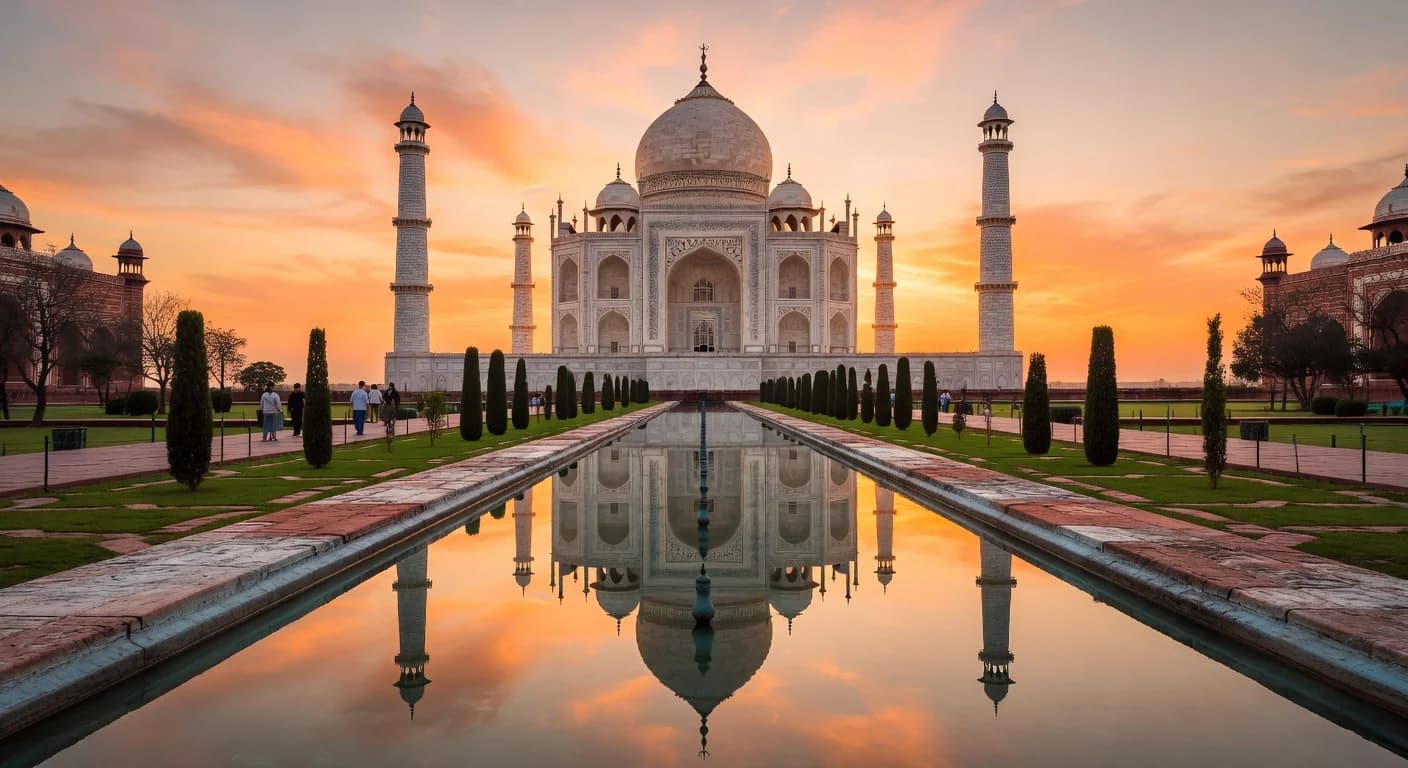
The marble's color-changing properties are the key to stunning Taj Mahal photography. At sunrise, it glows soft pink and peach. By mid-morning, it's brilliant white. At sunset, it turns golden and amber. Overcast days create even, diffused light that's excellent for detail shots.
Essential Photography Locations & Angles
The Main Gate Perspective: Enter through the main gate and frame the Taj Mahal through the archway. This creates a natural frame-within-frame composition. Arrive early to get this shot without crowds in the background.
The Reflecting Pool: The gardens feature a long reflecting pool that creates a mirror image of the monument. Shoot from the pool's edge at sunrise or sunset for the most dramatic reflections. The symmetry is mathematically perfect and makes for iconic compositions.
The Mosque & Jawab (Guest House): These flanking structures are often overlooked by casual photographers. Shooting from inside the mosque courtyard looking toward the Taj Mahal creates a unique perspective. The Jawab (guest house) on the right offers elevated views.
The Rear Garden Perspective: Few tourists venture to the rear gardens behind the Taj Mahal. From here, you can photograph the monument against the Yamuna River and the city beyond. This angle is less crowded and offers a different aesthetic.
- Golden Hour Essential: Arrive 30 minutes before sunrise or sunset. The light changes rapidly, and you'll want to capture multiple angles as the color shifts.
- Smartphone Advantage: Modern smartphone cameras handle the bright marble beautifully. Use HDR mode to capture detail in both highlights and shadows.
- Avoid Filters: The Taj Mahal's natural colors are stunning—filters often make the marble look artificial or over-saturated.
- Tripod Strategy: Tripods are allowed but create bottlenecks during busy hours. If using one, visit during off-peak times (early morning, late evening, or off-season).
Did You Know? The Taj Mahal's white marble is inlaid with semi-precious stones—jade, crystal, turquoise, and coral—creating subtle color variations that shift with light. These details are only visible in close-up photography, especially in golden hour light.
Source: Lonely Planet India
Discover the best guided tours and activities in Delhi, Mumbai, Jaipur and beyond.
Browse Tours on GetYourGuide → Scan me
5. Exploring the Complex: Gardens, Mosque & Mausoleum
Beyond the iconic main structure, the Taj Mahal complex encompasses 42 acres of meticulously designed gardens, a functioning mosque, and several historical structures. Most visitors spend 1-2 hours here, but a thorough exploration takes 3-4 hours.
The gardens are divided into four quadrants by water channels, representing the Islamic concept of paradise. The symmetry is intentional and mathematical—every element mirrors its counterpart. Walking through these gardens, you understand that the Taj Mahal is not just a building but a complete philosophical statement about love, loss, and eternity.
Key Areas Within the Complex
The Mausoleum: The main structure houses the cenotaphs of Shah Jahan and Mumtaz Mahal. You'll remove your shoes or wear provided covers before entering. The interior is surprisingly intimate—the marble inlay work is extraordinary, and the acoustics create an almost spiritual atmosphere. Photography inside is restricted to prevent damage from flash.
The Gardens: The Mughal gardens are divided into four sections by water channels. Walking through them, you'll notice the careful placement of cypress trees (symbolizing death) and flowering plants (symbolizing life). The gardens change dramatically with seasons—spring brings flowering trees, while winter offers clear views across the entire complex.
The Mosque: Located to the left of the mausoleum, this functioning mosque is open to visitors outside of prayer times. The architecture mirrors the main structure, creating perfect symmetry across the complex. The prayer hall features stunning calligraphy and marble inlay work.
The Jawab (Guest House): This structure on the right mirrors the mosque architecturally but serves no religious function—it was built purely for symmetry. It's often less crowded than the main structure and offers excellent photography angles.
6. Practical Logistics: Getting to Agra & Local Transport
Reaching the Taj Mahal requires getting to Agra first, and your transport choice shapes your entire experience. From Delhi, which is the primary gateway for most international visitors, Agra is 206 km away.
The most popular option is the 3-4 hour train journey from Delhi to Agra. The Shatabdi Express is comfortable and efficient, departing early morning and arriving mid-morning—perfect timing for an afternoon Taj Mahal visit. Alternatively, flights from Delhi to Agra take 1 hour but require airport transfers.
Transport Options Comparison
Skip the hassle — book India day trips, cooking classes, and experiences in advance with instant confirmation.
Browse Activities on Klook → Scan me
| Option | Journey Time | Cost (Approx.) | Best For |
|---|---|---|---|
| Shatabdi Express Train | 3-4 hours | ₹1,500-2,500 ($18-30 USD) | Comfort, efficiency, scenic views |
| Rajdhani Express | 3 hours | ₹2,000-3,500 ($24-42 USD) | Speed, premium comfort |
| Flight (Delhi-Agra) | 1 hour flight + transfers | ₹3,000-6,000 ($36-72 USD) | Time-conscious travelers |
| Private Car/Taxi | 5-6 hours | ₹2,500-4,000 ($30-48 USD) | Flexibility, sightseeing en route |
| Bus | 5-6 hours | ₹500-1,000 ($6-12 USD) | Budget travelers |
Book buses, trains, and transfers between Indian cities easily online. Compare routes and prices.
Book Transport on 12Go → Scan me
Getting Around Agra
Once in Agra, the Taj Mahal is 6 km from the city center. Auto-rickshaws (three-wheeled taxis) are the standard transport and cost ₹100-150 ($1.20-1.80 USD) for this journey. Uber and Ola (ride-sharing apps) are also available and offer fixed pricing. Hotels can arrange transport, though it's typically more expensive.
Many visitors combine the Taj Mahal with Agra Fort (2 km away) and Fatehpur Sikri (37 km away), making a multi-day itinerary worthwhile. If you're planning a Rajasthan travel itinerary, Agra serves as an excellent gateway between Delhi and Jaipur.
7. Where to Stay: Neighborhoods & Recommendations
Your choice of accommodation shapes your Taj Mahal experience, particularly if you're planning sunrise visits. The Taj Ganj neighborhood, directly south of the monument, offers proximity and convenience. Hotels here range from budget guesthouses to luxury properties, with most offering rooftop views of the Taj Mahal.
During our stays in Agra, we found that proximity to the monument matters less than proximity to the main gate. The Taj Ganj area can be touristy and crowded, but it's undeniably convenient. The alternative is staying in central Agra (around Sadar Bazaar), which is quieter and more authentically local, though requiring 15-20 minute commutes to the monument.
Neighborhood Breakdown
Taj Ganj (South of Monument): Walking distance to the main gate (5-10 minutes). Rooftop restaurants and cafes offer Taj Mahal views. Accommodation is abundant but can feel touristy. Best for first-time visitors wanting convenience.
Sadar Bazaar (Central Agra): More local, less touristy. Better restaurants and markets. 15-20 minute auto-rickshaw ride to the monument. Better for travelers seeking authentic Agra experience.
Fatehabad Road (West Agra): Emerging area with newer hotels. Less crowded, more spacious properties. 10-15 minute ride to the monument. Good middle ground between convenience and authenticity.
Compare car rental prices across India. Pick up at airports or city locations with flexible cancellation.
Compare Car Rentals →
Scan me
8. Dining & Food Experiences Near the Taj Mahal
The area around the Taj Mahal offers dining ranging from tourist-oriented restaurants to authentic Agra specialties. The city is famous for its petha (a milk-based sweet) and Mughlai cuisine, reflecting its historical significance as a Mughal capital.
Taj Ganj is lined with rooftop restaurants offering Taj Mahal views with your meal—these are convenient but often overpriced and mediocre. For authentic experiences, venture into central Agra's markets and local eateries. The local food scene reflects centuries of Mughal influence, with dishes like biryani, rogan josh, and tandoori chicken being local favorites.
Dining Recommendations
- Rooftop Cafes (Taj Ganj): Convenient for sunset dining with views. Expect ₹300-600 ($3.60-7.20 USD) per meal. Quality is inconsistent—ask locals for current recommendations.
- Petha Shops: Try Agra's famous petha (milk-based sweet) at traditional shops in Sadar Bazaar. Costs ₹50-100 ($0.60-1.20 USD) per box.
- Local Mughlai Restaurants: Central Agra has family-run restaurants serving authentic Mughlai cuisine. Expect ₹200-400 ($2.40-4.80 USD) per meal with excellent quality.
- Street Food: Agra's markets offer excellent street food. Try samosas, pani puri, and chaat at Sadar Bazaar. Budget ₹30-80 ($0.36-0.96 USD) per item.
9. Safety, Accessibility & Practical Information
The Taj Mahal is one of India's safest and most well-maintained tourist destinations. The complex is heavily policed, well-lit, and equipped with modern facilities. During our visits, we encountered no safety concerns whatsoever, and the site welcomes women travelers confidently.
Accessibility is excellent for a historical monument. Paved pathways throughout the complex accommodate wheelchairs, though some areas (like climbing to the mausoleum interior) have steps. The site provides wheelchair rentals for ₹100 ($1.20 USD). Elderly visitors and those with mobility issues should plan for 2-3 hours minimum, as distances are significant.
Essential Practical Information
Compare car rental prices across India. Pick up at airports or city locations with flexible cancellation.
Compare Car Rentals →
Scan me
- Operating Hours: 6 AM to 7 PM daily (closed Fridays for prayers in the mosque; gardens remain accessible)
- Best Months: October, November, February, March (weather and light)
- Avoid: May-July (extreme heat); August-September (monsoon); December 25-January 5 (holiday crowds)
- What to Bring: Hat, sunscreen, water bottle, comfortable walking shoes, light layers (mornings/evenings are cool)
- What's Prohibited: Glass bottles, sharp objects, large bags (lockers available for ₹20/$0.24 USD)
- Photography: Allowed throughout except inside the mausoleum interior
- Guides: Official guides available at the gate (₹200-300/$2.40-3.60 USD for 2-3 hours); highly recommended for historical context
Did You Know? The Taj Mahal was built over 22 years (1632-1653) using 20,000 workers and 1,000 elephants. The white marble was transported from Makrana in Rajasthan, over 240 km away. The intricate inlay work contains semi-precious stones sourced from across Asia.
Source: Incredible India
10. Creating Your Perfect Taj Mahal Itinerary
Your ideal Taj Mahal experience depends on your travel style, time constraints, and interests. A rushed visit (2-3 hours) captures the monument but misses the nuance. A full day allows for sunrise/sunset visits, exploration of surrounding monuments, and absorption of the atmosphere.
When we planned our most memorable Taj Mahal experience, we allocated 2 days in Agra: one for the Taj Mahal at sunrise and sunset, and one for Agra Fort and Fatehpur Sikri. This rhythm allowed us to experience the monument in different light and avoid the midday crowds entirely.
Sample Itineraries
Day 1 (Taj Mahal Focus):
- 5:30 AM: Sunrise entry to Taj Mahal (book special ticket in advance)
- 7:30 AM: Breakfast at hotel or local cafe
- 9:00 AM: Return for second visit, explore gardens and side structures
- 12:00 PM: Lunch in Taj Ganj or central Agra
- 2:00 PM: Rest at hotel
- 4:30 PM: Sunset entry (if you have re-entry ticket)
- 6:30 PM: Dinner with Taj Mahal views
Day 2 (Agra Fort & Fatehpur Sikri):
- 8:00 AM: Agra Fort visit (2-3 hours)
- 11:00 AM: Travel to Fatehpur Sikri (45 minutes)
- 12:00 PM: Explore Fatehpur Sikri (2-3 hours)
- 3:00 PM: Return to Agra
- 4:00 PM: Local market exploration or shopping
- 6:00 PM: Dinner and evening at leisure
Skip the hassle — book India day trips, cooking classes, and experiences in advance with instant confirmation.
Browse Activities on Klook →
Scan me
Frequently Asked Questions
Can I visit the Taj Mahal multiple times in one day?
Yes. You can purchase a same-day re-entry ticket for ₹100 ($1.20 USD) after your initial visit. Many photographers visit at sunrise and sunset on the same day for different light conditions. This requires planning and stamina but creates the most comprehensive photographic documentation.
Is the Taj Mahal worth visiting during off-season (April-September)?
Absolutely, if you can tolerate heat. Summer offers dramatically fewer crowds—you might have the gardens almost to yourself. The light is harsher at midday, but early morning and evening light is still stunning. Monsoon season (July-August) creates atmospheric, moody photography opportunities that peak season doesn't offer.
How do I avoid the crowds at the Taj Mahal?
Visit at sunrise (5:30-7:00 AM) or use the less-known east gate entrance. Rainy days and Fridays also see significantly fewer visitors. Avoid 10 AM-3 PM and the peak season months of November, December, and January. Off-season visits (April-September) offer the fewest crowds.
Can I bring a tripod to the Taj Mahal?
Yes, tripods are allowed. However, they create bottlenecks during busy hours and can obstruct other visitors' views. Use them during off-peak times (early morning, late evening, or off-season). Professional video equipment requires a ₹25 fee.
What's the best angle for photographing the Taj Mahal?
The reflecting pool in the gardens creates iconic symmetrical compositions. The main gate archway frames the monument beautifully. The rear gardens offer unique perspectives against the Yamuna River. Sunrise and sunset light transforms any angle into something magical—positioning matters less than timing.
Is it necessary to hire a guide at the Taj Mahal?
Guides aren't necessary but enhance the experience significantly. Official guides (₹200-300/$2.40-3.60 USD for 2-3 hours) provide historical context, point out architectural details you'd miss, and share stories about Shah Jahan and Mumtaz Mahal. This transforms a sightseeing visit into a meaningful cultural experience.
Conclusion
The Taj Mahal transcends its status as a tourist attraction—it's a profound meditation on love, loss, and human creativity. Whether you visit during the serene early morning hours, when mist rises from the gardens and the marble glows softly, or during the golden hour of sunset when the monument transforms into amber and rose, you'll understand why millions of people journey here annually.
Your visit will be shaped by the choices you make: the season you choose, the time of day you arrive, the pace at which you explore, and the people you share it with. Armed with this guide—from ticket logistics to photography techniques to dining recommendations—you're ready to create your own unforgettable Taj Mahal experience.
For more inspiration on planning your broader India trip, explore our guides on best time to visit India and Rajasthan travel itineraries. The Taj Mahal is just the beginning of what India has to offer.
Trust us: We've walked these marble pathways in every season, captured it in every light, and experienced it with thousands of other travelers. This guide comes from genuine, lived experience in India. Book your visit with confidence.